• There seems to be an uptick in Political comments in recent months. Those of us who are long time members of the site know that Political and Religious content has been banned for years. Nothing has changed. Please leave all political and religious comments out of the forums.

    If you recently joined the forums you were not presented with this restriction in the terms of service. This was due to a conversion error when we went from vBulletin to Xenforo. We have updated our terms of service to reflect these corrections.

    Please note any post refering to a politician will be considered political even if it is intended to be humor. Our experience is these topics have a way of dividing the forums and causing deep resentment among members. It is a poison to the community. We appreciate compliance with the rules.

    The Staff of SOH

  • Please see the most recent updates in the "Where did the .com name go?" thread. Posts number 16 and 17.

    Post 16 Update

    Post 17 Warning

"Going to Reno"

Bomber_12th

SOH-CM-2025
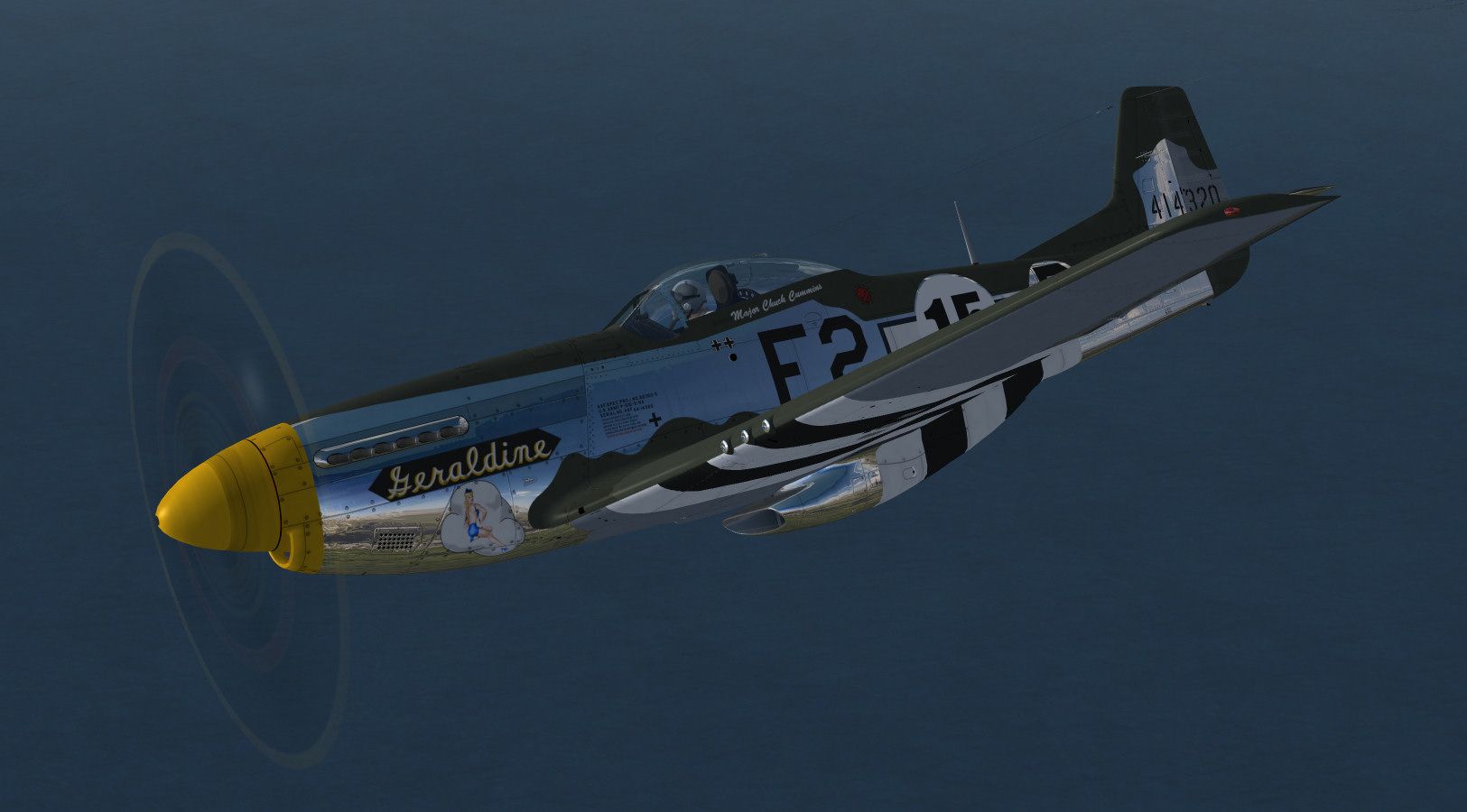
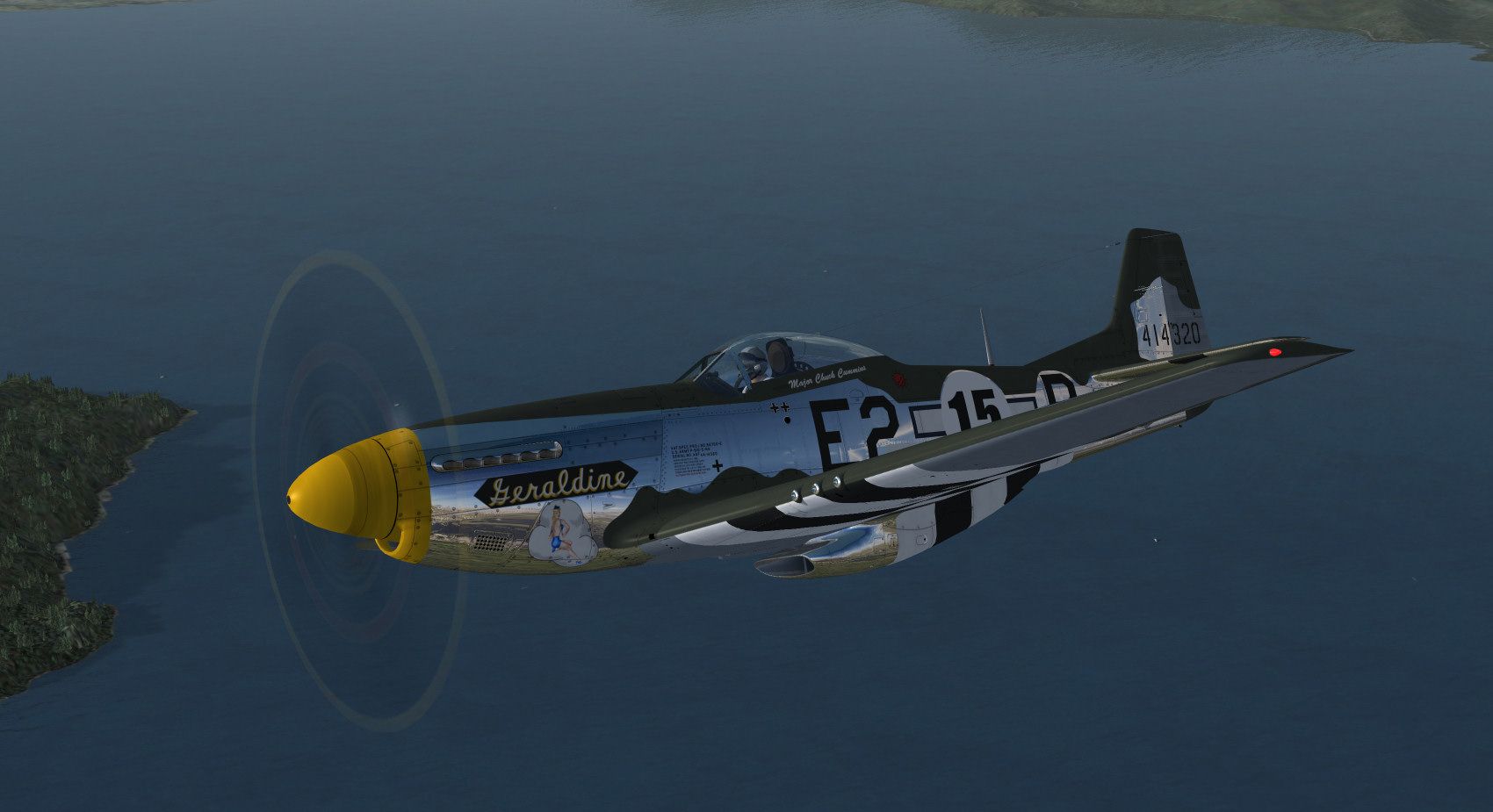
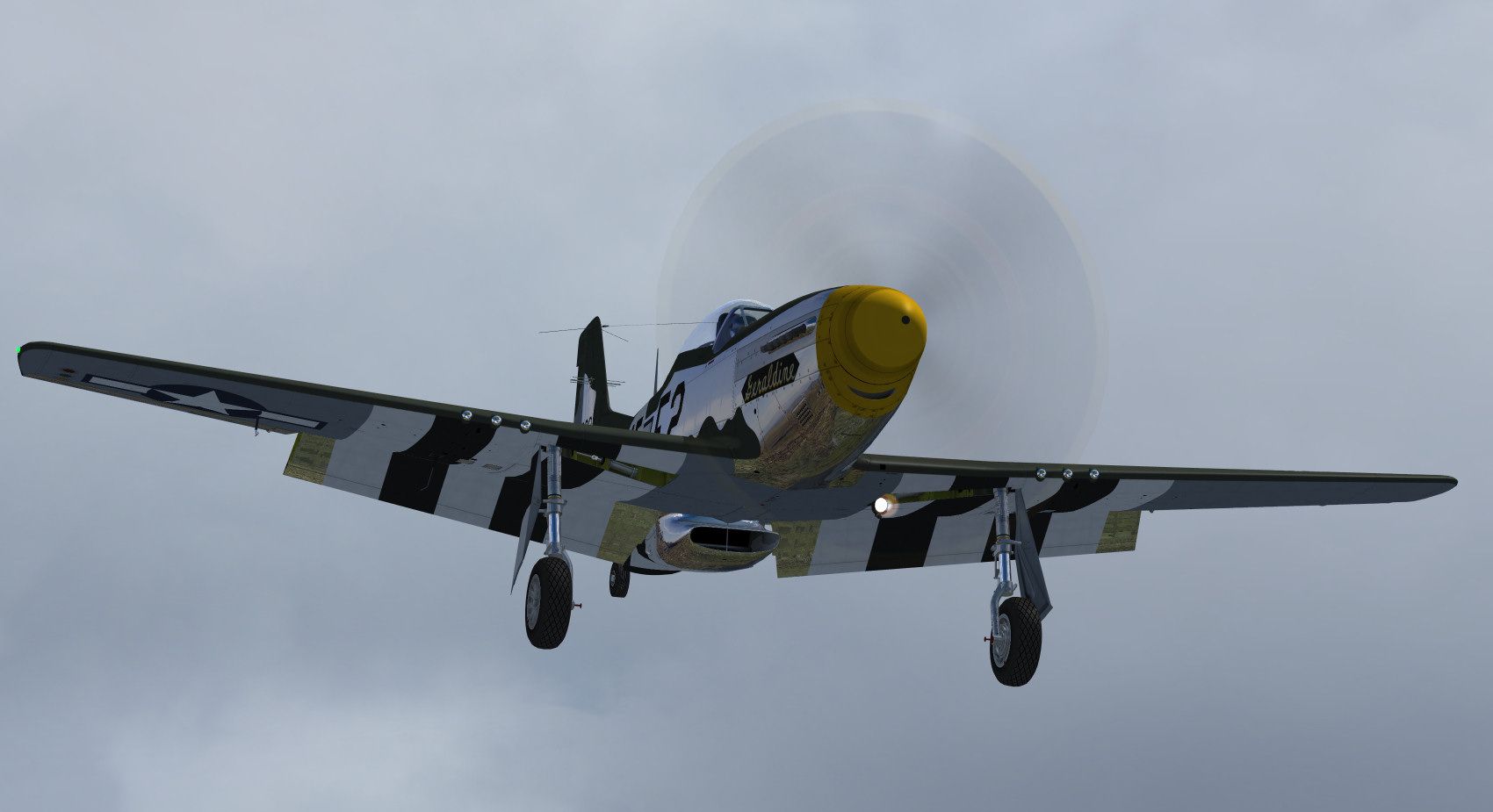
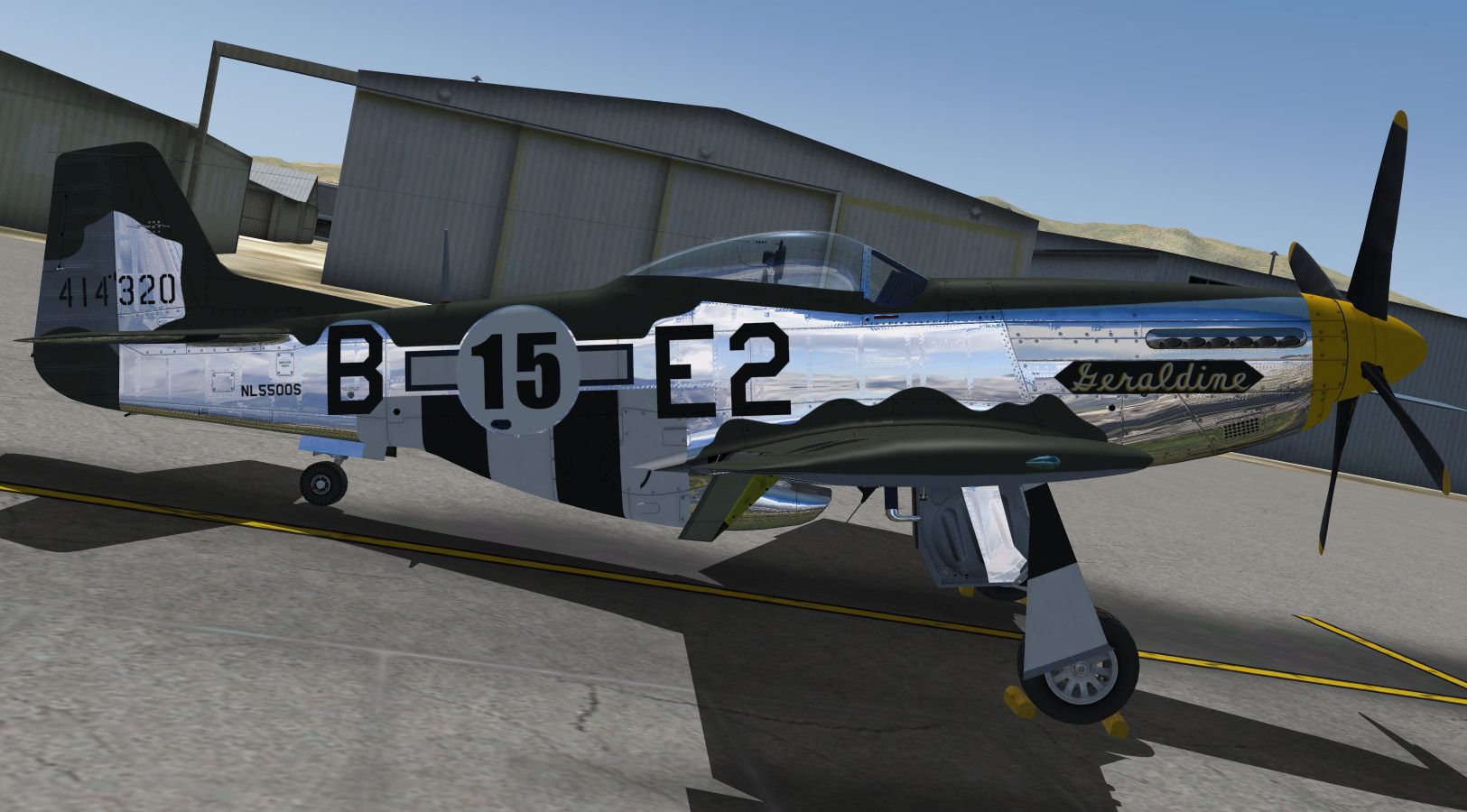
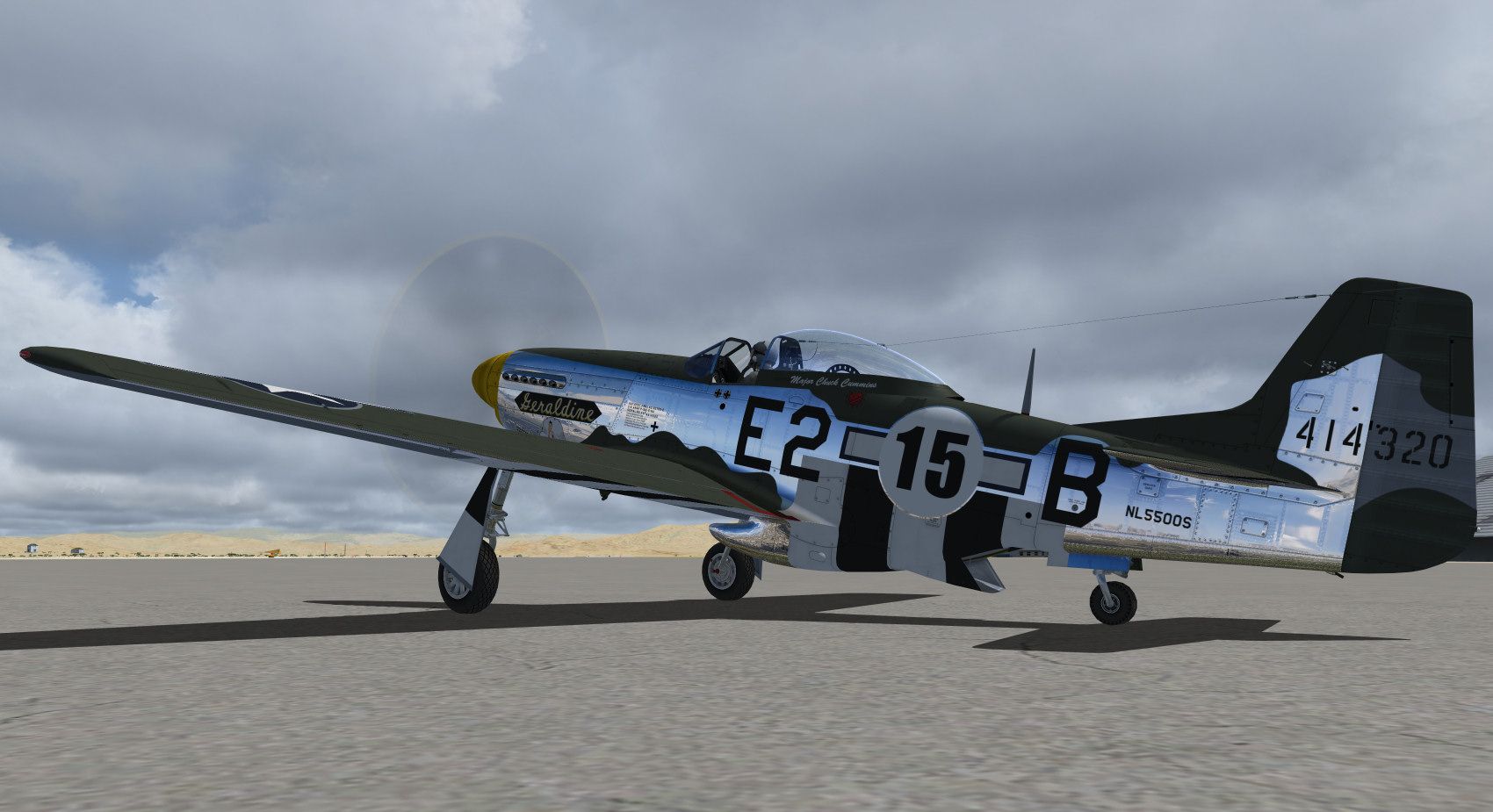
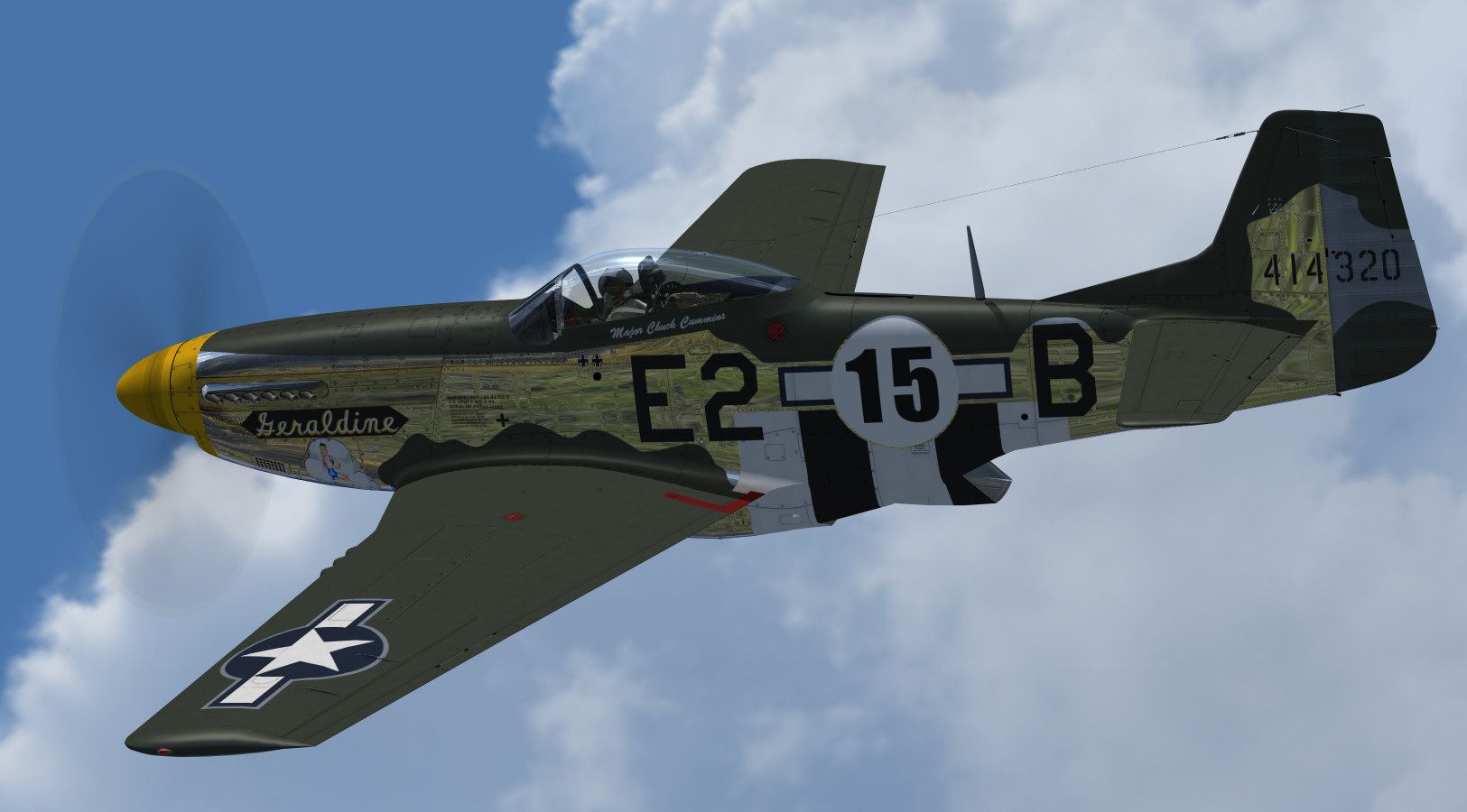
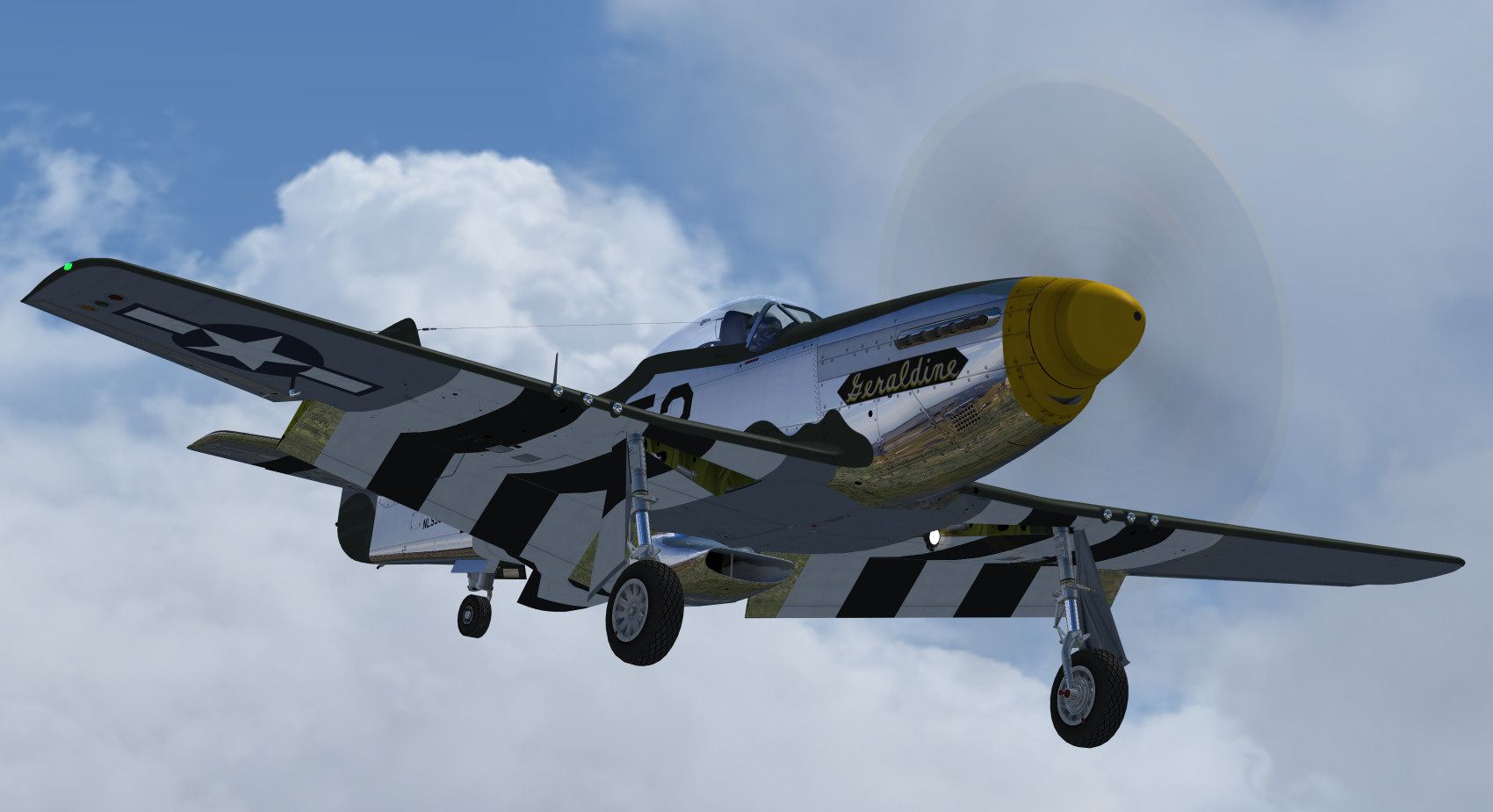
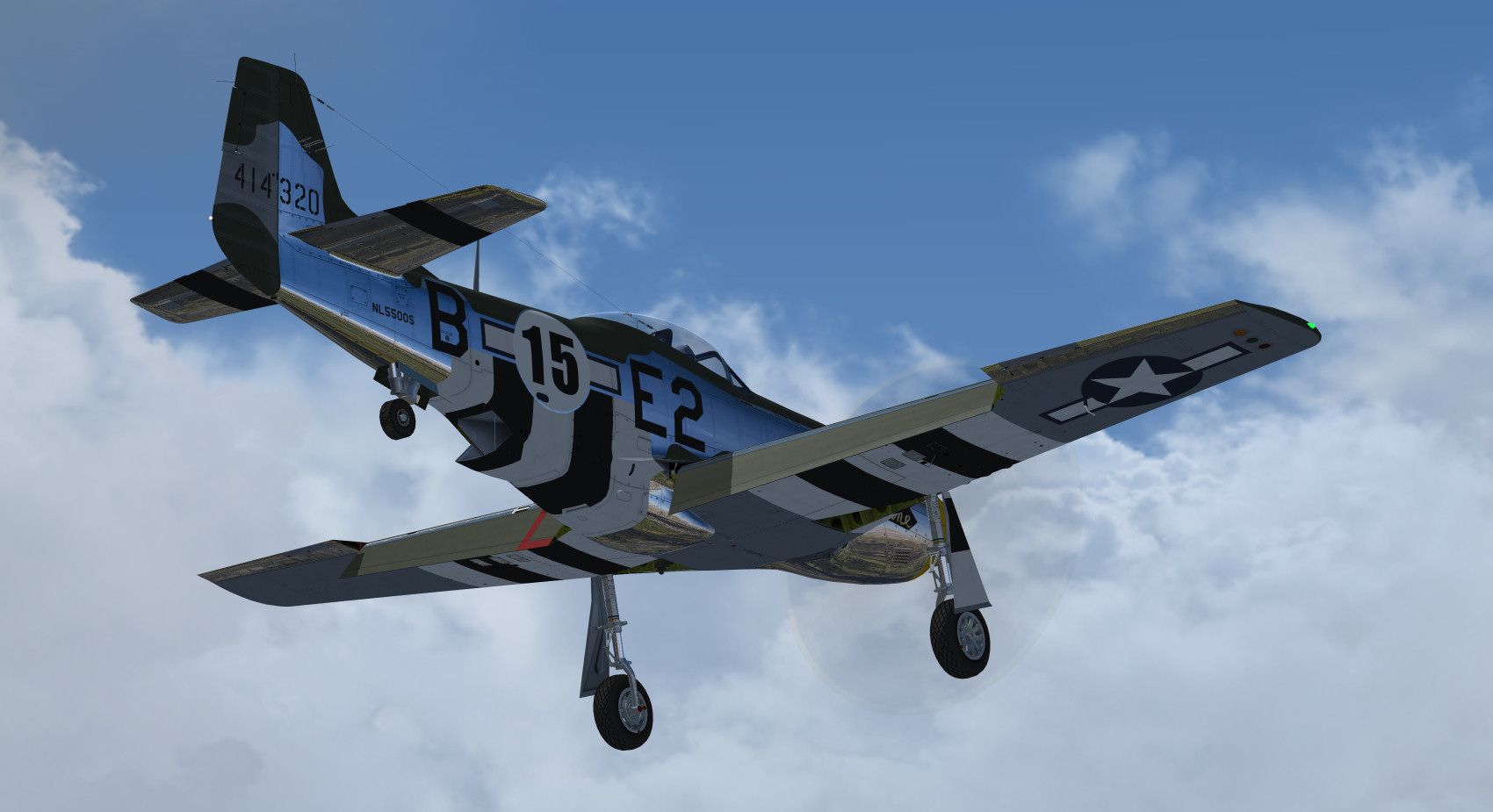
Some shots from an upcoming Warbirdsim release that has been in development for months, "Mustang Tales: Post-WWII and Navy Service". Through some included flights and two different models of "Geraldine", you can retrace the aircraft's journey to Reno in 2010. From Kenosha, Wisconsin, you are set to pick up the aircraft, in complete stock form (it is one of the most stock-military Mustangs flying today), and a flight plan is charted that takes you to Ione, California (with a few stops along the way), and a visit to Sanders Aeronautics. There, the aircraft has most of its military equipment stripped from it - the guns, ammunition, bomb racks, and gun sight, along with the gun ports and shell ejector chutes covered over (all of the same modifications that actually took place). From there, with the aircraft ready to go racing, you are directed on a 20-minute flight to Reno, arriving just in time for the week of the racing event.

Here are some screens showing the aircraft in race configuration. (They left items like the armor plate, WWII radios, APS-13 antenna, and beacon receiving wire antenna in-place.) In this configuration, the aircraft is both several hundred pounds lighter and a bit faster than the stock Geraldine (as duplicated). Piloted by Mark Watt, the aircraft qualified at the impressive speed of 351 mph, and placed a respective 3rd in the Unlimited Silver race, behind "Lady Jo" and "Sparky".

All of the screenshots are absolutely untouched except for cropping.

Rounding the pylons:
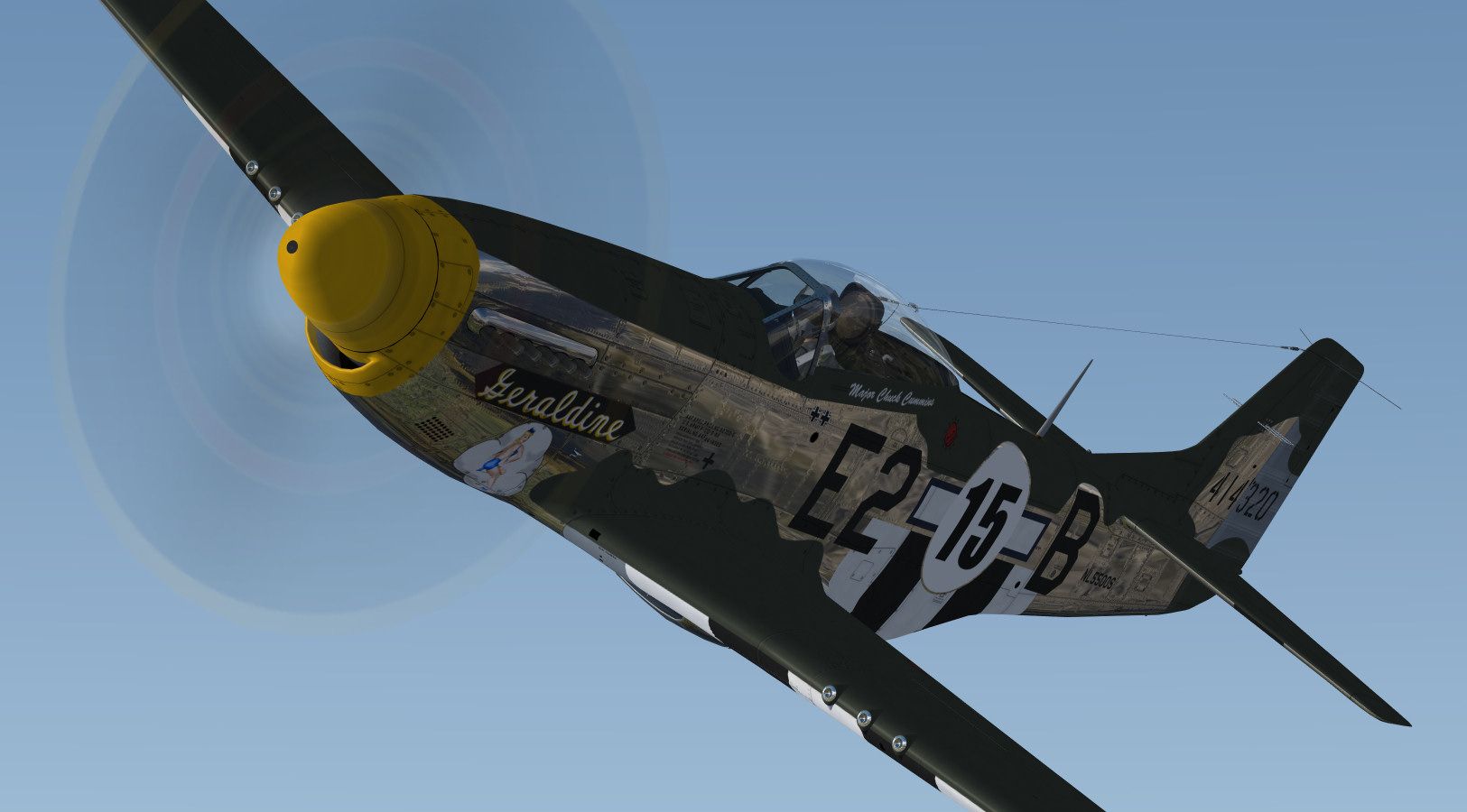
geraldine_reno_3_zps5a80cc14.jpg


Over nearby Lake Tahoe:

geraldine_reno_4_zps36370a7b.jpg


geraldine_reno_5_zps445b89fe.jpg


Arrival:

geraldine_reno_14_zps2c33f0ad.jpg


geraldine_reno_9_zpsf3f649e6.jpg


Heading back out:

geraldine_reno_11_zps4ecf7dad.jpg


geraldine_reno_13_zpsf2413dd9.jpg


And some more landing shots:

geraldine_reno_15_zpse3c5acaf.jpg


geraldine_reno_16_zps8f218374.jpg
 
Hey john?? Dumb question if you dont mind..
Would you ever consider making "Strega"??

PS.. that looks awesome as usual :)..
 
Hey john?? Dumb question if you dont mind..
Would you ever consider making "Strega"??

PS.. that looks awesome as usual :)..

Thank you Pam, and it would be sweet to have Strega in FSX (in my mind, it has the best looking airframe design of any of the highly modified Mustangs). Although I don't know if I'll ever be able to work in such a project, it certainly would be fun!
 
personally i think this is cool for the fact that that im in the area....i our plumbing business we worked at Ione,Angelscamp,Murphys,Jackson,placerville,sutterhill,.....all south of auburn..and then we wandered up to truckee,grey eagle,blairsden,grass valley/nevada city,sierra city,downiville,pike city.

so the Ione/eagles nest thing and then on to reno part would be fun for me especially....lol....i know...imma dork...sue me
 
John posting a thread titled 'Going to Reno' certainly got my attention!

'Geraldine' is certainly looking good there John!

A Cleveland Era Pony with with the basic strip/lighten job, would sure be fabulous! I'm curious how many guys would have even changed cockpit colors and such, in 46-49'. I would imagine several of the pits were pretty stock looking?

There was some good racing in 2010, between Mr. Paul's P-40, the stocker Mustangs, and Mr. Matthews Corsair.

Reno_2010-6.jpg

dsc_7999.jpg


Joseph
 
Thank you Joseph for the photos! I will have to add some exhaust colorization and lead residue to the "Reno" version. ; )

You're right about the Cleveland Mustangs. They were already de-milled, and save for tweaking the engines, were largely untouched. The armor plate was always removed, and the seat re-mounted without the armor plate in. Some aircraft surely retained their fuselage fuel tank, while others ditched it. At that time, if the owner didn't want to keep the aircraft's cockpit in its factory interior green paint, the only alternative was just to paint it fully black.

Mirage, from all that I could find out about the modifications that were done to Geraldine ahead of the races, they didn't run anything but the standard -7 engine (which it has all of the time), rather than something like fitting a souped-up -9 just for racing. As of right now I have kept the engine limited to 61" MP, and through Acceleration, detonation is onset at 61" after about five minutes. At Reno, the fuel that would be used with this type of aircraft/engine is 145 octane, and the engine's 61" MP limit is with 130 octane fuel being used, so I will raise it higher. With all of the Mustangs that are part of "Mustang Tales", soon to be released, I have added a new supercharger control (more functionality - allowing control over automatic/low blower/and high blower-test), updated the coolant and oil radiator door controls (including the emergency release system), and modified the mixture control and operation.

Edit: Looking at the data I have, when 150 octane fuel is used, the -7 Merlin is capable of sustaining up to 81" MP, and likely around 75" MP with 145 octane fuel. The engine will be tweaked for the Reno model, to have that additional power on the top-end. The Mustangs that have engines in them built for racing, are usually highly modified -9's. The -9 engine, running 150 octane fuel, is capable of sustaining up to 90" MP, stock, and they have been modified to take as much as 120"+ MP in some of the highest-performance Mustangs. When the -9 engines are flown at Reno, they use a different fuel, of 160 octane, which supports those crazy Manifold Pressure settings of 120"+.
 
The basics of the racing Merlin;

Most guys who run stocker mustangs at Reno, will simply coast around the pylons. Stock MP settings are used, IF that. I would suspect that even with the higher octane fuels, a lot of these guys are only going to run 50-55" during your average race situation. With Merlin overhaul costs nearing $100,000, it's simply not worth it for these guys to run their stock mustangs hard.

For the Race-guys, the simple way to get gobs more power from the 1650, is higher boost. Of course, the addition of ADI (Water/Methenol Injection) allows for this also, and radiator spray-bars help keep the temps down, however more boost meant higher RPM. Which by the old standard, the engine would be ran in upwards of 3800rpm, even one report on a race-developed Merlin states they could run up to 4,000, but this presents serious problems. Even with the best gear ratio's available, in that range, the propeller is no longer efficiently producing it's best thrust. On top of that, the stock (weak) Merlin connecting rods we're simply not making the grade, when running this kind of horsepower.

The solution? Beefy never-run Allison connecting rods. Not only are these rods stronger, but because of their greater mass, the engine runs at less RPM. Now it's more common for a race-Merlin to run in the 3400rpm bracket. These engines come at a pretty penny, in upwards of 200-300% more cost than a stock Merlin.

With all of that said; Even with an engine that technically 'could' run at 135-150" of MP, it's much more common to see 80-105" from the RACE guys. In fact, with a mount like 'Strega', I would suspect they could reasonably turn laps in the 470-480mph range, with less than 75". Which, right now... why would they run any harder? I believe they only ran over 100" for a few select laps, during all of race-week in 2012.

An idea of what a relatively 'stock' looking P-51 can accomplish, with a fine tuned Merlin, would be the Example of Dan Martin and "Ridge Runner III". Particularly in 2009.
The aircraft qualified 3rd at over 454mph, completed a whole heat race at an blistering average of 477mph plus change, and finished 4th in the Gold Championship.
Look at the airplane's profile... Clipped wings, wing tips, cut-down dog house, and some additional wing fillets..otherwise, very WARBIRD.
16-2009-reno-air-races-dan-martin-taxies-ridge-runner-p-51d-out-for-an-early-morning-test-fight.jpg

09u20_DSC8189.jpg

09u20_DSC8194.jpg


It's worthy to note that the radiator/ method for oil cooling was somewhat anti-convetional, and functioned more like a P-51H, but that's another story. The bolt-on modifications could be replaced in the off-season, for a more accurate war-time representation during the rest of the year. As would be typical, and prized among racers, a 'Transport' Merlin assembly was used (DC-4...), with -9 crank, oil pan, wheelcase and blower, with original 'G-6' Allison connecting rods. Another typical mod, would be the removal of the 'aftercooler' setup, in favor of running the blower outlet directly through to the intake manifold, for more boost. Of course, the use of some serious flows of ADI accompany to keep such a beast from detonation, and cyl. temps cool. If a Merlin is going to exceed 70+ inches, ADI is a must. In the case of "Ridge Runner", a 77 gallon tank was installed behind the seat, in a similar fashion to where the original center fuselage fuel tank would be.

The example of this mustang would be considered a 'Super-Stocker'. Similar setups have been used on other aircraft over the years, one of which is the well-known 'Miss America'.

Joseph
 
This will be a beautiful product John and adds greatly to the WBS collection. And this conversation is fascinating!! Where, for instance do you get a 'stock' Merlin?? How do you rebuild a 70 y.o. engine to crank out, what, 25% more power than it was ever designed to give?? And a Mustang doing nearly 480 on the deck?? Throwing these old girls around the desert must be one of the most thrilling but expensive hobbies in the world.

I remember the first time I saw a Mustang; it was at Plymouth in 1967. Charlie Masefield's N6356T, an ex-RCAF D-30 had recently won the King's Cup air race, and it won the Plymouth air race coming over the threshold trailing the leader a quarter mile and at full throttle. I've never seen a Mustang flat out at 50 feet since; a truly unforgettable experience.

DaveQ
 
Fantastic information, Joseph, thank you for posting that!

The following is not very well known about:

It's really common to read about how the V-1650-7 Merlin (the type that was used in all production P-51D's) was limited to 67" Hg MP (WEP). However, the V-1650-7 could produce much more than this, but 67" Hg MP was the limit when using the 100/130 grade fuel (prevented engine detonation up to 67" Hg), which was the type widely in use at the time. In June 1944, a higher lead content 100/150 grade fuel was introduced by the VIII Fighter Command operating from England, and the limit was initially lifted from 67" MP to 72" MP. However, the Army Material Command at Wright Field had already cleared both the V-1650-3 and -7 for 75" Hg WEP in March '44, using 100/150 grade fuel. On the other hand, the RAF cleared it's Merlin Mustangs for 81" Hg WEP on the same 100/150 grade (all 100/150 grade fuel was British-produced).

(The P-51B/D was good for around 400 mph at sea level at 81" Hg, 25 mph faster than at 67".)

This is the reason why in early Mustang production, the Manifold Pressure gauge was of the 75" Hg range, while from the P-51D-15-NA and onwards, all Mustangs were manufactured with a 100" Hg range Manifold Pressure gauge. The Brits, operating Mustang III's, changed out the 75" Hg MP gauges for a +25 lbs boost gauge, because of their use of the 100/150 grade fuel (+25 lbs boost = 81" Hg). When they received Mustang IVs (all late models), they already came fitted with the 100" Hg span MP gauge, so they didn't change it out on those (it explains why the Mustang IV's Pilots Notes referred to 81" WEP on 150 grade as opposed to +25 lbs boost with the earlier Mustang III's). VII Fighter Command P-51s on Iwo Jima also ran 80" WEP on U.S.-produced 115/145 grade fuel.

More about all that here, courtesy of Brent Erickson, who passed this information onto me via the P-51 Special Interest Group.

http://www.wwiiaircraftperformance.org/mustang/mustangtest.html

http://www.wwiiaircraftperformance.org/150grade/150-grade-fuel.html
 
Thanks John! I am familiar with those statistics. Very interesting reading for sure. One thing I'd like to study more would be the supercharger gear ratios, and the benefits of mixing/matching.

One thing that is particularly interesting to me, is how fast several 'Stangs went cross country, 2000+ miles for the Bendix Trophy races 1946-1949. Four different mustangs made that journey at an average speed of near, or over 450mph. That's cookin'! Reports say Mantz was pulling upwards of 105" from his P-51C in '47, when he averaged over 460mph between Van Nuys, and Cleveland. He made the trip in just under 4 and a half hours!

Another was Debona's D, 2nd place in the '47 Bendix, my WBS rendition below:
wbsformnov2.jpg


Joseph
 
I remember the first time I saw a Mustang; it was at Plymouth in 1967. Charlie Masefield's N6356T, an ex-RCAF D-30 had recently won the King's Cup air race, and it won the Plymouth air race coming over the threshold trailing the leader a quarter mile and at full throttle. I've never seen a Mustang flat out at 50 feet since; a truly unforgettable experience.

That must have been incredible, Dave! It will be nice to have that repaint you have planned of N6356T, complete with the post-WWII long-range tanks. Just the other day I noticed that I had an image of that aircraft saved to my files (as it stood out to me when I found it) taken in 1969, with 357th FG-inspired markings applied for the film 'Patton'.
 
Very nice John!

Thank you very much, Bob! "Geraldine" has been one of my favorites of all restored Mustangs, and it was likely what originally got me interested in the specific historical details of the P-51, when back in 2001 the aircraft first flew and the details emerged about all that was incorporated into the restoration (working gun sight, payload and rocket controls systems (even though the rocket stubs aren't fitted), period radios, and the guns are actually wired up to the trigger). At that time, the original plan was to finish the aircraft as "Detroit Miss", in polished metal glory besides. It got as far as the nose markings being added, when the owner Chuck Greenhill found out about a Kenosha, WI local, by the name of Chuck Cummins, who flew with the 361st FG during WWII. Chuck Greenhill was already a big fan of 361st FG Mustangs (having owned at the time a P-51 painted as Lou IV (of which as of 2010, he does again, but a different one)), and the decision was made to finish the aircraft as Chuck Cummins' P-51D-5-NA "Geraldine", instead. At the time the aircraft was completed, both Chuck and Geraldine Cummins (both of whom have unfortunately since passed away) went with the aircraft to some air show events, to tell their stories of what American life was like on both the battlefront and homefront during WWII.

It was quite the project for the company Square One which conducted the restoration, even though they were no stranger to Mustang restorations (and building TF-51's from the ground up - Square One unfortunately closed shop a few years ago). Although the F-6D "Lil' Margaret", restored in the early-mid 90's, was the first Mustang warbird restoration to have the fuselage tank fitted, "Geraldine" was the first to have the fuselage tank actually functioning, and they had to really dig into the old NAA documents and drawings to figure out how the tank was even mounted (the tanks mounting and rigidity in the airframe was done in large part through adding numerous balsa wood wedges, of which there are blueprints for in the P-51 engineering drawings). There is an interesting story that resulted from this. The pilot flying the aircraft from Chino back to Kenosha following the completion of the restoration, made a fuel stop at Grand Junction, Colorado. The line boy mistakenly filled the fuselage tank full (something that couldn't have happened on any other Mustang flying at that time). In the hot temps and high altitude at Grand Junction, coupled with the fuselage tank completely filled, the pilot, Tim McCarter, recalled, "Takeoff was a bit different and it gave me a good idea what the guys flying the Mustangs with full combat loads must have been thinking." When the fuselage tank is full, it is of course notorious for affecting the aircraft's flight handling, putting the aircraft's CoG limit fully aft. In 1953, within the USAF, there was actually an order issued which said that the 85-gallon fuselage tank was not to ever be filled above 65-gallons, and that "RESTRICT CONTENTS TO 65 GALLONS MAX" was to be stenciled next to the fuselage tank filler cap.
 
One thing that is particularly interesting to me, is how fast several 'Stangs went cross country, 2000+ miles for the Bendix Trophy races 1946-1949. Four different mustangs made that journey at an average speed of near, or over 450mph. That's cookin'! Reports say Mantz was pulling upwards of 105" from his P-51C in '47, when he averaged over 460mph between Van Nuys, and Cleveland. He made the trip in just under 4 and a half hours!
Joseph, again, thank you very, very much for your tremendous insights into racing Mustangs, and the details there of! I enjoy it! I'm rather embarrassed to say, that unfortunately, it is one part of the Mustang's story that I've never spent much time studying. I never knew that they were souping up the engines that much, even way back then in the mid-late 40's, to be getting that kind of power and speeds! That is fascinating! You know, I keep thinking I'm going to be wrapping up my involvement with Mustangs, and move entirely onto something else, and more and more still comes out that makes me want to continue exploring further.

Not really related/kinda related, I really enjoyed one of Kermit Weeks' Facebook postings from just a few weeks ago, when he used his P-51C as a business plane. Being based in Florida, he had to quickly get to a business meeting in Georgia, and just hopped into "Ina" and not but an hour later he was where he needed to be, and within not much more than two hours he was back at Fantasy of Flight (this aircraft of course being one of the examples once owned/raced by Mantz, though it is quite a bit more stock and tamed than Mantz had it).
 
Speaking of buying Merlins, it is absolutely crazy how expensive it is (as well as the props). I remember back in the mid-90's, they were talking about to buy a fully overhauled Merlin engine, it would cost as much as $100,000, as I recall. I saw some recent figures, and from those the cost has since doubled, to the point that you can't really purchase a fully ready-to-go Merlin for much less than $200,000. Even if you find one that is complete, but needs to be completely stripped apart and restored, you are still looking at spending $45,000 and up, depending on the condition, and then $100-150,000 to have it either overhauled or completely restored. And various owners and restoration shops all seem to have their preferred engine shop, of those that Joseph has listed. All P-51D's were manufactured with V-1650-7 engines, and the P-51H was developed with the V-1650-9 engine, which can also be fitted to a P-51D without much changes (in fact, that is what the P-51M was - a P-51D-30-NT with a V-1650-9A engine). As a result, you'll find both -7 and -9 Merlins in P-51D's today. Most of these engines have imrpoved parts over what they had originally, such as improved redesigned cylinders and fingers, transport heads, etc., all to try and increase the engine's life span before overhaul. On the Flying Heritage Collection's P-51D "Upupa Epops", where no expense was spared to have it absolutely correct as it was in 1945, the Merlin engine on it is perhaps the most stock to WWII of any being used in a flying Mustang today, with the engine having been restored to only original Packard-built specifications.

Some are perhaps surprised that there are still Merlins being found/rebuilt, but even more surprising is that in recent years, some really rare types long thought to be just about extinct, like German DB605's and Jumo engines, have been coming out of the woodwork it seems, as quite a number of Bf-109 and Fw-190 restoration projects have been taking place to airworthy.
 
Thanks for the compliments John! The History of the Racing mustang is something I have been seriously involved with since my youngest days, mostly inherited from my Father, who I would consider the authority on Post-War mustangs in the US. In fact, I am just now as we speak making arrangements to travel by cheap airline ticket, to north Idaho, to see my Dad, probably for the last time. We're not sure if he'll make it through the next day or two. Hoping to spend a little more time with him before he passes, and maybe even share some Warbird stories. I'll keep the forum notified of these events in the general section, later on. I still have much digging to do through his/our library of warbird/air racing memorabilia and will be finding many interesting things, I am sure.

Joseph
 
Joseph, please know you and your family have been in my thoughts. I know having been in a similar situation with my dad several years ago, how difficult and powerless it is to deal with. Please message or e-mail me sometime, when you get the time, and we can get to work on some of those Cleveland Mustangs and Airacobras, once and for all.
 
Back
Top