
Bell P-63C Kingcobra
Unit: 16th GvIAP VVS Siberia/Mongolia
V.2 corrects landing light on during day and missing canopy texture
Bell designed the P-63 with the intention of improving the high altitude performance failure of the P-39 Airacobra. Although similar looking, the P-63 was a totally new aircraft; being larger with a laminer flow wing, supercharging,etc. Despite its improvements, the P-63 never lived up to the level of the P-51, Corsair, or other late-war front line fighters. The P-63 never saw combat in USAAF squadrons. Some 76% of the 3300 planes went to the Soviet Union, where their service record is largely unknown. The Soviets were have spin recovery issues with the first production version, the P-63A, and demanded a fix. Bell responded with the P-63C, adding a fin under the rear fuselage and shifting some of the aircraft CG which solved the problems.
The Soviet Union had a need for a high-altitude fighter (where the P-39 was deficient), and excellent ground attack capabilities using the 37-mm cannon. The US Army directed the production of the Kingcobra to the Soviet s lend-lease program.
The Russians used the P-63C Kingcobra primarily in the far east after declaring war on Japan in August 1945, Its mission was for close-support and ground strafing. The Kingcobra had a relatively good low-altitude performance and had the ability to absorb a lot of battle damage and still remain flying. It proved to be a potent ground attack aircraft and tank-buster, but it never received the amount of attention in the Soviet Union as did the Ilyushin Il-2 Shturmovik.
Credits
Captain Kurt: Aircraft model, drop tank, VC, paint textures, 2D panel.
ACWai contributed the landing gear designs.
Shessi: Pilot figure
Kelticheart: Prop blurred texture
Gauges: AliCat, ACWai, Microsoft, and others unknown
714/257th 1% Aircraft: aircraft.cfg, air file, and .dp
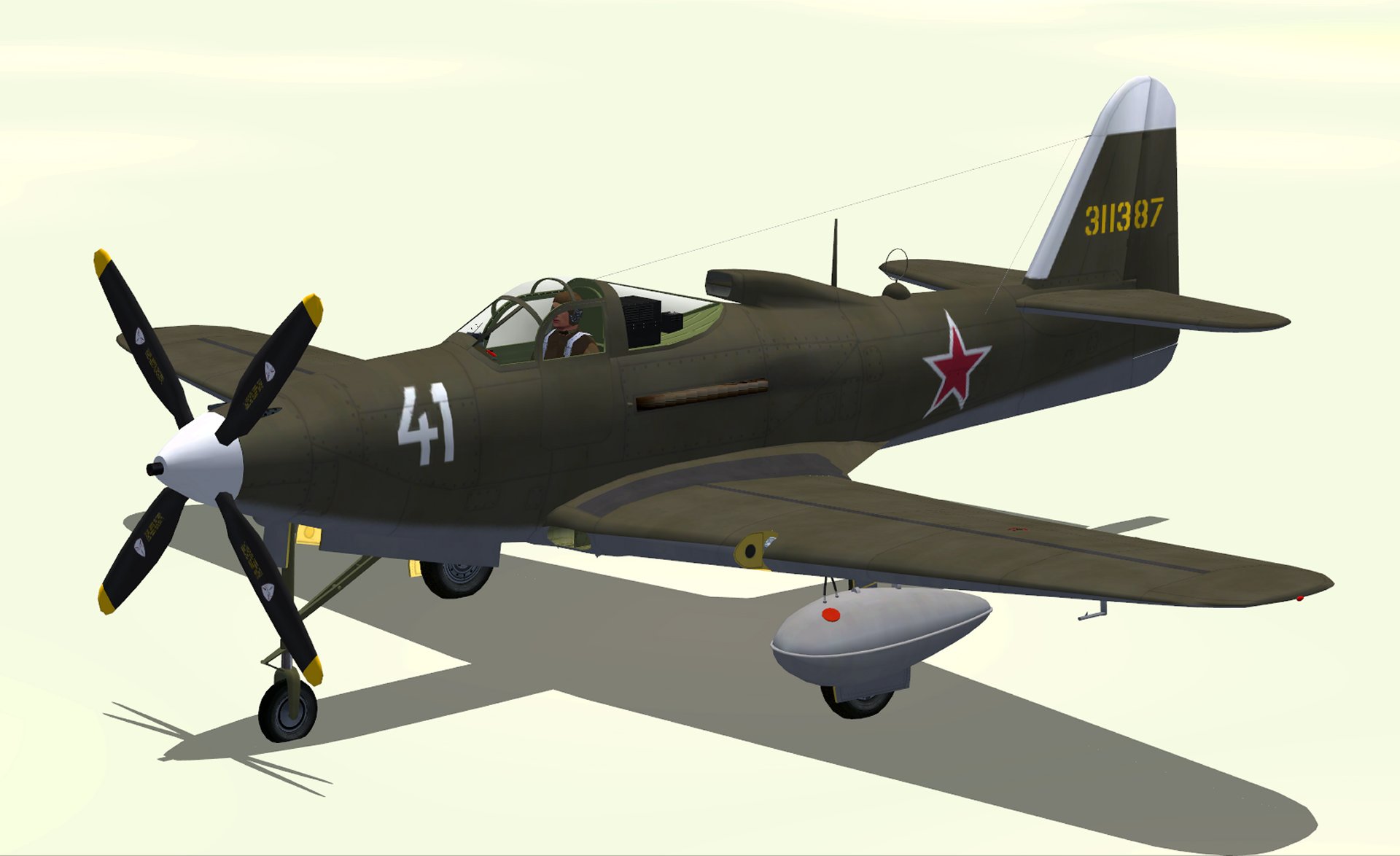
Unit: 16th GvIAP VVS Siberia/Mongolia
V.2 corrects landing light on during day and missing canopy texture
Bell designed the P-63 with the intention of improving the high altitude performance failure of the P-39 Airacobra. Although similar looking, the P-63 was a totally new aircraft; being larger with a laminer flow wing, supercharging,etc. Despite its improvements, the P-63 never lived up to the level of the P-51, Corsair, or other late-war front line fighters. The P-63 never saw combat in USAAF squadrons. Some 76% of the 3300 planes went to the Soviet Union, where their service record is largely unknown. The Soviets were have spin recovery issues with the first production version, the P-63A, and demanded a fix. Bell responded with the P-63C, adding a fin under the rear fuselage and shifting some of the aircraft CG which solved the problems.
The Soviet Union had a need for a high-altitude fighter (where the P-39 was deficient), and excellent ground attack capabilities using the 37-mm cannon. The US Army directed the production of the Kingcobra to the Soviet s lend-lease program.
The Russians used the P-63C Kingcobra primarily in the far east after declaring war on Japan in August 1945, Its mission was for close-support and ground strafing. The Kingcobra had a relatively good low-altitude performance and had the ability to absorb a lot of battle damage and still remain flying. It proved to be a potent ground attack aircraft and tank-buster, but it never received the amount of attention in the Soviet Union as did the Ilyushin Il-2 Shturmovik.
Credits
Captain Kurt: Aircraft model, drop tank, VC, paint textures, 2D panel.
ACWai contributed the landing gear designs.
Shessi: Pilot figure
Kelticheart: Prop blurred texture
Gauges: AliCat, ACWai, Microsoft, and others unknown
714/257th 1% Aircraft: aircraft.cfg, air file, and .dp


