-
Please see the most recent updates in the "Where did the .com name go?" thread. Posts number 16 and 17.
-
IMPORTANT DOWNLOADING INFORMATION - ALL MEMBERS PLEASE READ
Please see this thread for updates. Update Thread
SOH ADMINISTRATION
You are using an out of date browser. It may not display this or other websites correctly.
You should upgrade or use an alternative browser.
You should upgrade or use an alternative browser.
Restauravia AST-200 Ximango
- Thread starter D5turbi
- Start date
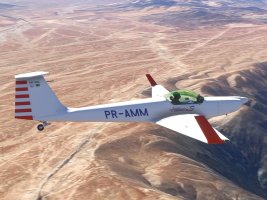
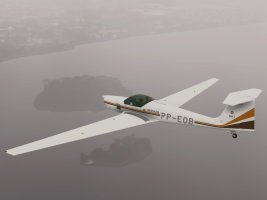
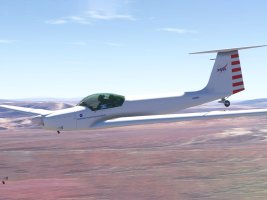
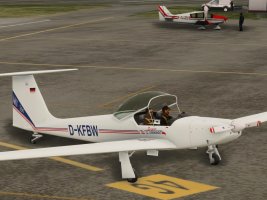
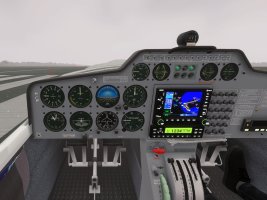
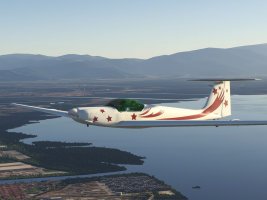
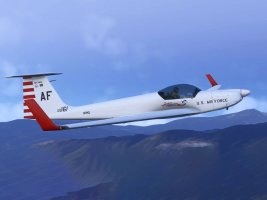
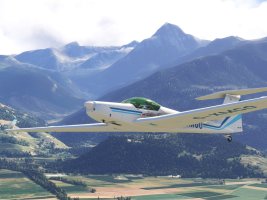

Sorry, I am not a glider pilot. The flight model was adapted from an FSX model and improved as much as possible by a real motor-glider pilot.How does it perform as a glider, engine off? I flew the Falke SF25 real world for years. With 1-2 m/s rise it could gain altitude without the engine.
Personally, I am unable to help you with this matter.
However, I will pass your question on to the person who helped us with this model.
Here is the response from the person who improved the flight model.How does it perform as a glider, engine off? I flew the Falke SF25 real world for years. With 1-2 m/s rise it could gain altitude without the engine.
This person also flies the SF 25.
(In the simulator, windmilling starts much earlier than the 100–110 knots seen in real life. Adjusting the parameters to reflect that made it impossible to start the engine in MSFS 2024.)
It performs slightly better than a falke at high speeds (120 150 kph) without climbing a lot better. The difference between an sf25 and an amt200 is the exact same than the one you would find on a comparison between a wooden glider (let's say an ASK 13) and an early composite one (let's say a grob astir G102 ) : it has globally a similar glide ratio, climb a bit less in small thermals but is able to glide efficiently at relatively high speeds.
In terms of performance :
Best glide : 58 knots
Best climb : 52 knots
Stall : around 40 knots
In terms of flight, I personnaly recommand to fly around 60 knots with engine out (do not forget to feather the prop), in the sim it tends to behave quite badly below 50 knots when thermalling. For best glide, fly at 58-60 but do not esitate to push it all the way up to 80 knots, the polar is flat so it will still fly well enough.
Be carefull when flying engine off : as in the SF25, the battery empties herself fast. In case you experience a battery failure when flying engine off, turn mags and fuel on, unfeather the prop and dive frankly up to 100-110 knots : the engine will windmill and then start.
In conclusion, compared to the falke it is sleekier and faster but is less adapted to low speed. Also, the landing can be easily performed without airbrakes (unlike in the falke)

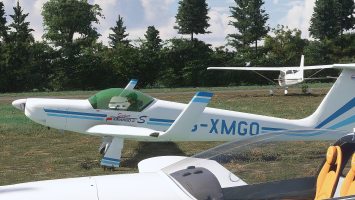
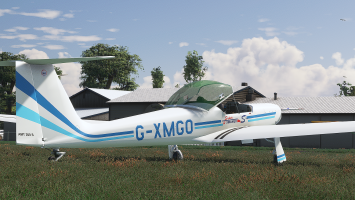
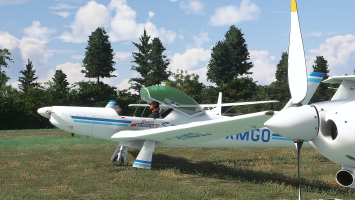

guzzi
Charter Member
The AMT-200 and AMT-200S are generallly regarded as one of the best, if not the best, glassfibre motorgliders built in the 80s -early 2000's........In R/L it won't fly as tightly as a SF25 so loses out in very weak thermals -but is better than any other glassfibre motorglider. In the glide it is a genuine 30:1 with the wingleted AMT-200S model, whereas a Falke is in the region of 22-24:1 and it will leave the Falke for dead as speed increases. https://www.motorgliders.org/wiki.html/archives-model-specific/ximango/ is a useful resource.........How does it perform as a glider, engine off? I flew the Falke SF25 real world for years. With 1-2 m/s rise it could gain altitude without the engine.

guzzi
Charter Member
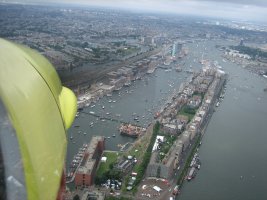
Stamo engined? I flew a Slingsby T61 Venture - Slingsby's version of the Falke - relied on the curvature of the Earth to get airborne two up! The later Rotax powered versions are far better - especially the Turbo Falke with the 115hp 914 engine......even makes a semi-decent towplane. The later AMT-300 Turbo Ximango Shark with the 914 was also used as a towplane- but I think Aeromot only made a handful of them ....... the AMT-600 Guri two seat training aircraft was a development of the Ximango as well. I believe Aeromot made about 25 of them. Of course the Ximango is a development of the Fournier RF10 which itself is a glassfibre version of the wooden RF-9 motorglider............I flew the SF25 on a special VFR trip over Amsterdam during SAIL 2010. Controlled by Amsterdam Tower. They warned other aircraft: traffic very slow!
View attachment 198149
Last edited:
guzzi
Charter Member
Ah it would be a reasonably fast Falke then with 80hp............Limbach 2000 EA engine.


DennyA
SOH-CM-2023
I don't think anyone is going to complain about people talking about flying the real plane we're discussing the simulation of.
If they do, I will file a complaint against the complainant.
I'm not a mod, but I'll make a Citizen's Legal Call here and say "carry on with the real airplane talk, gents."
If they do, I will file a complaint against the complainant.
I'm not a mod, but I'll make a Citizen's Legal Call here and say "carry on with the real airplane talk, gents."

simtech
SOH-CM-2026
I spent several hours with this in MSFS 2024 exploring various places and find this a very delightful experience. The creator has done an excellent job in terms of texturing, flight dynamics and immersion. I soared for almost an hour around CYBD, Bella Coola. Only niggles I have are the c/p avatar randomly vanishes. Have to cycle to outside for it to return and the prop can't be assigned to a button or axis. The propeller control does work from the cockpit. Overall a very excellent rendition and a pleasant experience flying. Many kudos to the creator.
I also noticed the passenger bug—involving an Asobo model—but haven't been able to find a fix for it; its appearance depends solely on the weight specified in the payload settings.
Propeller pitch control is coded to allow only three positions: low pitch, high pitch, and feather. Consequently, linear control via a joystick button does not appear to be possible.
Propeller pitch control is coded to allow only three positions: low pitch, high pitch, and feather. Consequently, linear control via a joystick button does not appear to be possible.