• There seems to be an uptick in Political comments in recent months. Those of us who are long time members of the site know that Political and Religious content has been banned for years. Nothing has changed. Please leave all political and religious comments out of the forums.

    If you recently joined the forums you were not presented with this restriction in the terms of service. This was due to a conversion error when we went from vBulletin to Xenforo. We have updated our terms of service to reflect these corrections.

    Please note any post refering to a politician will be considered political even if it is intended to be humor. Our experience is these topics have a way of dividing the forums and causing deep resentment among members. It is a poison to the community. We appreciate compliance with the rules.

    The Staff of SOH

  • Please see the most recent updates in the "Where did the .com name go?" thread. Posts number 16 and 17.

    Post 16 Update

    Post 17 Warning

"Twilight Tear, Then & Now" (WIP)

Bomber_12th

SOH-CM-2025
I believe the cat is pretty much out of the bag on this one, so I thought I'd post a bit of early images and information about it.

This aircraft actually spurred the idea about doing a "Then and Now" set of Mustangs, and became the first project of those started, but one thing led to another, and "Cripes A' Mighty" ended up being finished before this project could be.

For a little bit of background:

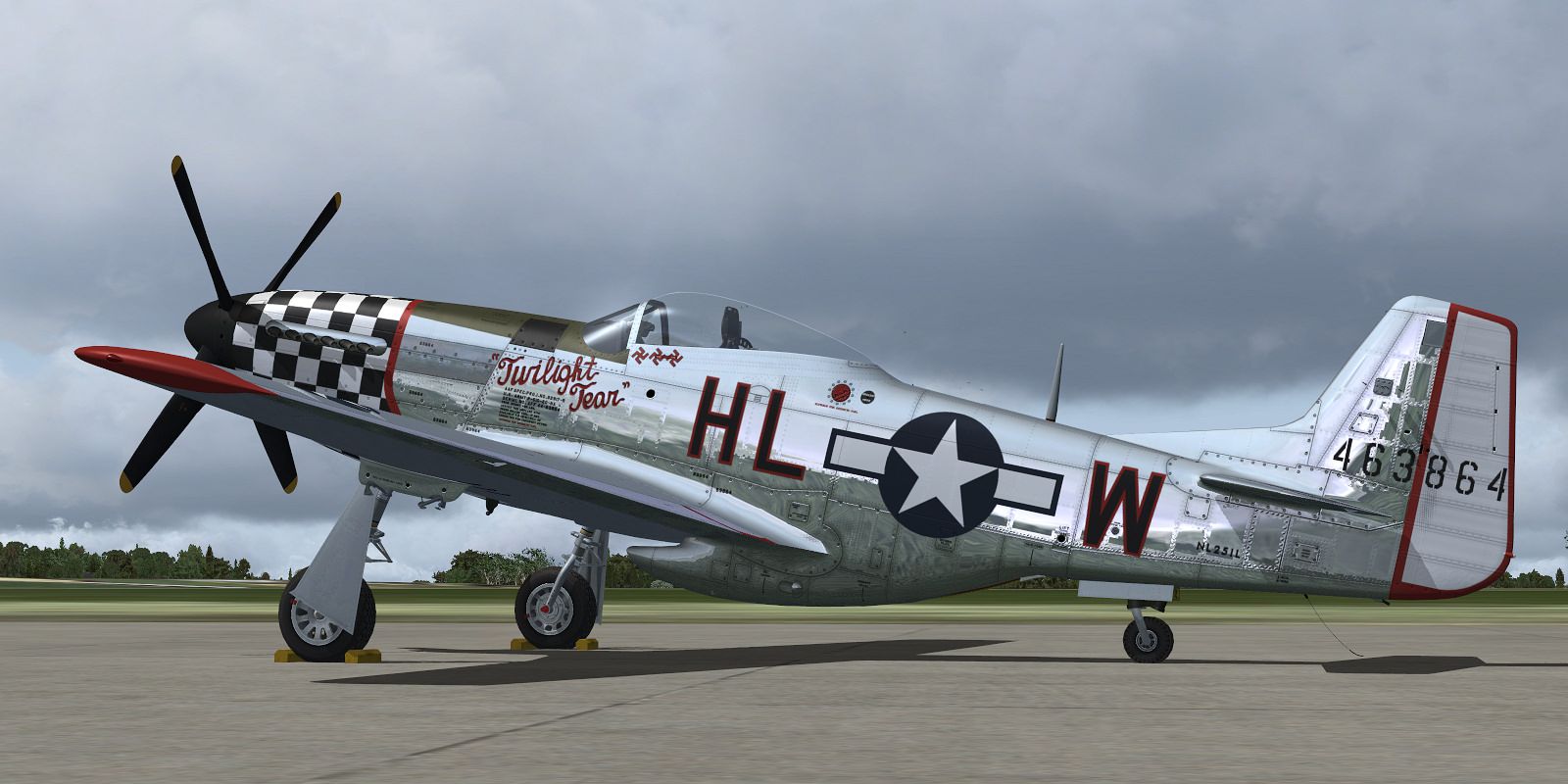
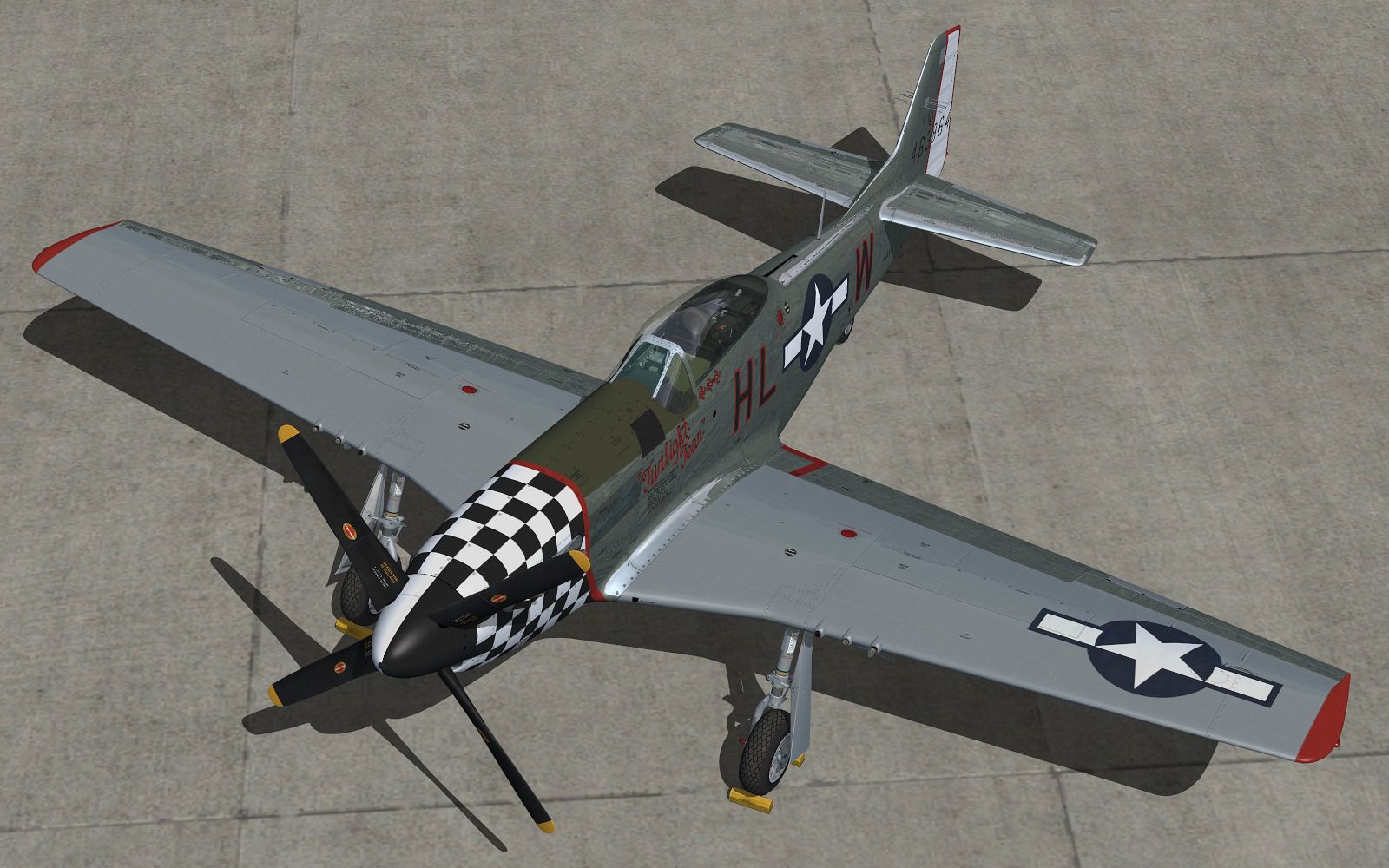
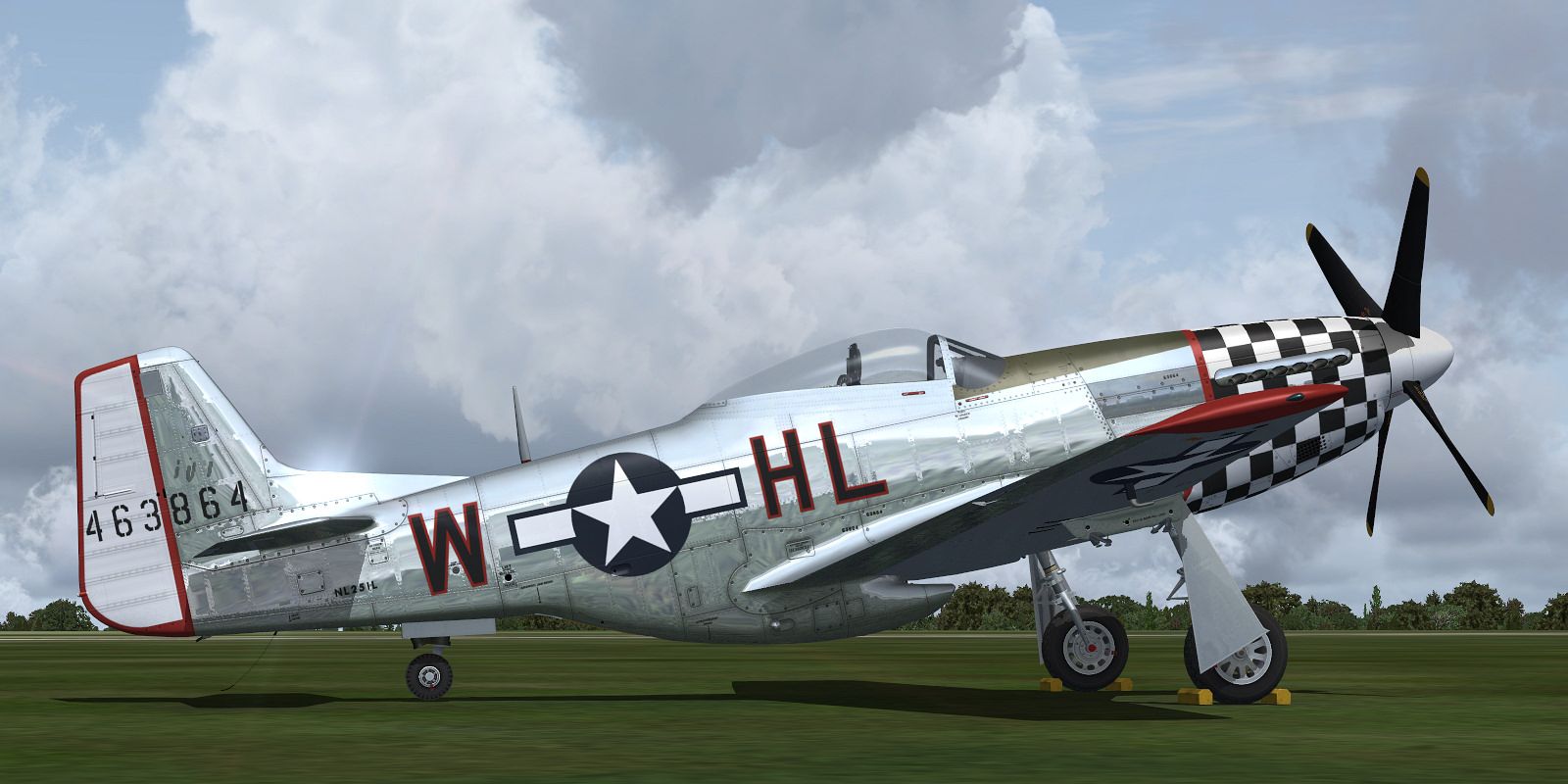
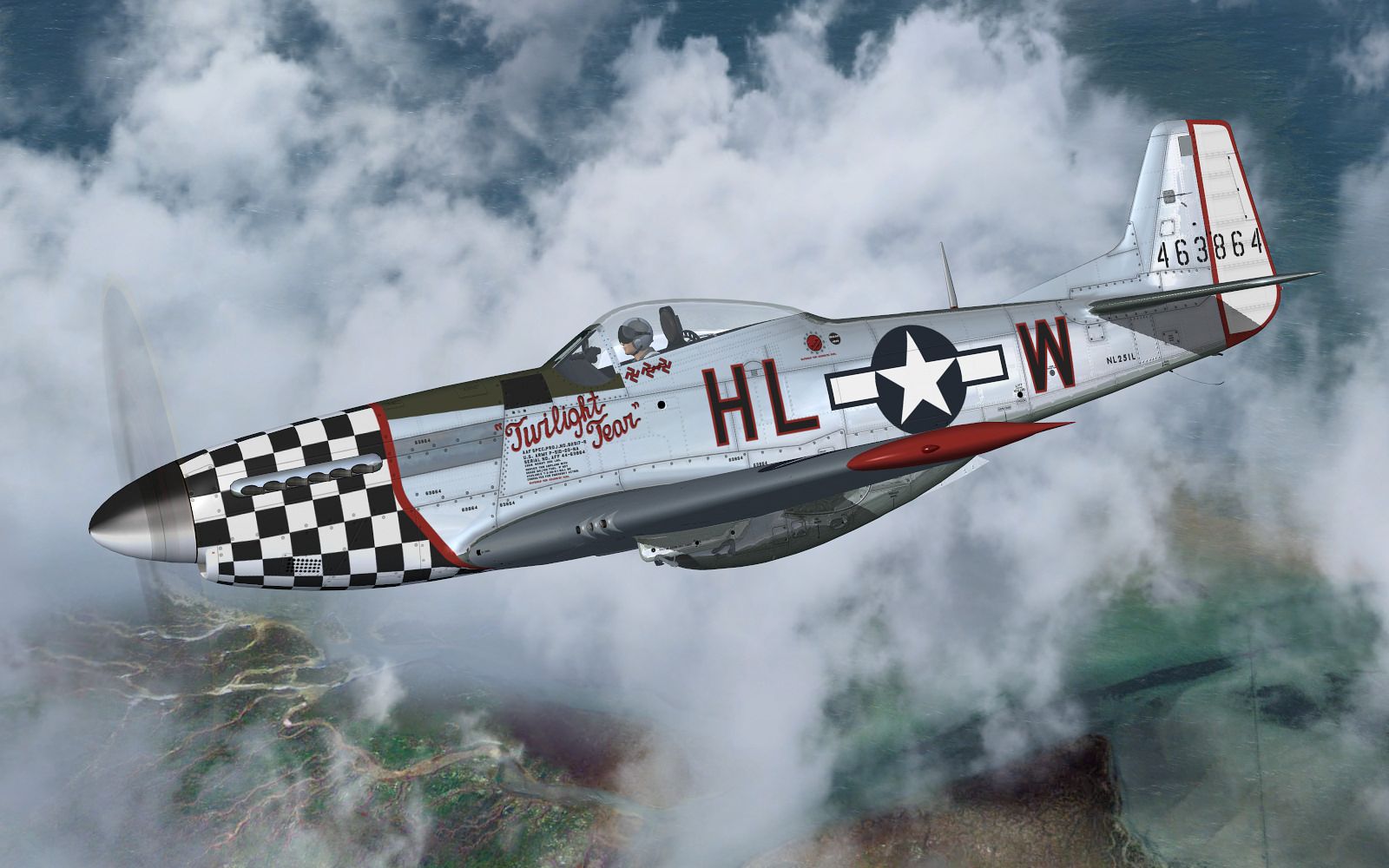
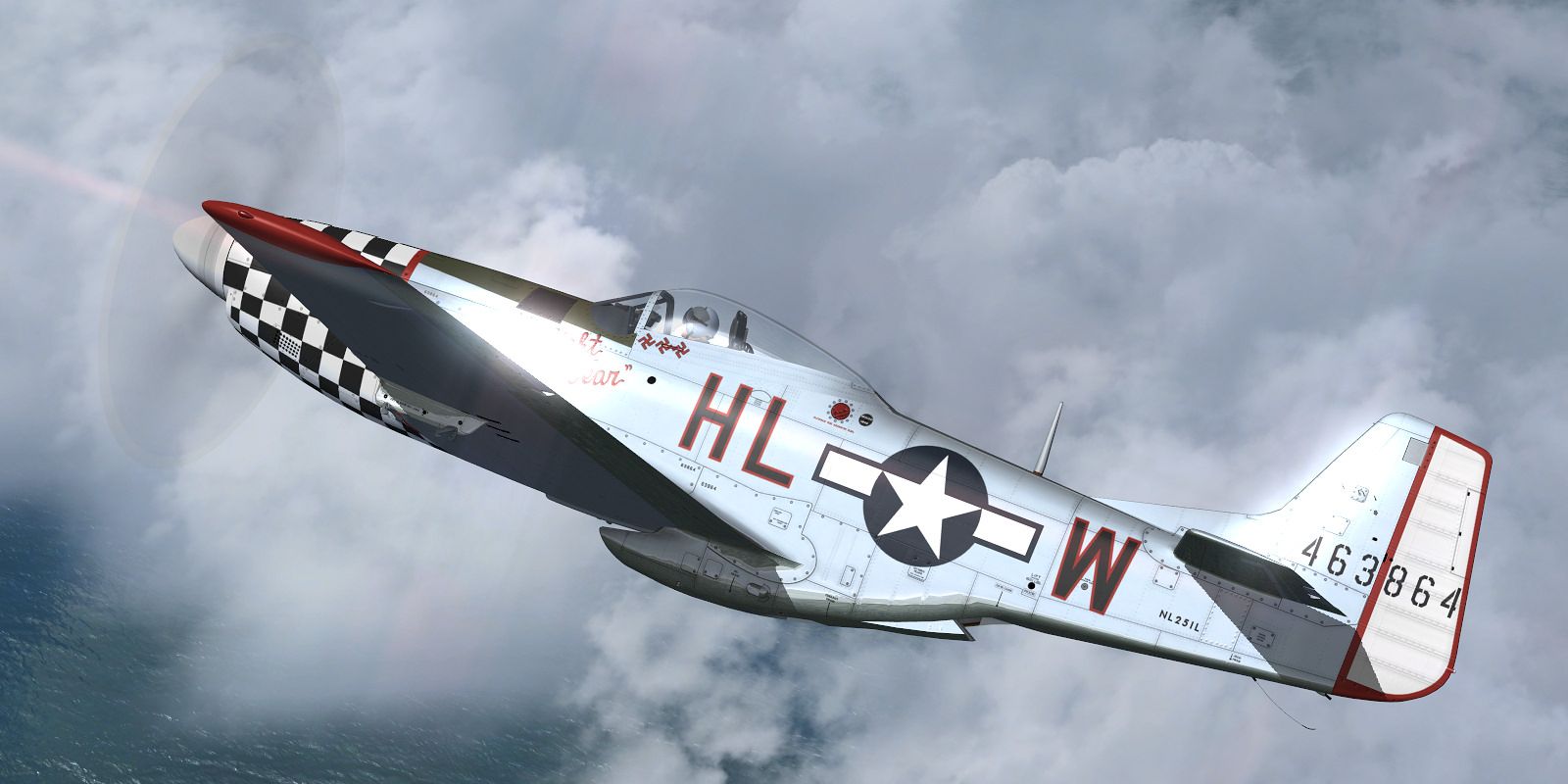
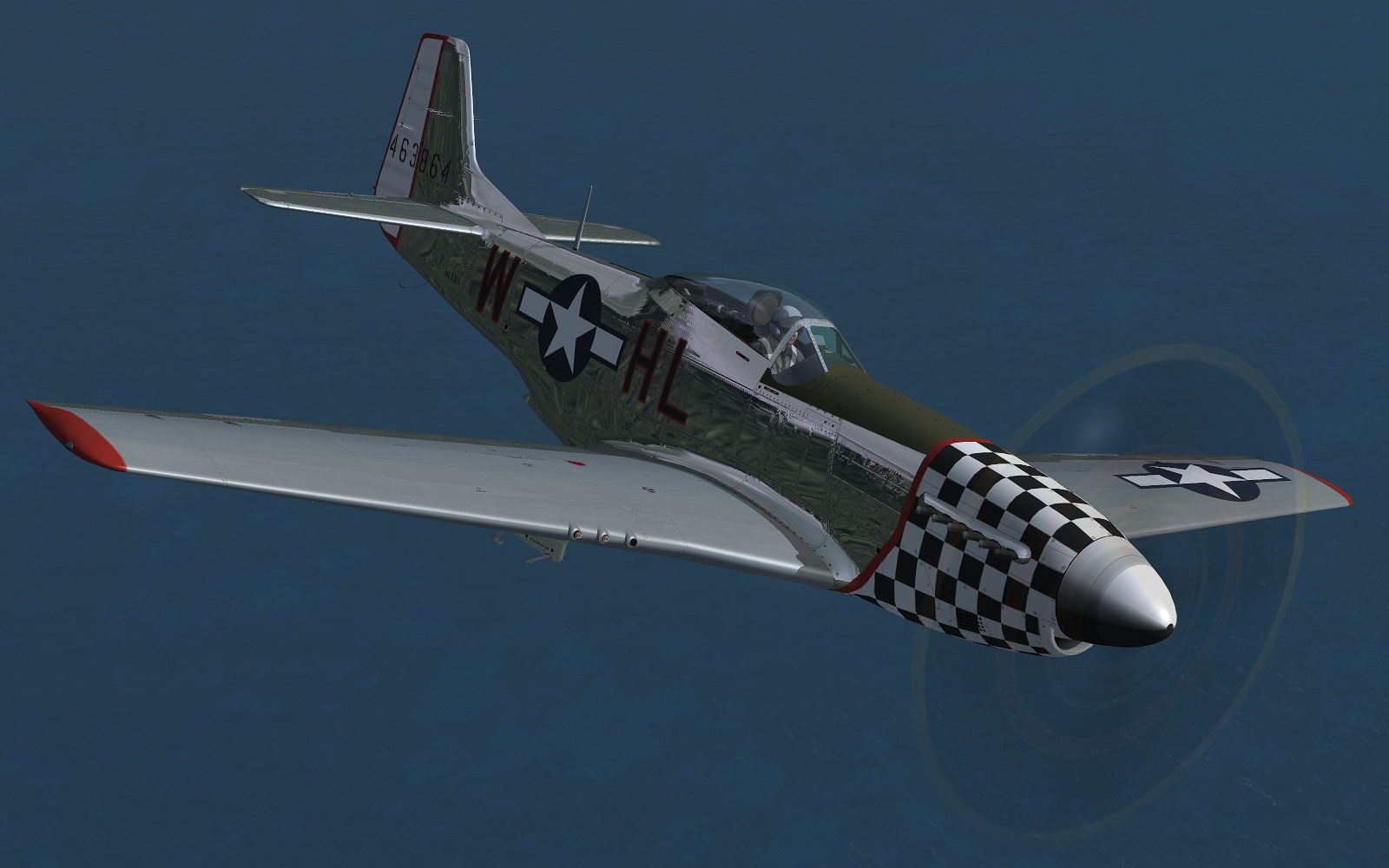
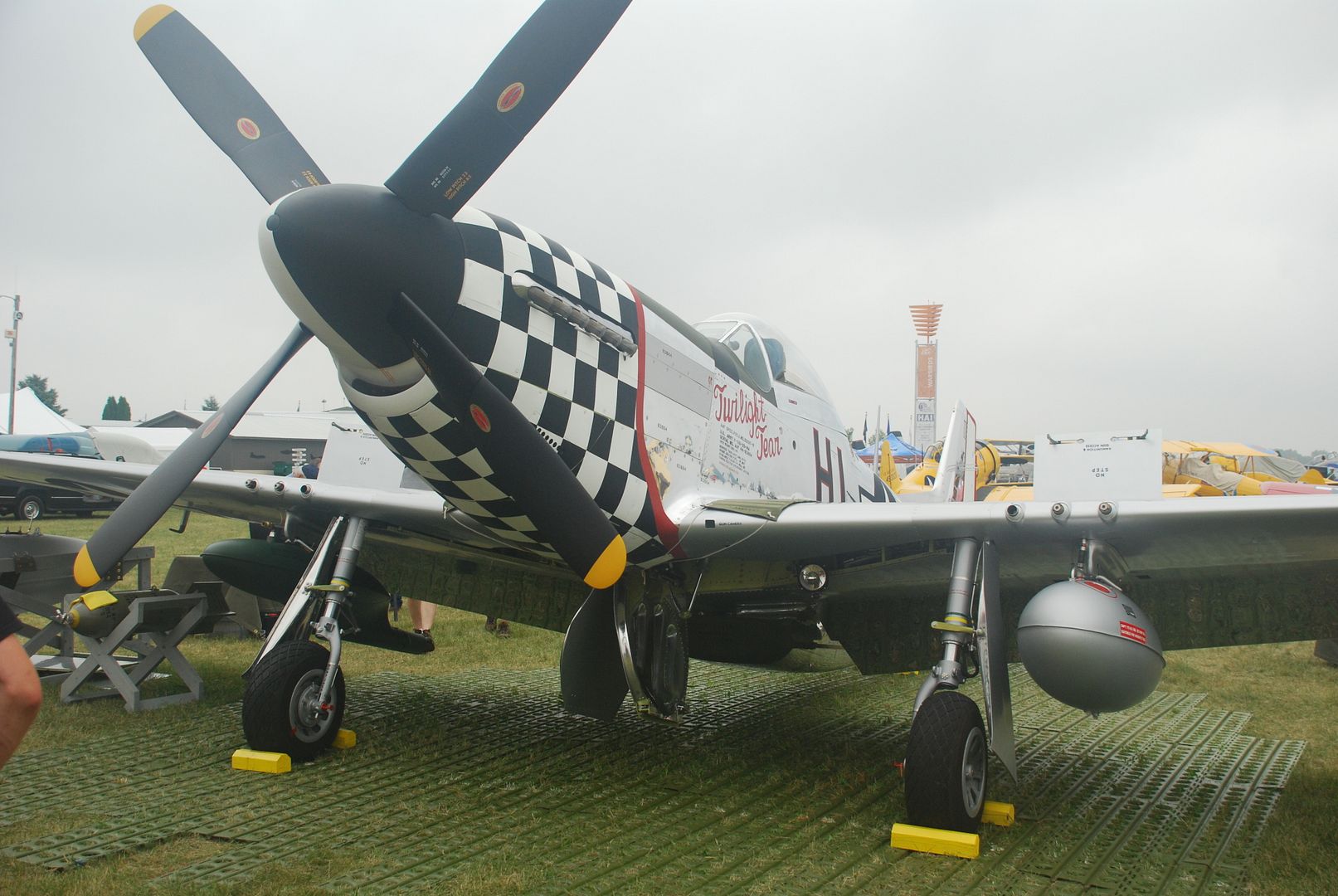
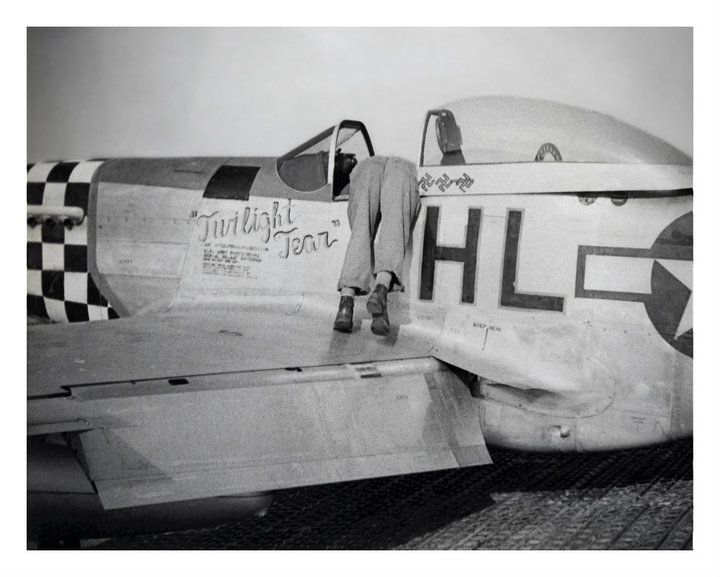
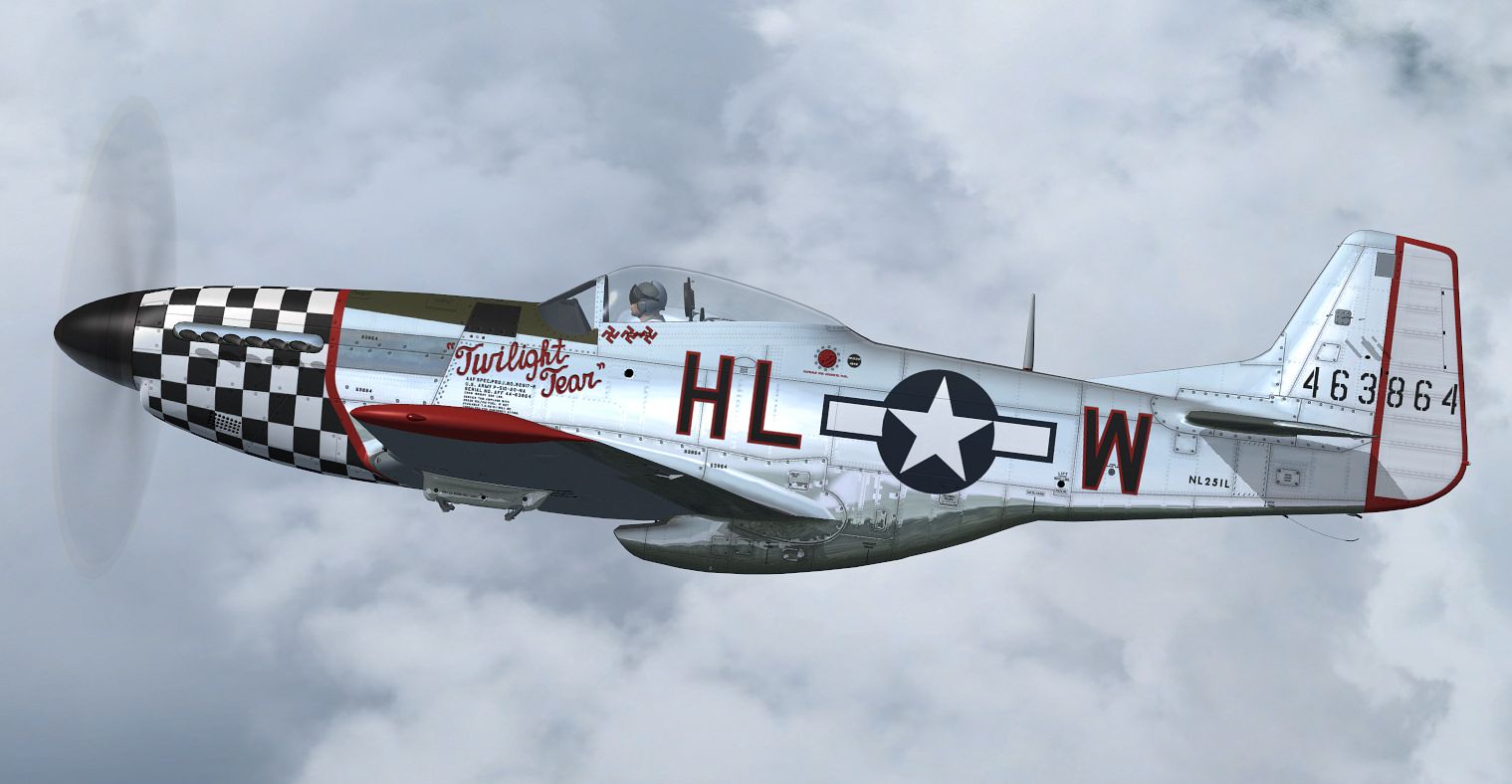
This P-51D, an early-production P-51D-20-NA, is quite unique in that it is one of a very select few surviving Mustangs that actually saw combat use in WWII. 44-63864 was built early enough in the war, that upon arrival to England it was assigned to the 78th FG 83rd FS at Duxford. From there, the aircraft became the personal mount of Lt. Hubert "Bill" Davis. Lt. Hubert named the aircraft after the "1944 Race Horse of the Year", a filly named Twilight Tear. The aircraft was credited with shooting down three enemey aircraft - 1 Me-109 on March 2nd, 1945, and 2 Me-109's on March 19th, 1945 (67-years ago today!). Following the end of WWII, the aircraft, which remained in Europe, was sold to Sweden, where it became RSwAF Fv26158 F16 coded Red D, and later Green K. Following service in the Swedish AF, the aircraft was obtained by the Israeli AF. The aircraft was then later sold to William Lear Jr. who flew it from Tel Aviv to Athens, and then to Geneva, with the aircraft registered then as N251L in 1960. In the summer of 1963, the aircraft was to be ferried accross the Atlantic to the U.S., by pilot Roger Gaston Arnoult, but Arnoult, having never flown a P-51 before, crashed on landing at Reykjavik, Iceland. The aircraft was almost sold for scrap, but the remains were rescued by Petur Jonsson and Michael Valdimarsson in 1986. The remains were then purchased by Ron Fagen, of Granite Falls, MN, who sent the project to Tri State Aviation for a rebuild to completely stock and airworthy condition. The aircraft flew again for the first time since 1963, in April of 2011. Final detailing was conducted through a joint-effort by Fagen's Warhawks Inc. restoration company, and the then newly founded Aircorps Aviation restoration company. The aircraft was then showcased at the 2011 EAA Oshkosh Airventure air show, where it won the WWII Grand Champion award for the authenticity and complexity of the restoration.

This webpage is dedicated to this aircraft on the Fagen Fighters website: http://www.warhawksinc.com/twilight_tear.html
Here are a collection of images of the aircraft on display at Oshkosh last summer: http://s1103.photobucket.com/albums/g461/aircorpsaviation/EAA Oshkosh 2011/

Provided some amazing access to this aircraft, as well as some exclusive photographs, the project for FSX was born. Work on the aircraft as it is now, in its restored condition, is very near to being completed, and work on the depiction of the aircraft as it was during WWII is just beginning. Like the "Cripes A' Mighty, Then & Now", this project will yet again introduce a bit of a different cockpit look, completely accurate for the specific production-model type and in-field modifications (which were reproduced when the aircraft was restored).

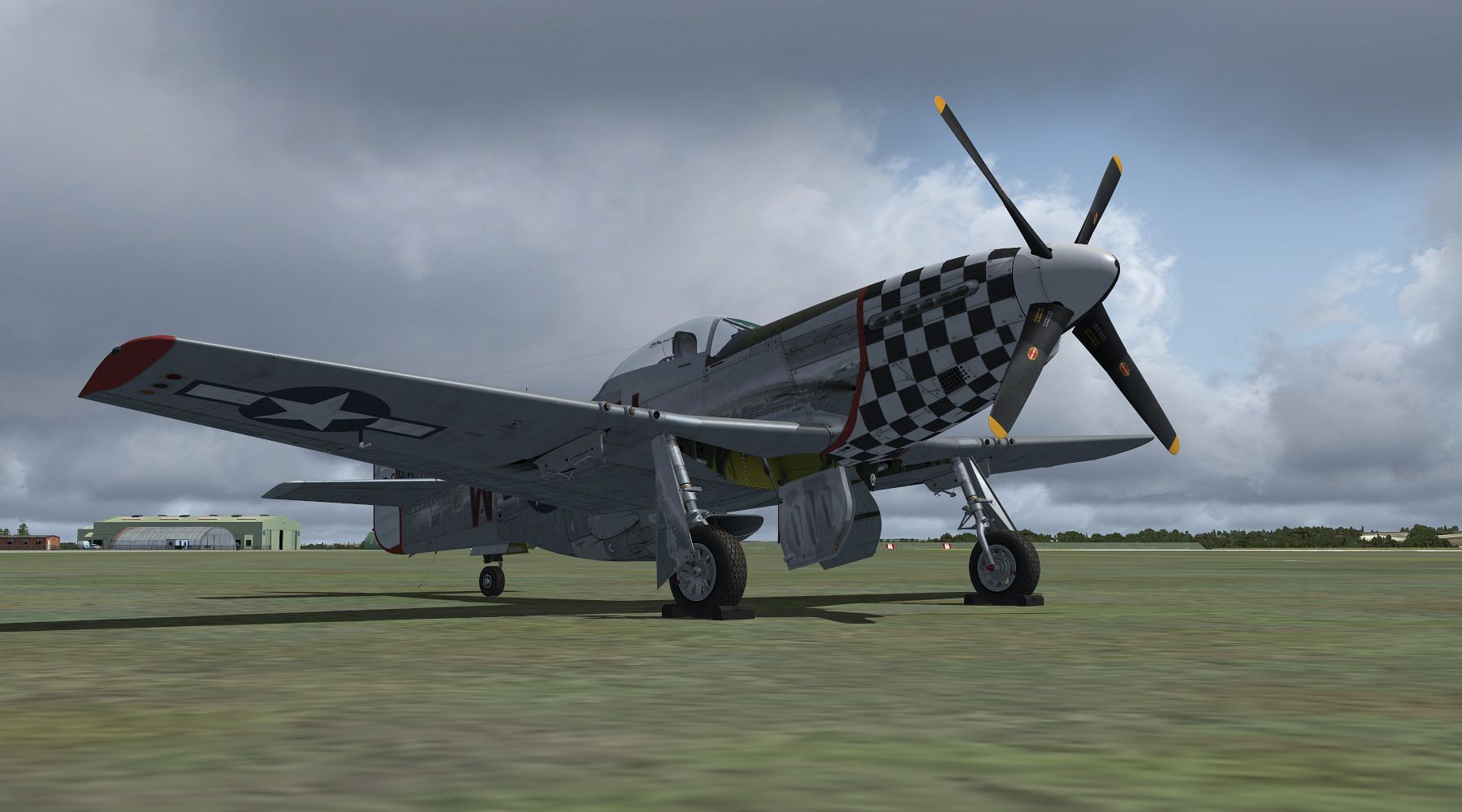
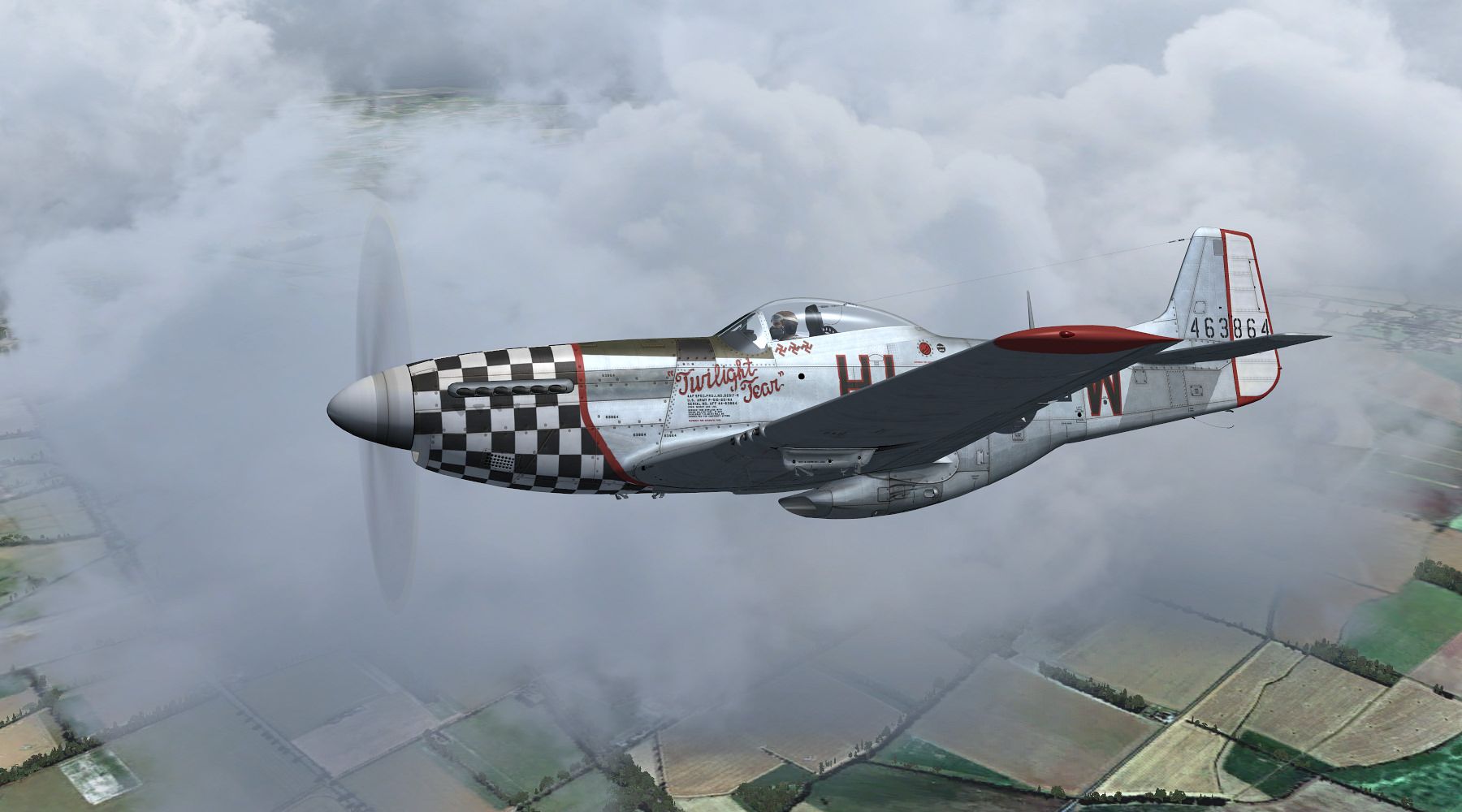
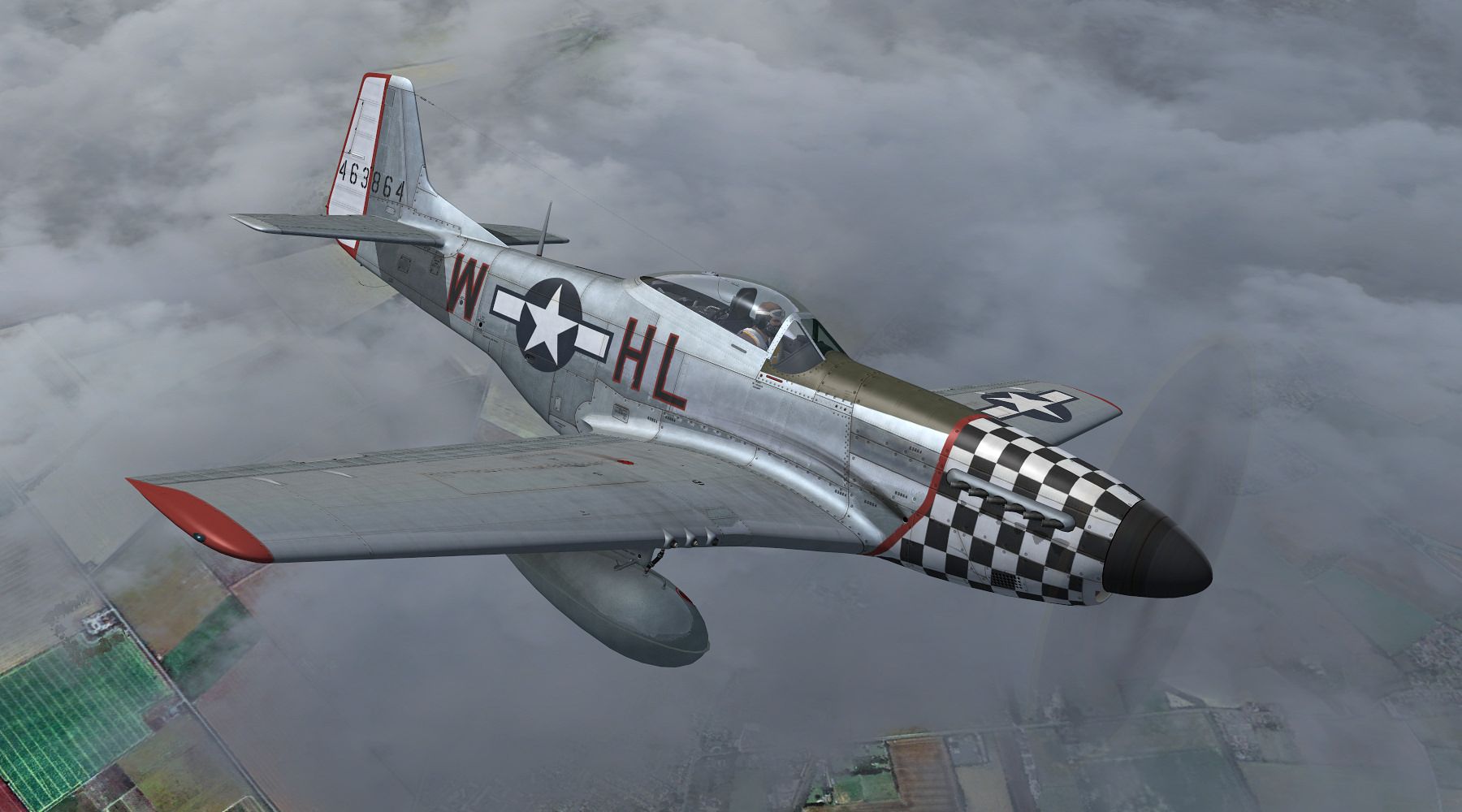
First off for images, here are some of the exterior of the restored "Twilight Tear", very near complete. I'll also be posting some cockpit screens soon - it has avionics that are unlike those incorporated into my past restored-Mustangs, and reflect what the real aircraft actually does use (which is more sparse, and even less intrusive on the originality/complete stock look of the cockpit, and the avionics are easily removeable). It is extremely authentic inside this Mustang, and it is the only one in existence with a full-proper early-production P-51D-20-NA cockpit configuration. The model exterior is tuned so that the markings could be fully-accurately reproduced, without any short-cuts.
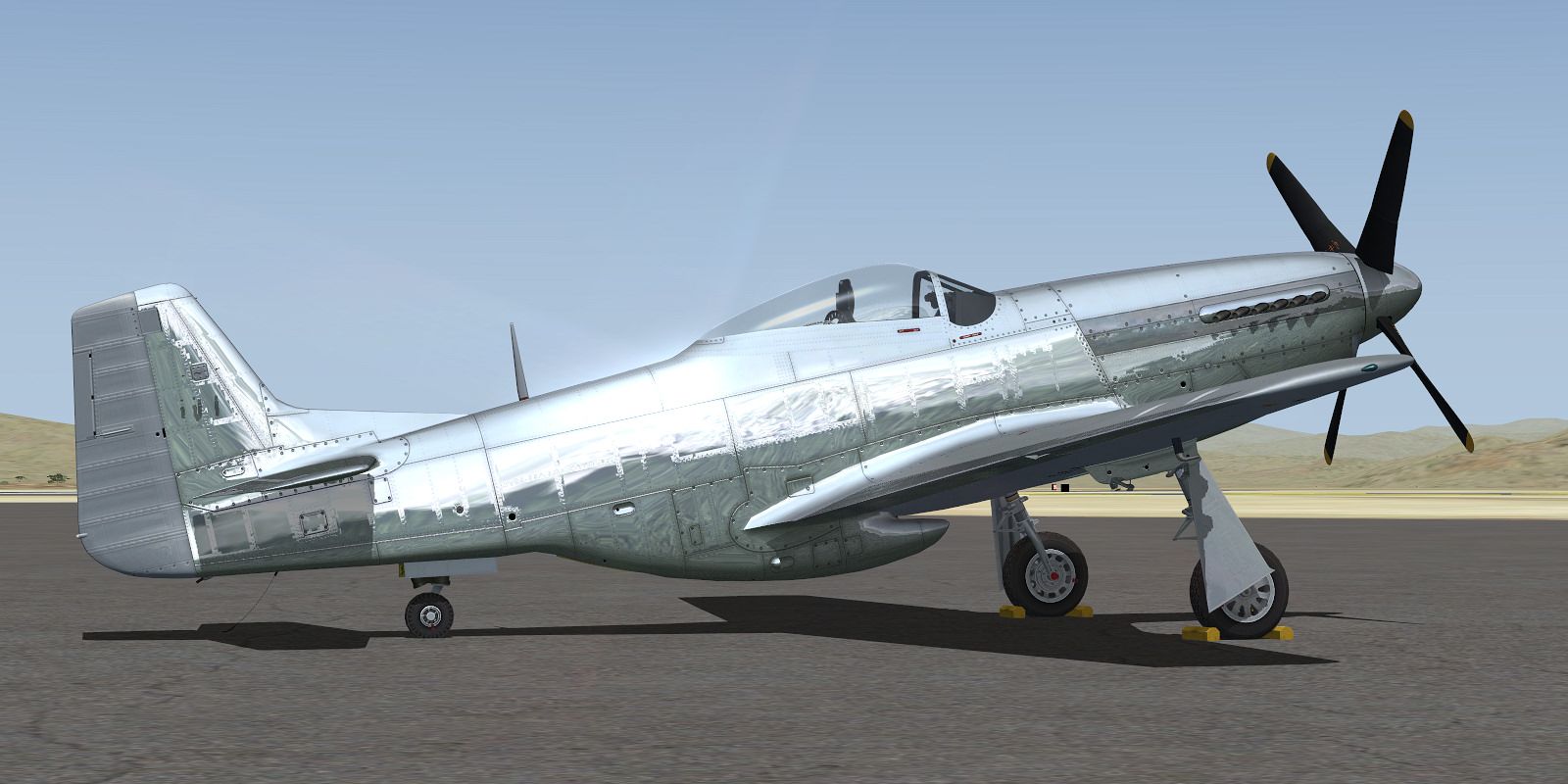
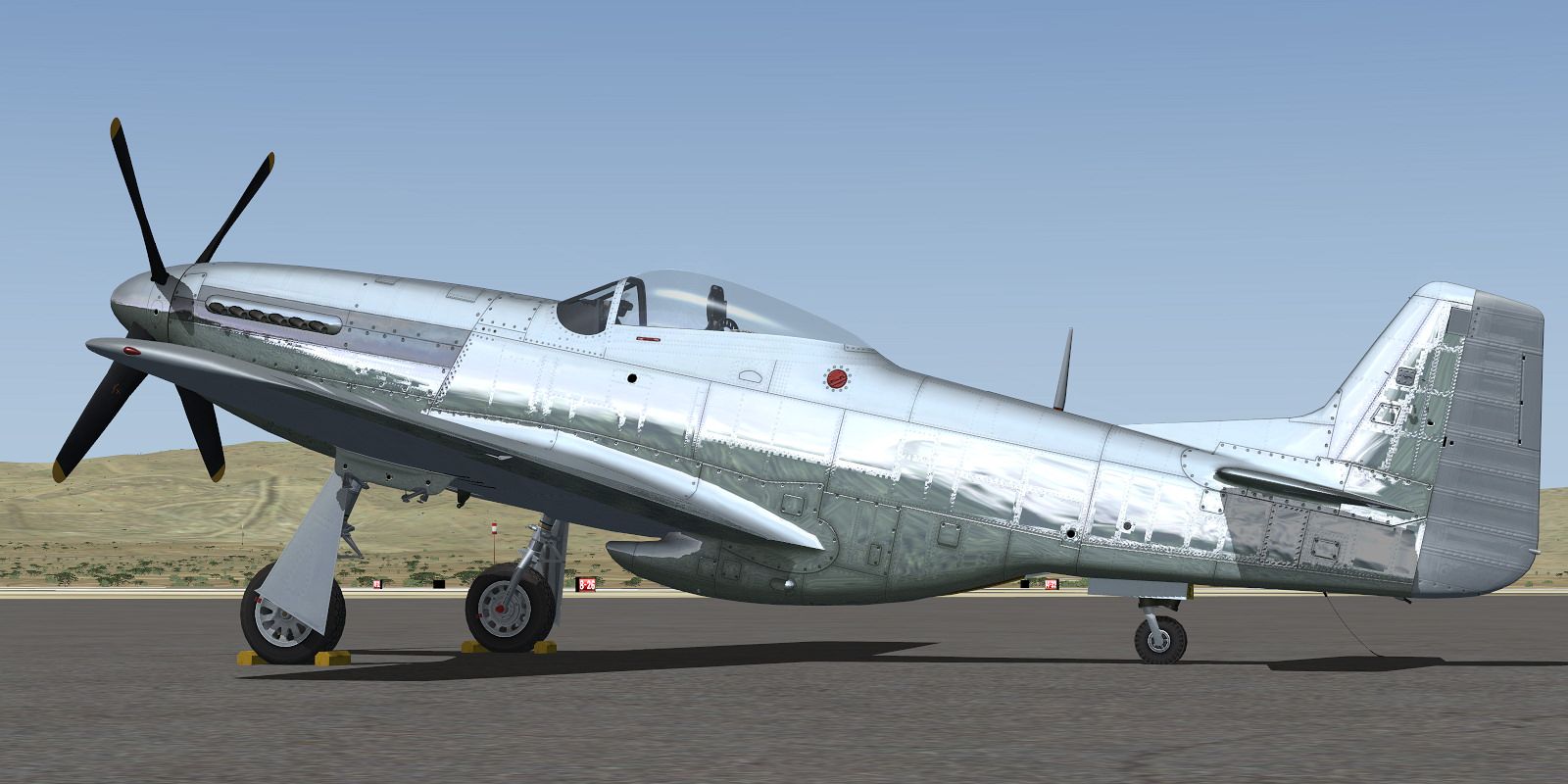
Image1.jpg


Image2.jpg


Image5.jpg


Image6.jpg


Image7.jpg


Image8.jpg


Image9.jpg


Image11.jpg
 
Thank you Stiz, and I see your point. ; ) They're all different to me, and I just can't kick it.

As I mentioned in other threads, this type of project is only another way to keep busy on top of the P-39, A-36/P-51A/P-51B, and eventual Tony projects.
 
John,
One outstanding machine there!

I must ask, will the bare and polished version be included?? :)

Good work!

Joseph
 
If not with the package, the bare finish will certainly be provided as a free download. I'll likely be taking the bare textures adding a few more touches to them to make it into my own 'signature' personal transpot of sorts as well.
 
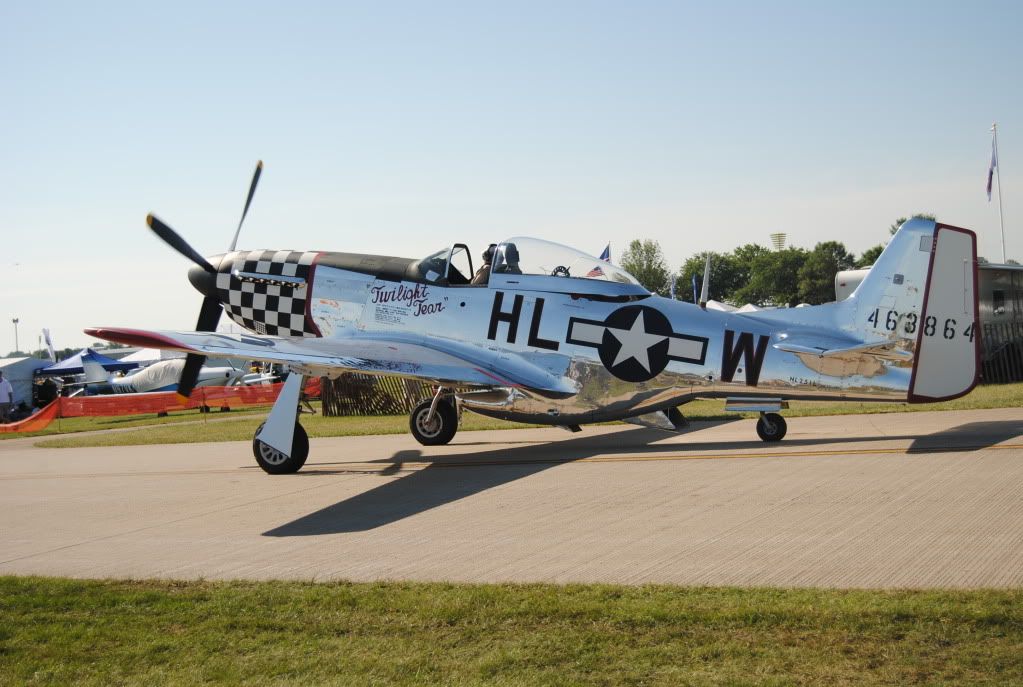
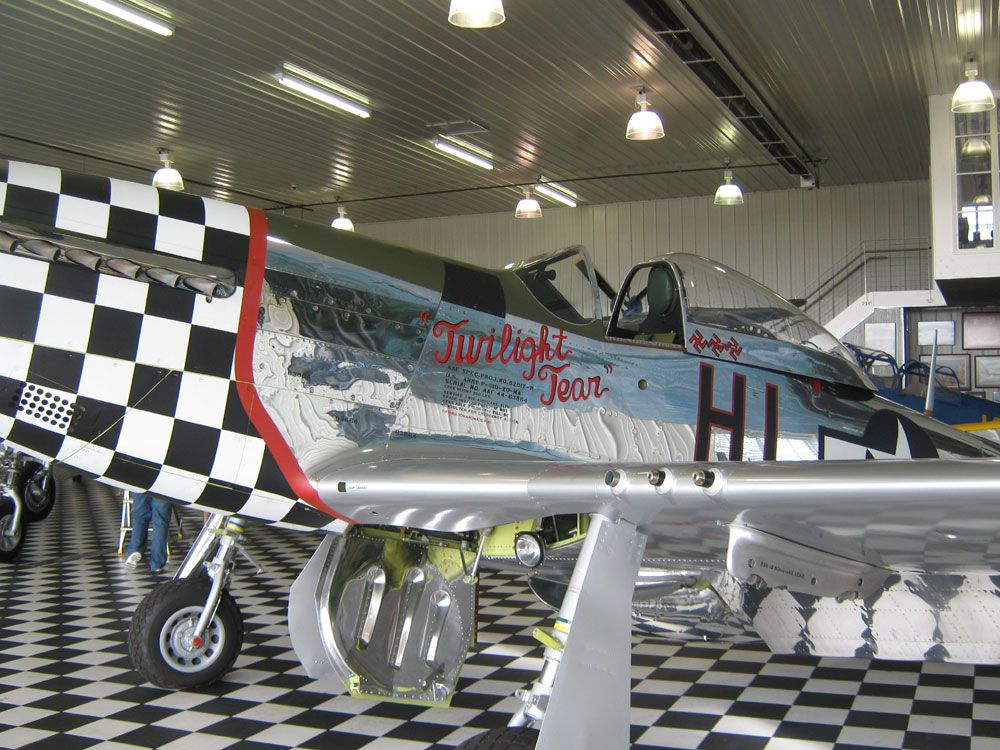
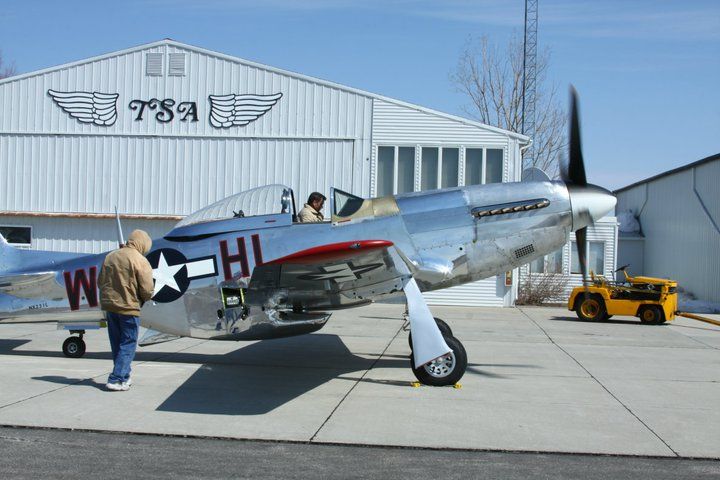
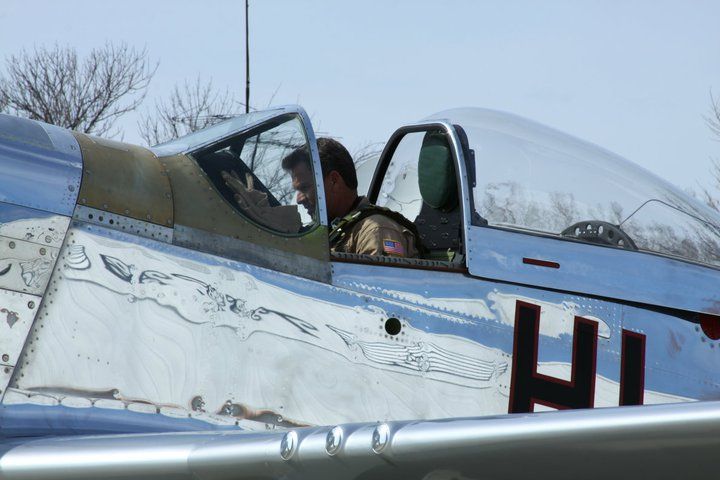
Here is an assortment of images of the real aircraft.

EAAAirventure2011PartOne1584.jpg


TT3.jpg


6015590431_47d5d0d408_o.jpg


The only known photo showing the artwork on the aircraft during WWII.

284859_2040905855675_1035156510_31888287_207310_n.jpg


252129_2040881175058_1035156510_31888238_2415863_n.jpg


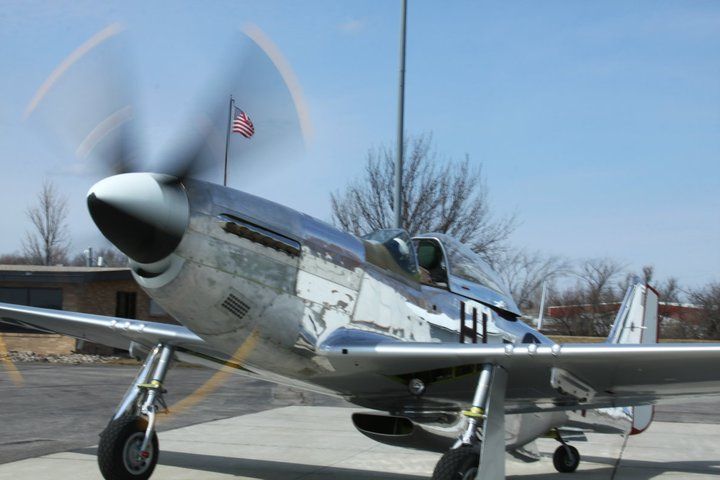
Some early first-flight pics. Note that in order to make the paint stick, you cannot apply it to polished metal, so the metal has to remain a bit rough, so the paint has something to stick to. As can be seen in these photos, the cowling sections had been prepped for the application of the checker-board markings, though they had yet to be applied.

226151_197130040345620_135466413178650_534358_5594270_n.jpg
223941_197130003678957_135466413178650_534356_4354456_n.jpg
267261_197130017012289_135466413178650_534357_8252604_n.jpg
 
"Two Twilight Tears"

One of the things possibly worth mentioning, is the fact that this isn't the same airframe which was painted as Twilight Tear that used to be owned by The Fighter Collection and based at Duxford a few years ago. Through a mistaken identity-connection, that airframe was indeed believed to have been the original "Twilight Tear", but that was due to a, if I recall correctly, paperwork issue from its time in Israel (it seems all P-51's that entered into the Israeli AF ended up having their serial numbers shuffled around and re-assigned - one other case in-point also being, that the airframe used in the "Galloping Ghost" owned by Jimmy Leeward, that came out of Israel, was almost certainly not the same airframe as the original "Galloping Ghost" of the 40's that went into Israel, for this very same reason (despite the Israeli paperwork claiming that it was the same airframe)). Even though the name "Lt. Bert Lee" and two Japanese flags were found etched into the metal of the TFC Mustang, the same metal the Mustang was originally produced with in 1944 and never removed, not much thought was given to it at the time that all of the belief was around that it was the wartime "Twilight Tear". However, by about 2006/2007, with the owner of the wreckage removed from Iceland, being able to prove absolutely that it was in fact the original 44-46863, and photographic evidence showing the wartime Pacific-based P-51K-10-NT "Fragile But Agile" with the exact name "Lt. Bert Lee", as well as the same two Japanese flags, painted on the aircraft in the exact same spots, it became clear that the former TFC Mustang, which had now switched owners, was actually the wartime Pacific-Theatre vet, and by 2010 the aircraft was fully restored and painted in the markings it really did once have during WWII.

One of the interesting details about this, and that I have never seen brought up before, is that P-51K-10-NT's (quite early models) were manufactured with fabric elevators, where as by the time of P-51D-20-NA production, the elevators were all metal. The former TFC Mustang that was once thought of as being "Twilight Tear", had fabric elevators even up to the point that it was operating with The Fighter Collection (which the original Fragile But Agile had, being a P-51K-10-NT) - the aircraft now known to be the original "Twilight Tear" (or at least incoporating the remains of it), and the subject of this project, had metal elevators, as would be expected for it being a P-51D-20-NA (as "Twilight Tear" was).
 
Thank you Stiz, and I see your point. ; ) They're all different to me, and I just can't kick it.

As I mentioned in other threads, this type of project is only another way to keep busy on top of the P-39, A-36/P-51A/P-51B, and eventual Tony projects.

Tony? Eventually? As in Ki-61? As beautiful as these Mustangs????
 
Yeah, the Ki-61...how nice/detailed it will be, will depend on the resource materials I can continue to secure.
 
Good history John...

In regards to NX79111, or 44-15651 and whether or not it was in fact the original "Galloping Ghost", one of the tell-tale factors is that it would have had to have been a rare surviving-15-NA Model. Furthermore, here's a few items of interest.

1.) Cliff Cummins was quoted as saying that the Israeli government attempted to purchase the aircraft (original GG), but that the US blocked the sale. As I understand it, it is reported that the aircraft was just intended for export. Dr. Cummins would have known best, I would presume? If this is true, and the aircraft remained intact, and stateside, I would say this was indeed the original Ghost.

2.) There is a chance that merely the original NAA Data Plate went to Israel, with another airframe., and possibly that airframe returned, and later became Dr. Cummins racer?

3.) Jimmy believed he possessed the original Ghost

Regardless, she was probably the most colorful of the racing mustangs in history, and sported more combinations of modifications as well, particularly in canopies. Gone, but not forgotten, long live Jimmy and the Ghost!

Joseph
 
I'm sorry for adding that bit in there about "GG", Joseph - number three on your list of points is certainly what mattered most in regards to the aircraft. I'll always miss watching Jimmy fly at Oshkosh (the only opportunities I ever had, to do so).

I was going back through some of my bookmarks, and this is a photo posted to Airliners.net, showing the remains of the crashed 44-63864 being recovered in 1980. Although severely damaged (the pilot was killed in the landing accident in 1963), you can still easily make out the wings and the tail from the Mustang: http://www.airliners.net/photo/North-American-P-51D/2029453/L/&sid=1f6971e605ec1777a274bb65811f02a2

And another lovely photo of the completed restoration, taken at Oshkosh last summer: http://www.airport-data.com/aircraft/photo/655856L.html

nose-headon.jpg


nose-headon2.jpg
 
I thought it would be worth mentioning too, that often times when you see swastika kill-markings applied in the way they are on Twilight Tear, you will get people saying that they are backwards and incorrectly applied (as would commonly be the case), but as the wartime photo of the aircraft shows, this was in fact the case on this particular aircraft.

BTW, the OD/green-painted tanks that look rather strange mounted to the aircraft in some of the photos from Oshkosh last year, are M-10 Chemical/Smoke tanks, that were used during WWII for dispensing anything from tear gas to smoke screens (though I have never seen any evidence of P-51's using them during WWII, let alone any 78th FG Mustangs, I have seen photos of P-40's and A-20's having them mounted). When you look at the drop tank controls within the cockpit of a P-51, you will see referene to "Chem. Tanks", as you used the drop tank arming switches in a slightly different way in order to activate them, and thus when you hear reference to "Chem. Tanks", these are them. I think they were only presented with the restoration to help boost the 'interesting' and 'attention to detail' factor.
 
The restored version of 'Tear is now in beta, and with the research and study of the original wartime photos complete, the plans for reproducing the aircraft as it was photographed in March of 1945 are now set.

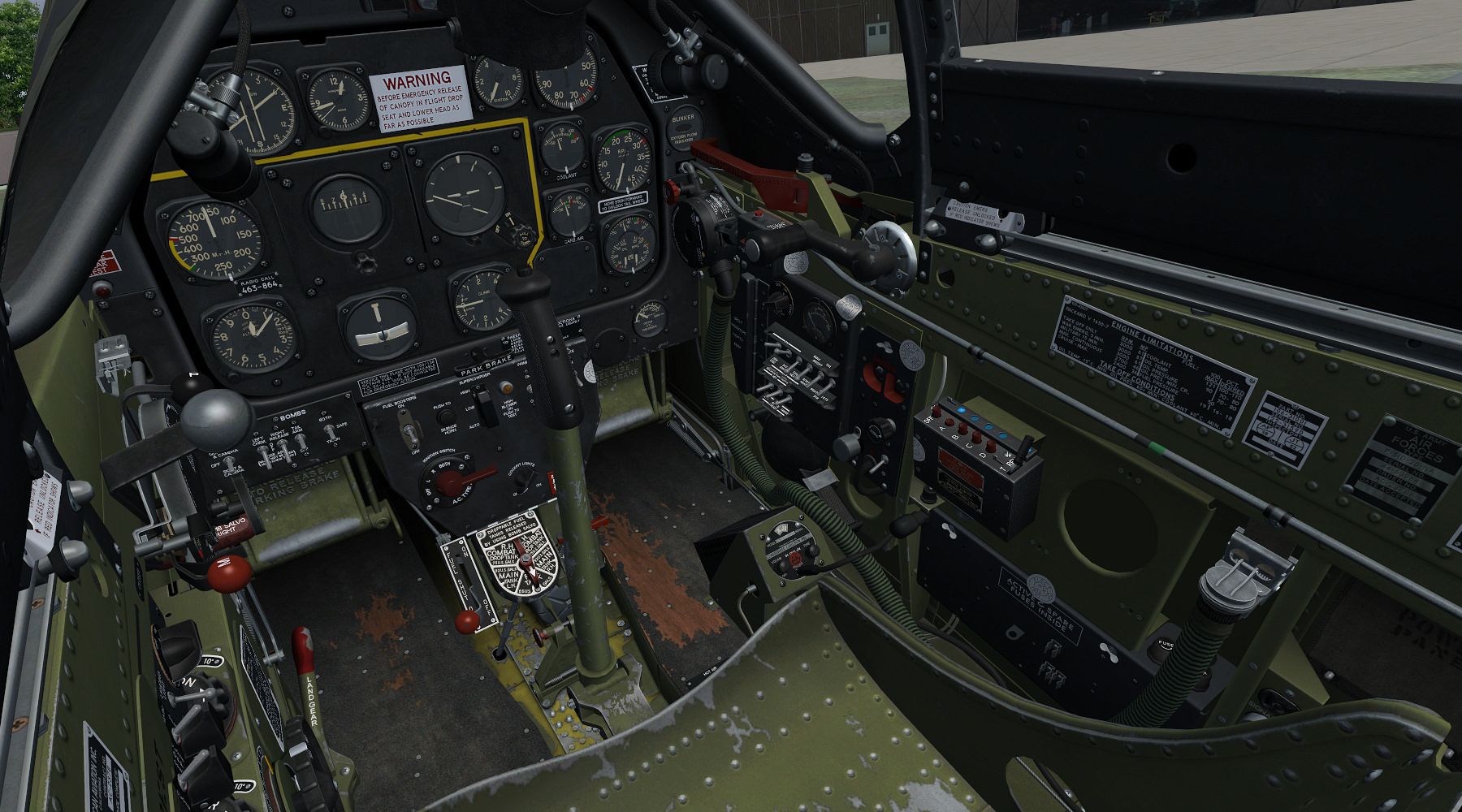
Here are some screenshots of the beta-candidate. The modern avionics fitted within this aircraft are extremely minimal, just Com and Transponder heads, mounted in an easy-to-remove boxed-in panel assembly. The use of these two specific avionics heads has become a bit of a trend amongst some of the most authentic warbird restorations, as they are likely the least intrusive when compared to similar options, and they can be added into the cockpit without compromising the authenticity of the cockpit. The only modern aspects of the cockpit which remain fixed (just like the real-world example), are the phone and mic jacks and avionics circuit breakers (but they are presented in a way that looks correct for the period). The modern avionics panel is even mounted to the original/authentic radio bracket/panel in the cockpit, using the same mounting-holes as originally provided on this very panel when manufactured at NAA. When displaying the aircraft on the ground, when you open the gun bay the modern avionics panel is removed, so that the cockpit is as stock, for display purposes, as it can be.
 
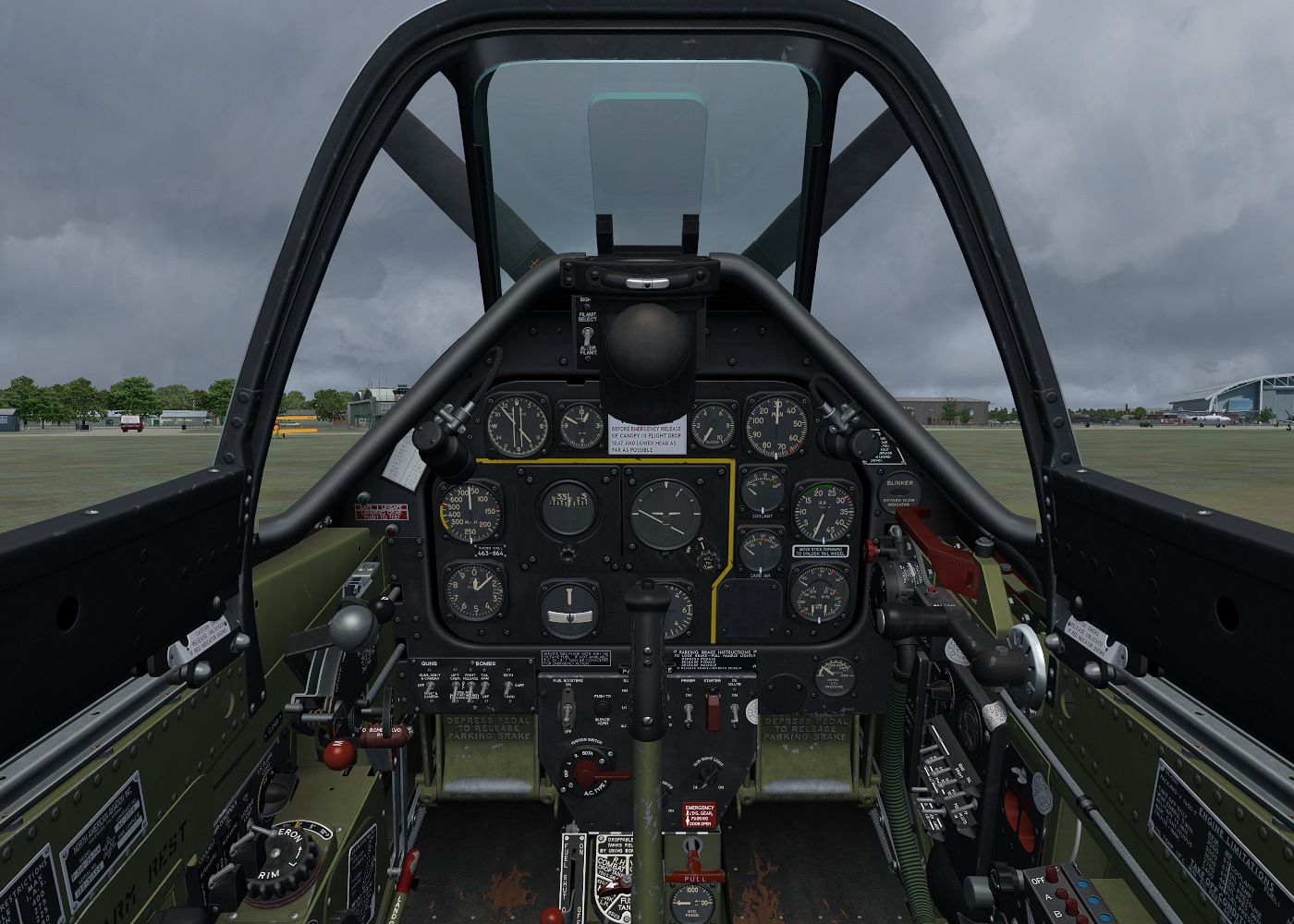
More work-in-progress, this time with a wartime-flavor. When the aircraft was photographed in March of 1945, just after it had accumulated its third kill, it still had the N-9 reflector gunsight fitted (as original from the factory, being an early-production P-51D-20-NA), and it also had not yet been fitted with the tail warning radar set (the restored aircraft is as it was either later in the war, or post-war/summer of '45, when the aircraft, by that point, had been modified with the addition of a K-14 gunsight and the tail warning radar set). Note within the screenshots the N-9 gunsight fitted and no tail warning radar set fitted.
 
Thank you, John! I'm currently putting the finishing touches on the cockpit of the WWII example. It is the only example of an early production P-51D-20-NA for and flight simulation that has been done authentically as it would have been without any field-modifications. The N-9 reflector gunsight was used on the P-51D from the first production model all the way into P-51D-20-NA (and D-20-NT) production. On P-51D-15-NA production, the back-up ring a bead gunsight was deleted, and the N-9 gunsight bracket was re-designed since it no longer had to have the mounting extensions for the ring-sight, so although the N-9 sight is fitted to the wartime Twilight Tear, it does not have the back-up ring and bead sight like the P-51D-5-NA's from Little Friends II. It makes for a unique sight, to see the N-9 fitted to a cockpit configuration that is quite a bit late in production (though it does have the earlier switch-panel configurations - i.e. the pre-rocket controls and pre-tail warning radar configuration).

Another unique item on this aircraft, is a 100"-span type Manifold Pressure gauge, something that, until only last fall, I had no idea was actually used on Mustangs during WWII, and is actually authentic! Most people, including myself, have probably been quite used to seeing the 75"-span type Manifold Pressure gauge fitted within Mustangs, no matter the make or model. Every once in a while I would see a 100"-span type fitted within a restoration, but I had long thought that the 100"-type was only introduced after WWII on ANG and USAF examples, and seeing it fitted within a Mustang sporting WWII markings I had thought was not correct. However, within original North American Aviation and USAAF documents from 1944, I came to find that the gauge was switched from the 75"-span type to the 100"-span type during P-51D-15-NA production and on all later models. The reason for this, was that when the VIII Fighter Command in Europe, in the summer of '44, introduced 100/150 grade fuel for the first time, the WEP output for the Merlin engine, running this fuel, surpassed the limit of the 75"-span gauge (though the USAAF only cleared its Merlin Mustangs up to 72" on WEP, at first, and then 75" on WEP, where as the British cleared its Merlin Mustangs up to 81" on WEP, running 100/150 fuel). For the same reason, until the RAF got its hands on P-51D's (which were all of the later-type, already fitted with 100"-span gauges) they replaced the 75"-span MP gauges on their Mustang III's (P-51B's) with +25 lbs boost gauges (= 81" Hg).
 
Getting closer. The documentation and final testing will take another week or two in order to complete.

As mentioned earlier, this aircraft is an early production P-51D-20-NA, that came off the assembly line at Inglewood, CA in early December of 1944. From this point, and all the way to late-March 1945, when it was photographed with the third kill-marking on the canopy frame, the aircraft had an N-9 reflector gunsight installed, and did not have the tail warning radar set installed (which didn't arrive into P-51D production until very late D-20-NA's and D-25-NA's). The aircraft was also built before the introduction of the rocket control system and rocket launcher supported wings. I have chosen to depict the wartime aircraft as it was when photographed in late-March 1945. By the time its service with the USAAF was done, the aircraft had been updated in the field, following techinal orders for installing the K-14 gunsight and the tail warning radar, onto the earlier airframe which hadn't been built at the factory with those items yet in mind. The aircraft, in its restored state, retains those final updates, just as they were.

Looking around the cockpits of the two versions of the aircraft, you can see how the same basic core remained, though a number of features changed. For instance, not only was the N-9 sight removed, and the K-14 sight added, but due to the location of the K-14 gunsight control box, the landing light indicators also had to move, as did the compass correction card. The re-positioning of these items are actually illustrated and instructed through the technical order documents for the in-field installation of the K-14. With the change in gunsight, also came a change in throttle lever. With the installation of the AN/APS-13 tail warning radar set, the previous G-Band, radio audio, and radio detonation switch panel was replaced with the panel designed for use with the radar set, featuring the controls for activiating and using the tail warning radar, and the radio detonation and G-Band controls were deleted as a result. The indicator for the tail warning radar was mounted to the top left-side of the instrument panel shroud (standard position), and the warning bell was mounted to the radio fuse and circuit panel on the lower right-hand side of the cockpit.

Note that there is a circular cover plate on the lower right-hand side of the instument panel. The reason for this, is that the panel was initially designed for use with the manual primer pump, as seen in the P-51D-5-NA, but by the time of the P-51D-15-NA, the manual pump was deleted and an electrical primer was added, with a toggle switch added to the center electrical panel. Despite this, the panel was changed right away to support this, so the panel continued to be manufactured with the main hole and mounting holes manufactured into it, and as each P-51D-15-NA or early model P-51D-20-NA rolled of the assembly line, a cover plate was screwed into place covering this. Mid-way through P-51D-20-NA production, around the same time there was a large amount of changes introduced (including the rocket control system, K-14, etc.), the panel was re-designed and the oxygen flow gauge was re-positioned near to where the manual primer pump was once fitted.

tt_ww2_1.jpg


tt_ww2_2.jpg


Here's a direct comparison between the wartime depiction, in its early configuration, and the restored depiction, in its late-war and current configuration.

tt_ww2_9.jpg


tt_ww2_10.jpg
 
BTW, can anyone recommend a machine gun firing effect that is available for free use (with link or file name to download)?
 
Back
Top