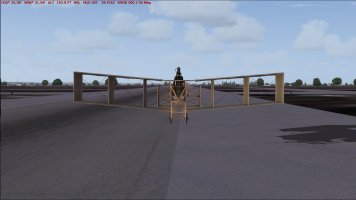
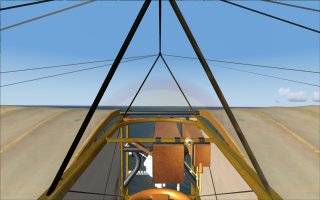
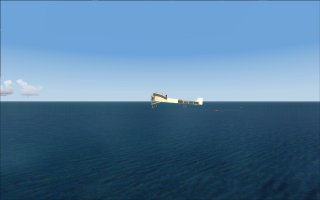
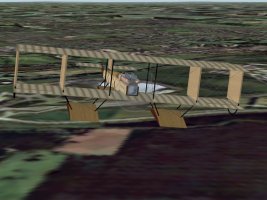
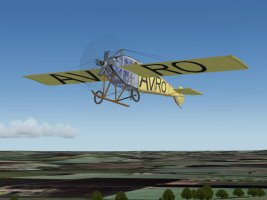
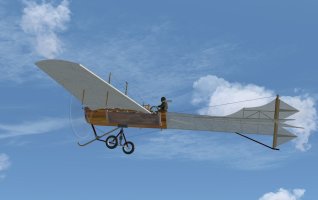
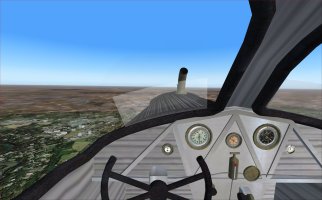
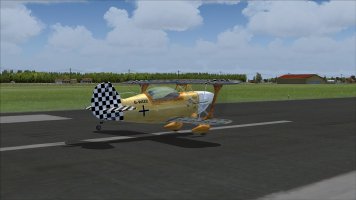
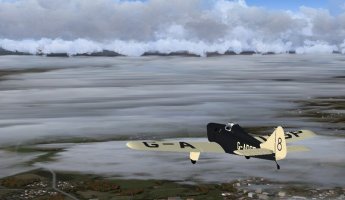
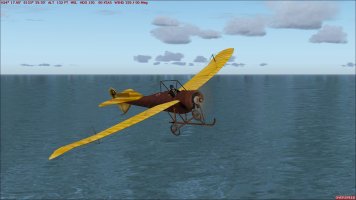
Rummaged around in the dark recesses of my hangar and found some more antiques, fun to fly briefly ...if you have the patience ..and the time. None of these planes have instruments or brakes, a couple have no discernible rudder action, the engine is either on or off (half throttle is an "idle", any less and the engine may die), and there's no more than 12-15kt between overspeed and stall. so landing is a balancing act of getting a decent rate of descent without overspeeding
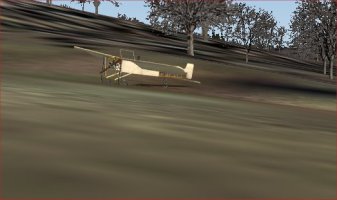
The 1909 Goliescu Avioplan
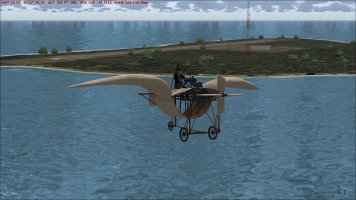
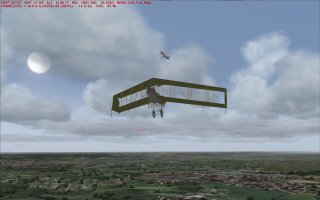
This was a real aircraft. Goliescu was a Romanian inventor who squandered his resources on this plane; it made numerous flights in Europe, the first tubular fuselage to fly, a concept not pursued again til Caproni built one twenty years later. While awaiting a public display in Paris the Avioplan was destroyed when a storm demolished the warehouse it was in. Destitute, Goliescu became a spy for Russia during WWI; caught and sentenced to prison, he was released in the early thirties and returned to his aeronautical studies. He passed away in 1942, never building another airplane. (Don't let speed drop below 40kt, it will stall instantly and plummet like a rock; the engine isn't responsive enough to save you.)
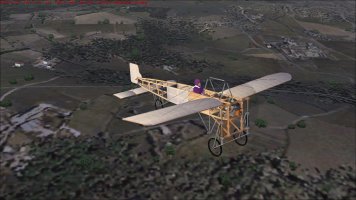
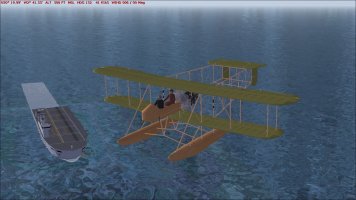
The Wright Model B of 1910. Slow, cumbersome, as maneuverable as an arthritic hippo in a mudhole, but quite stable. Little more than a powered glider.
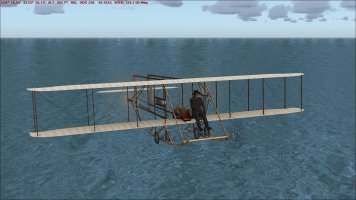
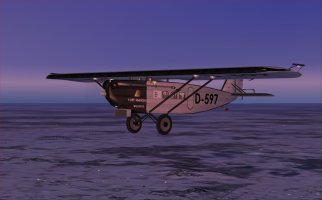
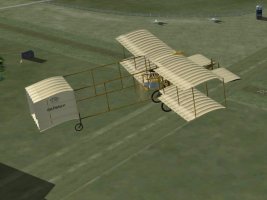
The Handley Page H.P. 5 of 1912. The most advanced of these, only a step from the aircraft of WWI and the first successful airplane from HP. It flew thousands of miles around England during 1912-1914, and gave hundreds of people their first airplane ride. Eventually it became a prized display at the company headquarters til 1940 when a manager decided he needed the space and ordered it chopped up and incinerated.
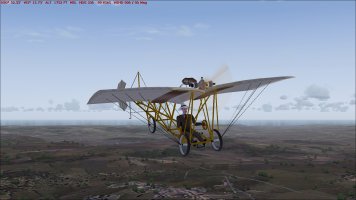
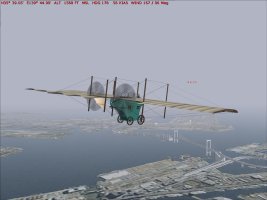
And the airplane that is still controversial as possibly the first controlled heavier than air flight. The Santos-Dumont 14bis first flew publicly in 1906, but there is, arguably, evidence it had been flying a couple of years at that point. (The Wright brothers threatened to reclaim everything they had given to the Smithsonian if the latter even mentioned the accomplishments of Santos-Dumont.) Not easy to fly, is nose heavy, stalls at 30kt, overspeeds at 40, apparently only has pitch and roll control, requires utmost attention. And notice the pilot stands in the cockpit.
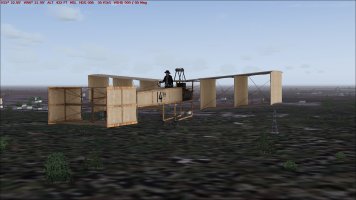
A flight from Dannelly Field to Maxwell Field, 8 miles apart, took over fifteen minutes, mostly maneuvering to land ...