• There seems to be an uptick in Political comments in recent months. Those of us who are long time members of the site know that Political and Religious content has been banned for years. Nothing has changed. Please leave all political and religious comments out of the forums.

    If you recently joined the forums you were not presented with this restriction in the terms of service. This was due to a conversion error when we went from vBulletin to Xenforo. We have updated our terms of service to reflect these corrections.

    Please note any post refering to a politician will be considered political even if it is intended to be humor. Our experience is these topics have a way of dividing the forums and causing deep resentment among members. It is a poison to the community. We appreciate compliance with the rules.

    The Staff of SOH

  • Please see the most recent updates in the "Where did the .com name go?" thread. Posts number 16 and 17.

    Post 16 Update

    Post 17 Warning

**The OFFICIAL All Sims Air Tour Thread**

Leg 16: Memphis International (KMEM) to Bessemer airport (KEKY)

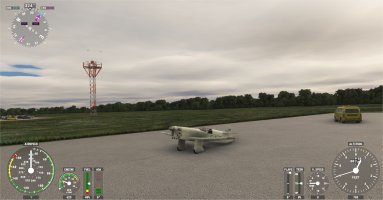
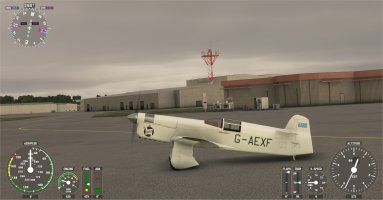
Flying the Percival Mew Gull in MSFS 2020. Using Active Sky FS for weather and Little Navmap for navigation. Using FSLTL for AI traffic.
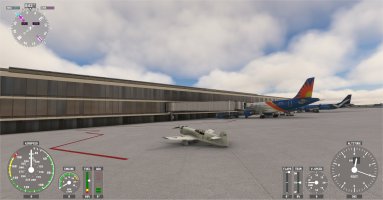
01 ready at gate.jpg
Ready to start the engine at the gate. Still airliners nearby, but different ones than when I landed here. 60% fuel on board for this leg.
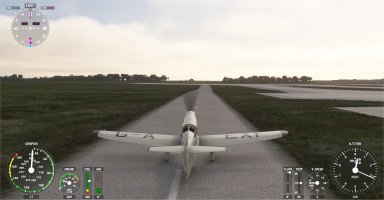
02 long taxi to 36L.jpg
Another very long taxi out to runway 36L.
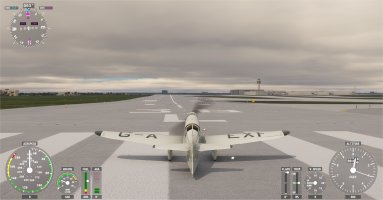
03 takeoff 36L.jpg
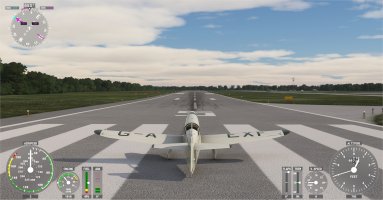
Lined up for takeoff on 36L. No one in the way for this takeoff, thankfully.
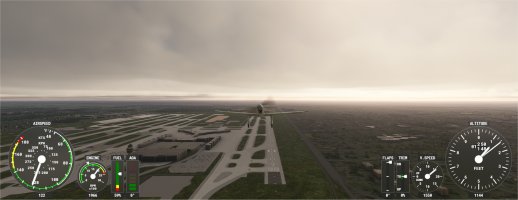
04 stay on heading.jpg
The tower asked me to stay on the runway heading for a while. If I had banked right too soon to get on course there would be a number of aborted takeoffs on 36C or 36R, and I definitely would not be welcome here anymore.

Shortly after takeoff I had the same weather conditions as the last flight. Fog and haze down low and clouds above. At first I flew up to 4000 feet to get above the clouds, but gradually had to keep climbing as I continued eastward.
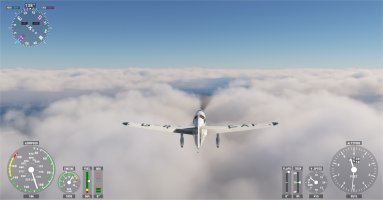
05 above clouds 9500.jpg
Here I am above the clouds at 9500 feet altitude.
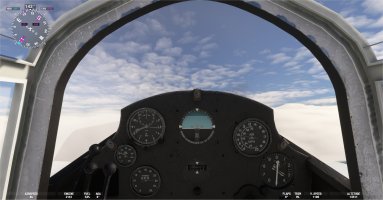
06 briefly at 13500.jpg
A short while later I had to continue climbing and was momentarily up to 13500 feet! I immediately decided to dive back down lower as the regulations require oxygen to be used above 12500 feet altitude and I did not have any on board. So I said "The heck with this." and made a rapid descent down toward the ground.
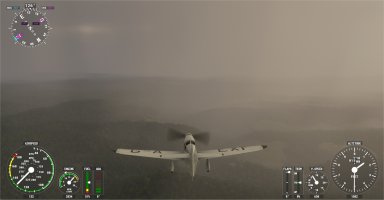
07 haze and hills 1500.jpg
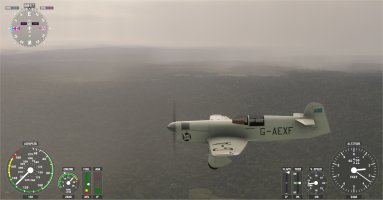
Down to 1500 feet, still in marginal conditions with some hills ahead. I prudently climbed to 2500 to 3000 feet in the IFR conditions just to be sure to stay above any hills that I would not see ahead.
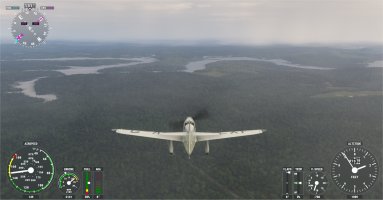
08 Black Warrior river.jpg
Finally in somewhat clearer weather and almost there. That is the Black Warrior river ahead.
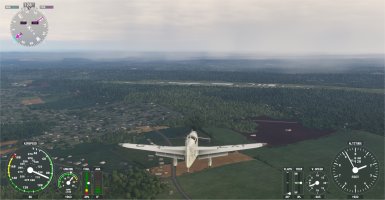
09 airport ahead.jpg
Airport in sight ahead.

10 final for 23.jpg
On final for runway 23. I had my first perfect centerline touchdown of the Air Tour today.

My last two flights were made in sequence without a PC reboot. I did make it to the parking spot and tried to bring the throttles to idle to shut down the engine but MSFS 2020 was frozen at this point.

I still made it though. Ended with 49% fuel on board. I used up a lot more fuel than expected this leg because of the necessary climb to high altitude to try and stay VFR.

Next leg is due East to Atlanta Regional Falcon Field (KFFC)
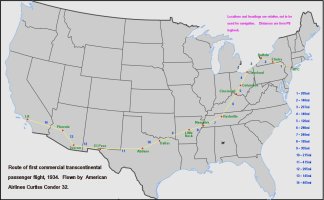
 
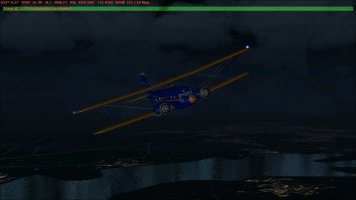
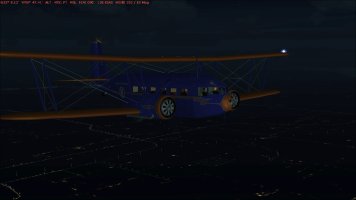
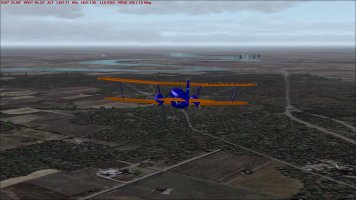
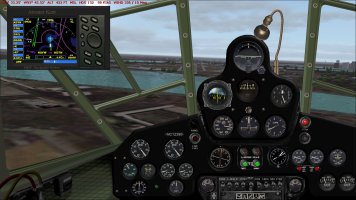
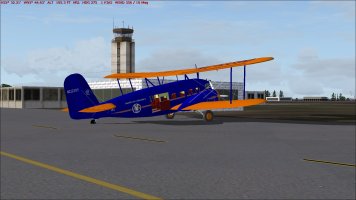
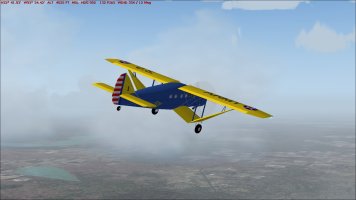
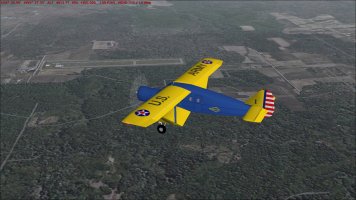
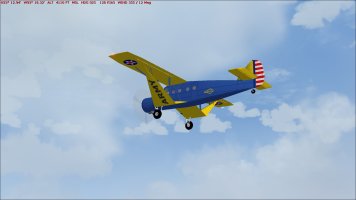
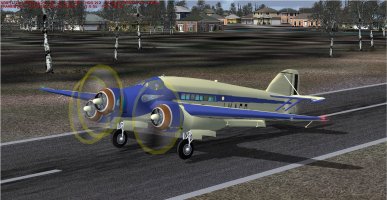
Well, I somehow survived the GeeBee, and refurbished the next plane for a more leisurely flight. It had the wrong engines, throttle quadrant wasn't working, panel was incorrect, and the AP was inoperative, but it was worth the effort. This plane was obsolescent when it hit the market but became a favorite with passengers and explorers; Byrd chose it for his polar expeditions, several foreign air forces used them for executive transports and ambulances, and many were flying into the fifties. Sadly none survive. Quickly overshadowed by the more modern, and faster, DC-2, the Curtiss AT-32 Condor was still preferred by many travelers for its roomier and quieter cabin, and smoother ride. It was the first airplane to offer sleeper flights and was the first commercial transcontinental passenger flight.
For anyone interested in recreating this flight, it was 14 legs, from New York to Los Angeles -
condor_1934_map.jpg

Back to business, Condor warming up for a 6AM departure from Fort Worth
kdfw.jpg

And I'm off (obviously)
kdfw2.jpg

kdfw3.jpg


At 5000ft the temperature was -5C to -10C the entire trip
kdfw4b.jpg

Dawn approaches
kdfw6.jpg

kdfw7.jpg

Sunrise
sunrise.jpg

30 minutes to go
30min.jpg

Not much to report along the way. passed no airports of note but dozens of small local fields including, near the end, the "Fish-n-Fly Lodge", aka "Beer Field", near the town of Uncertain TX. I just had to look into this. Opened around 1951 it fell into disrepair in the late '80s and was apparently abandoned sometime between 1994 and 2006; as of 2019 the runway was "intact though deteriorated" and a couple of dilapidated buildings were visible. Odd that MS chose to include it in FS2004.
"According to Pud Harper, his father, Beer Smith, operated the Fly 'n Fish Resort on Caddo Lake in the early 1950s. “The Fly 'n Fish was a 20-room motel that had a large dining area downstairs," Pud said. "Upstairs it had a ballroom with a stage that could be lowered or raised. On the other end of that was a bar. People would fly their private planes in, and we had a hangar where they could leave them. Across the street, he built a huge pier."

More to come...
 
Leg 17: Bessemer airport (KEKY) to Atlanta Regional Falcon Field (KFFC)
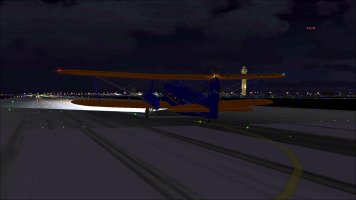
Flying the Percival Mew Gull in MSFS 2020. Using Active Sky FS for weather and Little Navmap for navigation. Using FSLTL for AI traffic.

01 engine started quiet ramp.jpg
Engine started on the quiet ramp at Bessemer. 49% fuel on board for this leg.

02 takeoff 05.jpg
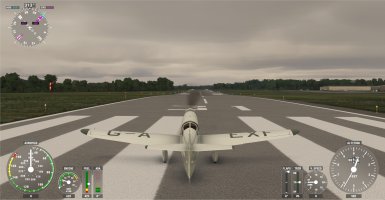
Lined up for takeoff on runway 05.

03 on the way.jpg
Up in the air and on course for Atlanta. A bit of history about my flight simulation related to Atlanta. My first ever participation in an online Flight Rally was during the Summer Olympics in Atlanta Georgia in 1996. I flew Douglas Bader's Mark Vb Spitfire from Burbank CA (KBUR) to Hartsfield-Jackson Atlanta International (KATL) with refueling stops at Albuquerque International Sunport (KABQ) and Adams Field (KLIT).

04 3000 for hills.jpg
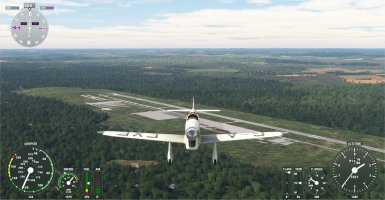
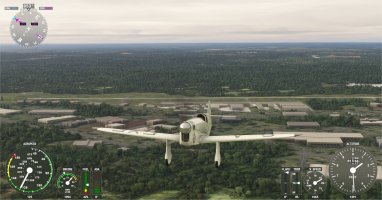
In general I cruised at around 2000 feet altitude. But here I climbed to 3000 feet to clear these hills.

05 foggy and hazy conditions.jpg
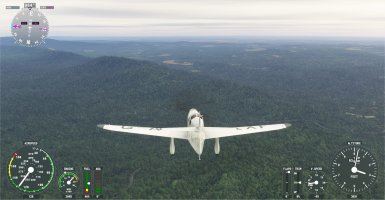
Most of the way there on a fairly uneventful flight. Still foggy and hazy conditions since about half way along the flight. A fair distance off my right wingtip so not visible is the small private airport called Answered Prayer (1GE3) near Franklin Georgia. It has a 2000 ft grass runway. Just thought the name was interesting.

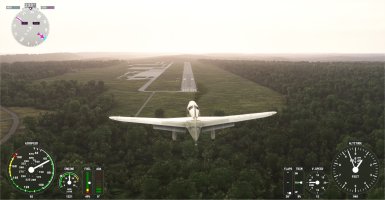
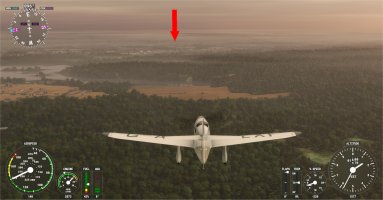
06 airport in sight.jpg
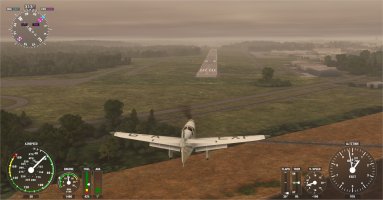
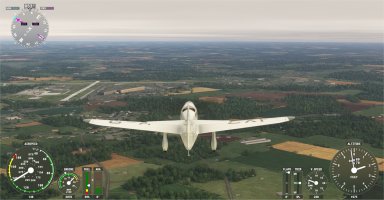
Airport in sight ahead. I banked right and got in the downwind leg for runway 31.

07 final for 31.jpg
On final for runway 31.

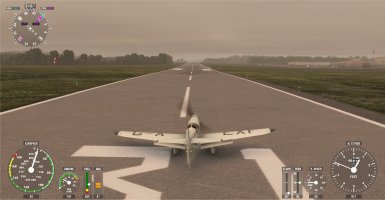
08 touchdown on the numbers.jpg
Touched down right on the numbers.

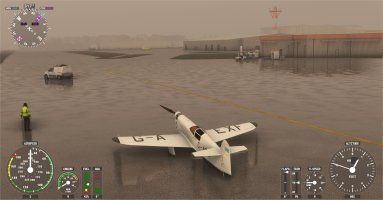
09 parked in the rain.jpg
Parked in the rain at Atlanta Regional Falcon Field (KFFC) 42% fuel on board. I wonder if they have a KFC franchise here on the airport? In any case it is time to find some grub and have a rest.
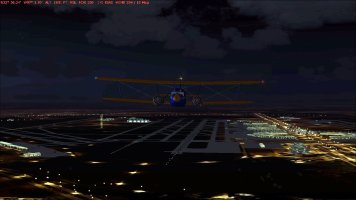
10 weather.jpg
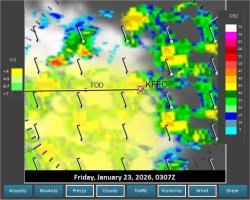
My weather radar looked like this. Probably the most intense of the Air Tour so far. Just after I touched down it started raining quite a lot.

Next stop is Greenville Downtown Airport (KGMU) in South Carolina.
 
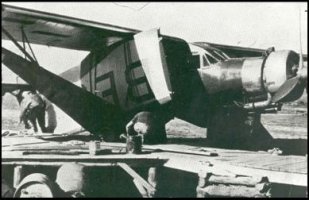
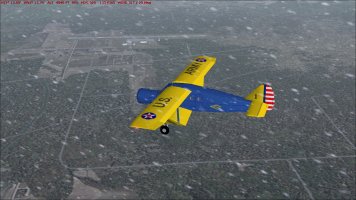
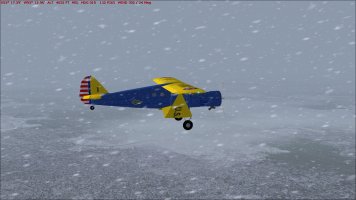
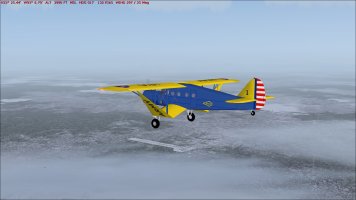
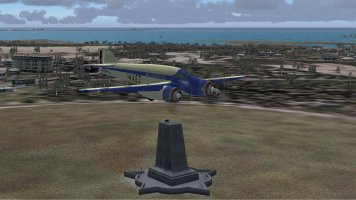
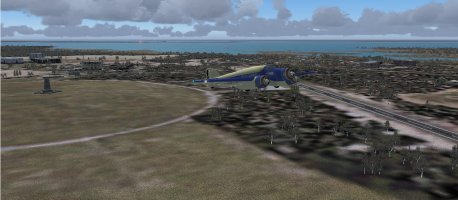
Still trudging along, this time in the "Flying W". The Bellanca Aircruiser was shut out of its original purpose by changing regulations, but it found a home as a utility transport in military and civil use. Rugged construction, efficient operation, ability to land and takeoff nearly anywhere, and the unprecedented ability to carry its own weight in cargo on a single engine gave it a long life as a cargo hauler to remote regions. it was especially popular with mining operations in western Canada. A famous exploit was when a Fairchild damaged a wing during a forced landing out in the boondocks, no roads in the area, no way to get to it much less bring it out for repairs, but it was too valuable to abandon. So they strapped a new wing to the side of an Aircruiser, it flew out to the site and landed in a rough field; the Fairchild was repaired and both planes flew home.
aircruiser-wing.jpg

Only 23 were built, between 1930 and 1938, about half went to the USAAF as C-27s.
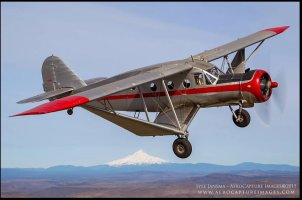
At least two Aircuisers were still flying in the seventies. One still flies today from a museum in Oregon; another is being restored in Canada.
aircruiser_tillamook.jpg

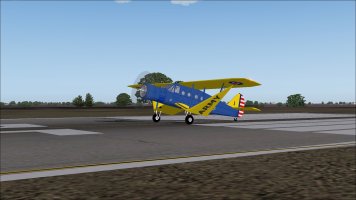
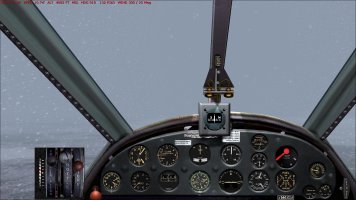
The only Aircruiser I know of for FS is the old Mike Stone model for FS2002, later updated for FS2004; no VC, no wing views from the 2D panel, but it's still fun to fly. Mine is repainted as a C-27 and has the 700hp engine used by the military variants.

Afternoon departure from Shreveport, 180 miles to Little Rock (actually named for a little rock on the riverbank settlers used as a landmark to find the place)
kdtn.jpg

kdtn2.jpg

KSPH, Springhill Airport, opened in 1966. Pilots are warned to watch for ultralights in the area.
ksph.jpg

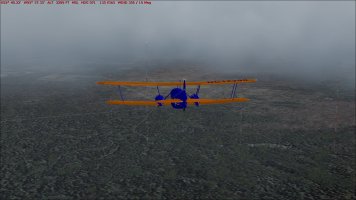
Egad, this plane is not equipped for IFR ...neither is the pilot.
whiteout.jpg

whiteout2.jpg

Temperature at 4000ft had been around 0 degC, suddenly it plummets to -20C. A brief glimpse of KAGO through a break in the clouds
kago.jpg

kago2.jpg

kago3.jpg
 
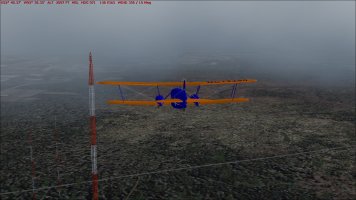
4F8, Wilson Airport, Stevens, Arkansas; privately owned, no tower or facilities, "in poor condition". But it points the way.
4f8.jpg

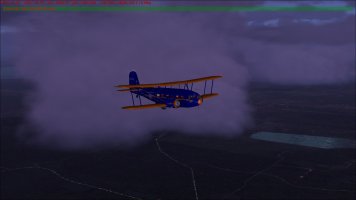
Clouding up again, flashes of lightning high in the sky, still too cold
cold.jpg

forty miles to go, more snow, visibility somewhat impaired
40-to-go.jpg

ten minutes to Little Rock, somewhere up ahead
10-min-out.jpg

KLIT in sight, thunder all around
klit_thunder.jpg

Cleared to land ...wonder if an Aircruiser ever landed here in RL
klit_thunder2.jpg


Untitled.jpg

Nitwit
nitwit.jpg

190 miles in 84 minutes
done.jpg

Next stop Memphis, about 112 miles. What to fly...
 
Fri 23rd. Jan (report on 24th)
Dare County (KMQI) → Kitty Hawk (KFFA) → Richmond (KRIC)
FS9/2004

Part 1 KMQI to KFFA

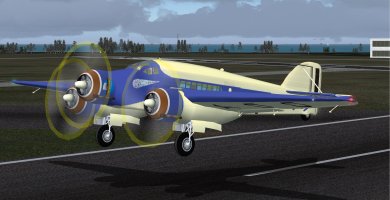
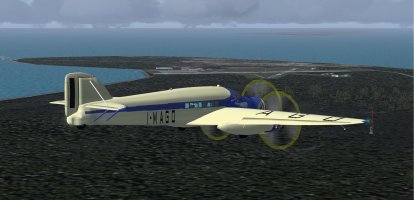
This is the shortest leg of the tour, in the air Dare County and Kitty hawk both visible, only around 10 miles apart. The Italians had prepared a suitably historic craft for us (altough Susie only co-pilot, a pilot experienced on the type (Fabio) Captain). And there she was:
1 SPA parked.jpg

The Sparviero Italian for sparrowhawk. The Savoia Marchetti SM79 first took flight in 1934 as a passenger plane, later developed for military use. Considered probably the best Italian aircraft of WWII with over 1200 produced.

“Remember, shut up! and don’t insult the Influencers.” Suzanne’s instructions clear as she made her way to the cockpit, leaving Callum and me amongst a gaggle of aviation journalists and influencers in the comfortable cabin.
Alessandro had agreed a fly past of the Wrights monument with the “authorities”.
The wind 279 at 11 Kts. So we would be using rwy 23. In taxi the Sparviero was not bad apart from a very large turning circle making tight taxi turns difficult.
We taxied down the runway to the 23 end then 180 deg turn, 15 deg flaps, a touch of up trim and full power and we were up and away:
4 spa up.jpg

Then another 180 degree turn in the air heading back past Dare County:
5 Spa over KMQI.jpg

and aiming for the monument for our fly past:
6 spa lin monu.jpg

The permission was for 500’ minimum altitude pass. As we approached I would have guessed we were well below that :eek::oops:
7 spa lin 2 mon.jpg

I was surprised how built up the area is (I hope that is just my autogen, is it like that in real life?):
8 spa mem.jpg

Maybe just a little less than 500’ ;):D. Then climbing away:
9 spa climb away.jpg

Fabio and Suzanne no doubt having a great time, heading north up the coast to fit a circuit of sorts as we returned south lining up for rwy 20 at Kitty Hawk:
10 spa final.jpg

The Kitty hawk runway is 3000’ long BUT narrow, safe touch down, but only a few feet to spare between wheels and grass verge. The Sparviero had remarkable STOL capabilities, it could take off in 980’ and land in 660’:
11 spa down.jpg

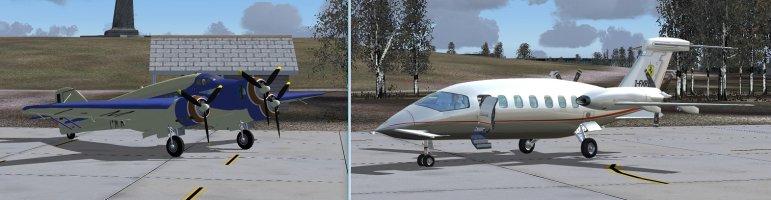
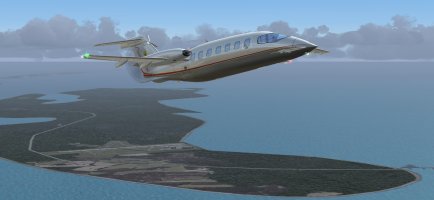
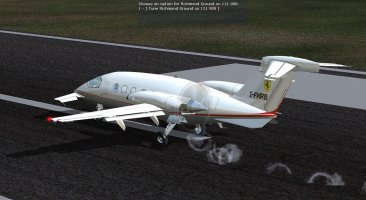
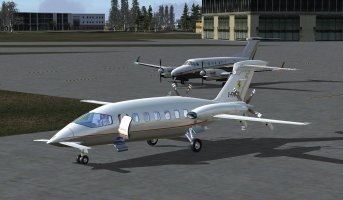
We parked up next to the New, the Piaggio P180 Avanti, it was to showcase the latest design and technology and take us on our next leg to Richmond:
Both 1.jpg
 
23 Jan. (Report filed 24th.Jan)
FS9/2004

Part 2
Kitty Hawk (KFFA) → Richmond (KRIC)

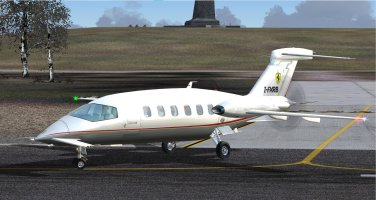
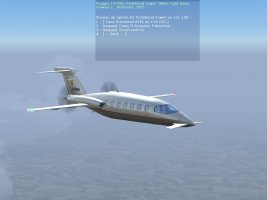
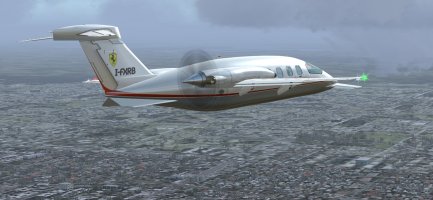
After around half an hour (time enough for photographers to get pics of old and new together) we boarded the Avanti, kindly loaned from Ferrari for the NAT.
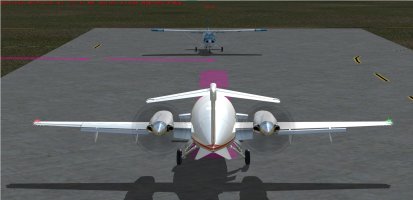
We taxied out to rwy 20, the same winds blowing as the last leg:
1 fer taxi.jpg

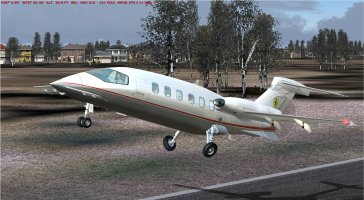
Take off more akin to a business jet than a turboprop, reaching 120 Kts with one click of flaps and slight up trim she lifted, this aircraft takes some familiarisation, she is very “twitchy”, after take off some forward stick is required or she will head up like a rocket and into a stall:
2 fer take off.jpg

3 Fer Takeoff.jpg

As we approached KMQI we turned for heading 320
5 Fer over KMQI.jpg

The plan had been to climb to 16,000’ to show off the Avanti’s speed, but the weather had other ideas, at 16,000’ the wind was 281 at 51 kts almost a perfect head wind. In any case a short 130 n.m. hop not really wat the plane was designed for; her forte longer trips 1000 n.m. + at altitudes above 30,000’.

The pilot descended to 11,000’ where the head wind was a mere 38 Kts, and we cruised at a ground speed of 265 Kts. This was the first crew who seemed to heed the NOT MORE THAN 250 kts. BELOW 10,000’. I had presumed we had had special permission in the Howard 500, where we just exceeded 300 Kts at 8000’. Or maybe it’s a rule that isn’t enforced?
Soon enough it was time to start our descent for Richmond, now not only a head wind but thick haze to go with it:
7 approach rich.jpg

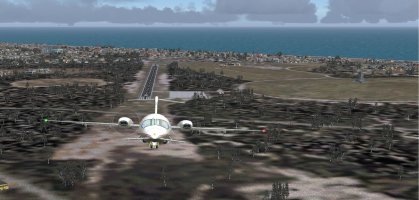
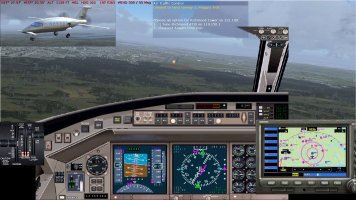
We were cleared for rwy 2, equipped with ILS we decided to use the modern autopilot:
8 fer on final.jpg

Some 3 n.m. out and I decided to switch ILS approach off and take her in manually, that’s when it all went pear shaped; quite often in FS9 switching the autopilot off results in the plane diving up or down, in this case she banked steeply to port and nosed down. I don’t know why this happens. But entering final at almost 200 Kts probably did not help. She has no spoliers and with the very streamlined shape does not loose speed easily.
I recovered but it was too late to make a landing so did a go-around.

On downwind we noticed snow to the north. We did a much larger more relaxed circuit this time, here on downwind:
9 Fer down w.jpg

Coming in for final the second time all went well. The Avanti has flaps on both canards and the main wings, they must work together in a sophisticated way:
10 Fer touch down.jpg

We were taxing to our allotted parking spot when the tower ATC cleared us into a Mexican stand off with a Cessna 172 (another annoyance with FS9 ATC):
11 Mex standoff.jpg

Finally parked by a Beechcraft it still looked like old and new next to each other:
12 close down.jpg

It was nice to be free again, free to choose our aircraft and our timing for the last four legs, but the Italian intervention very interesting. That evening in the bar of the hotel we had a heated discussion about weather it had been in the spirit of the NAT, Callum arguing of course it was: the NATs had been all about showcasing the newest and best, that is what Alessandro had been doing. Suzanne more of the opinion this was a re-creation of the old, so only older aircraft should be used. I stayed out of it, only reminding Suzanne she had jumped at the opportunity of being co pilot in the Avanti.
 
I figured that flying to the world's very first airfield at Kitty Hawk had to be a special flight, and as the stage length is only 6 nms the aircraft had to be something special instead, so I chose an 'aircraft' whose basic technology even predated the Wright Bros. :)

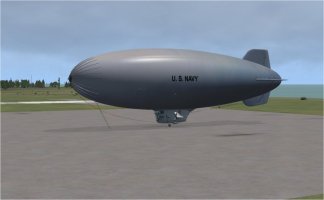
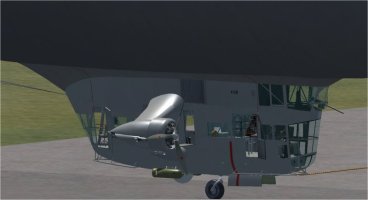
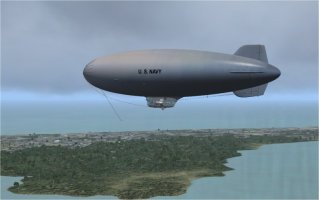
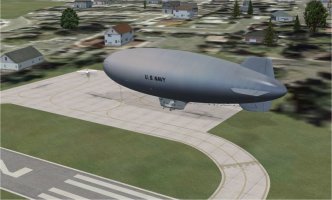
Yes, I chose an airship! In this case a Goodyear K class blimp that first flew in Dec 1938, so I reckon it counts as 'early' enough.

Leg 22-a.jpg

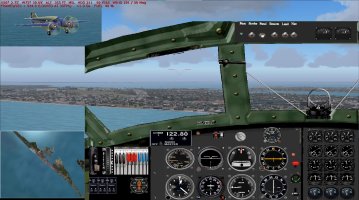
It's a BIG machine, being 250 ft long and 80 ft high, but of course in flying trim it weighed nothing. :) The FSX model is magnificent, having the most detailed externals and internals I've ever seen, quite outstanding. Here's the control cabin with all four of its hatches open. Yeah, those are bombs hanging on the sides and there's two depth charges in the open bomb bay underneath. You never know if you might spot an enemy submarine in Albemarle Sound. :oops:

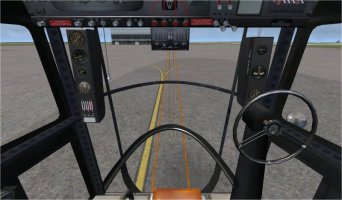
Leg 22-b.jpg

The panel and interior is even more detailed. In the panel almost all the controls actually work, even the cables that control air flow into the fore and aft ballonets act like the real ones and really do affect the model's trim. That's one of them hanging down just to the right of the vertical panel on the port side.

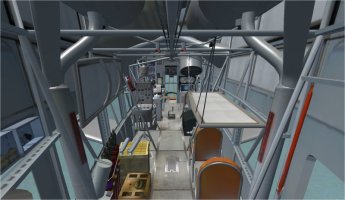
Leg 22-c.jpg

The rest of the cabin is the same, this is the view from right aft looking forward.

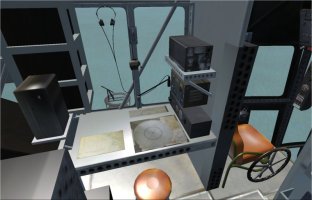
Leg 22-d.jpg

The Nav's position, just aft of the Captain, even has a working drift sight! Not that I had a chance to use it on this flight as I was almost in sight of my destination right after I'd taken off.

Leg 22-e.jpg

That take-off was almost simple, engaging the low speed mode by selecting 'Flaps Down', she lifted off almost vertically as soon as I'd opened the throttles a small amount, and I was soon out over the Sound and headed for KFFA Kitty Hawk. Steering the K ship wasn't as easy as you'd think as it had to be done just by use of the rudder and was very slow. While you could use 'ailerons' and make the ship bank into the turn, in the RW they couldn't and didn't do that, so neither did I. It took a little while to get onto heading, but after that it was a matter of keeping level with the aid of elevators and the trim cords. Note the single landing gear leg is retracted in this view.

Leg 22-f.jpg

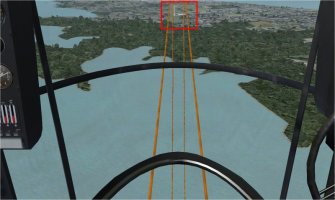
You can see how easy it was to keep on track as when the KFFA field hove into view it was directly ahead, right in the centre line Of course it was probably just luck on my part rather than any inherent skill in flying airships! Mind you, I'd have LOVED to have really flown in one, but I was born too late.

Leg 22-g.jpg

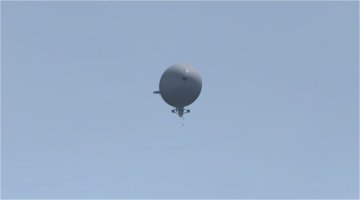
The ground crew at KFFA could hardly miss my approach, this VAST grey thing coming very slowly into view. I was cruising at around 500 ft and at about 60 kts maximum speed.

Leg 22-h.jpg

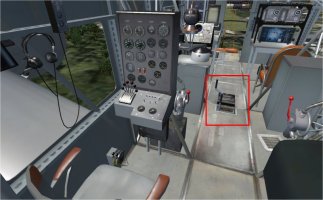
Landing wasn't going to be easy according to everything I'd read about it, in both the RW and FSX flying, but one thing that was essential was to put the gear back down. In the RW this was done by cranking a folding handle under a hatch in the cabin floor, and sure enough, there it is in the FSX model too!

Leg 22-i.jpg

Landing really wasn't easy, in fact it was probably the most difficult bit of 'flying' I've done on this whole Tour so far! Just slowing down caused huge trim changes because the engine thrust lines are way below the aerodynamic drag centre of the ship, and I was constantly trimming up and down to try and keep the ship level, while at the same time trying to reach KFFA's landing pad. The FSX model has a 'helium dump valve' incorporated, by using the 'Spoilers' and when I was almost over the pad I used it, but it resulted in a very steep nose down trim, and I had to wind some up trim in pretty quickly.

I did get the ship down eventually, and it was almost on the pad, but I doubt it would have classed as a 'soft landing'.............

Leg 22-j.jpg

Not the fastest leg of the Tour as I averaged 26 kts for the 6 miles, most of it due to the very lengthy landing, and I only used FOUR galls of fuel, with 246 galls still left in the tanks!

I think I'll use something a LITTLE bit faster on the next legs, but it was interesting trying a totally different from of flying for a change!
 
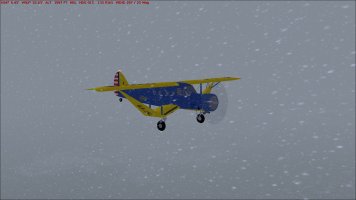
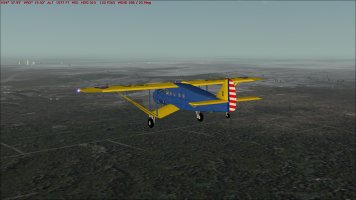
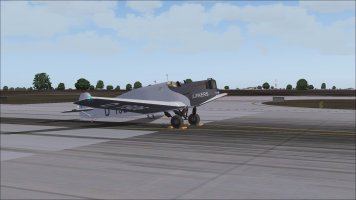
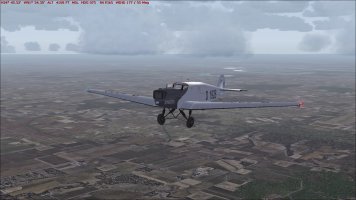
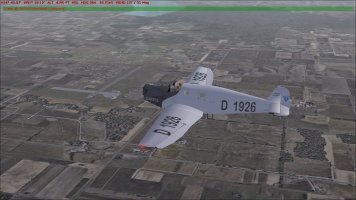
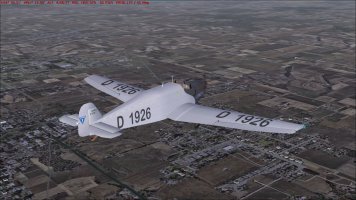
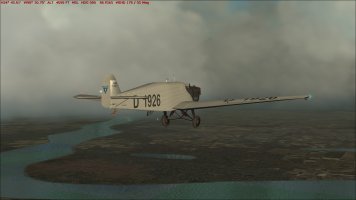
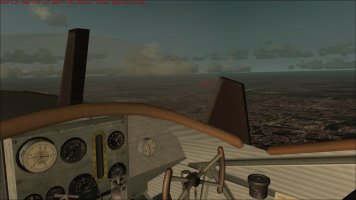
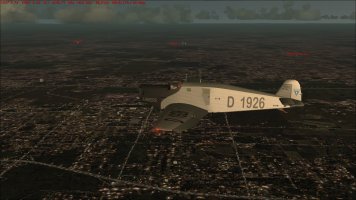
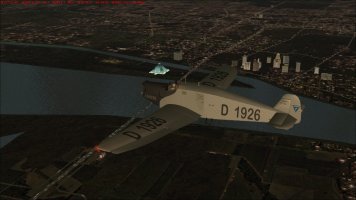
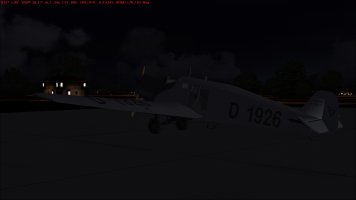
My next ride looks positively archaic compared to other planes here, but 199 were produced between 1927 and 1934, some with open cockpits, some with enclosed (the long range versions), some on floats. 300hp, non-retractable landing gear, and no flaps, yet the Junkers W33 set many records in its day,
- the first east to west crossing of the Atlantic, 37 hours in 1928 (this aircraft is on display in the terminal of Bremen airport)
- a flight endurance record of 55 hours
- a distance record of 2,896 mi during a single flight around Dessau in 1927
- a record for duration and distance while carrying a 1,100 lb load; 1,700 miles in just over 22 hours; a similar record was set for floatplanes
- a W33 fitted with a radial engine set an altitude record of 41,800 ft in 1929

They served as transports, passenger aircraft, ambulances, crop sprayers, mail planes, the Luftwaffe even kept some as trainers into the early forties. Some were license built in Sweden and Russia, they were used by the air forces of seven countries, and nine countries bought them for civil use.

Since the distance from Little Rock to Memphis was only 112 miles I though this would be a good trip for a relatively slow 86kt cruise ...boy did that bite me.
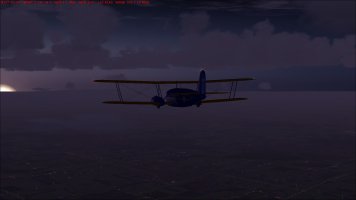
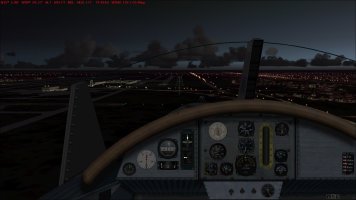
Departing Little Rock, pray for decent weather, I have the open cockpit version
klit.jpg

cruising.jpg

cruising2.jpg

6M0, Hazen Municipal Airport, aka David Duch Field (named for a local man who, at age 19, became manager of the Stuttgart Arkansas airport, and ran a flying service in Hazen for forty years)
6m0_hazen.jpg

Halfway along, cruising 4000ft at 85 kt; M36, Frank Federer Memorial Airport in Brinkley Arkansas (barely visible above the plane), mainly a base for crop dusting and fire fighting aircraft (who was Federer? even the town's website doesn't say)
m36_halfway.jpg

35 miles from Memphis, should be down in a half hour ....
35mi.jpg

cloudy.jpg

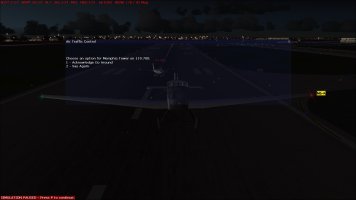
But no, ATC wants me to take the scenic route, so off we go on the upwind leg, KMEM off to the right
upwind.jpg

A parade of aircraft queued up to land, I'll have to wedge in there somewhere
parade.jpg

All those aircraft farther back are going to get very grumpy when stuck behind this speedster
 
Garish tourist rap
garish.jpg

Finally in line ...where's that damn Airbus going?! (he zipped across in front of me less than a mile away) ...note the Cessna landing ahead of me, at 1800ft; that ossified cranium is going to cause me no end of irritation
airbus-.jpg

On final, not long now...
final.jpg

WTF!?!?!? This mental midget has had plenty of time to get off the runway, doesn't even have his landing lights on (I have an excuse - the W33 doesn't have landing lights) ...now I get to do it all over again
go-around.jpg

My 112 mile jaunt that should have been less than 90 minutes turned out to be 148 miles in 2hr 40 min, including that interminable taxi to a parking space that must have been in the next county (turn left, turn right, turn left, hold for the 737, continue, turn left, turn right, hold for the Embraer, continue..... note to self - pack a lunch before landing at Memphis again)
done.jpg

Map says over 200 miles to Bessemer, KEKY, definitely want something faster for that leg.
 
Last edited:
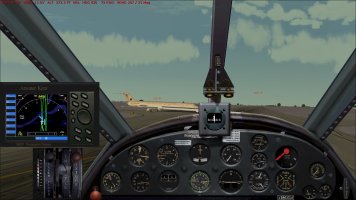
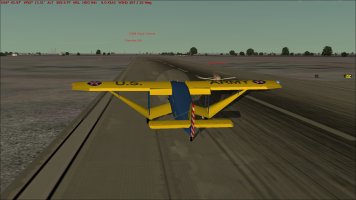
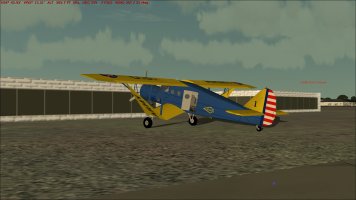
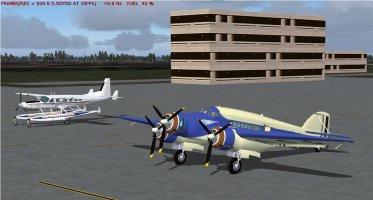
@jgf I like the W33. I have the lionheart one but it’s not really good if you want to be realist with loading management. Which one is your?

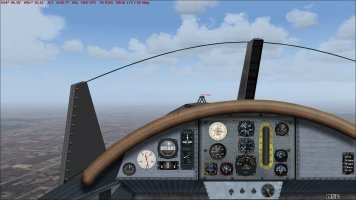
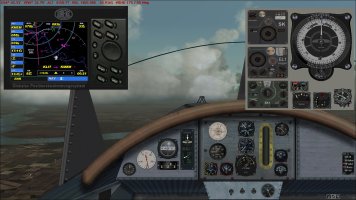
This one is from Hauke Keitel and Rolf-Uwe Hochmuth, ca 2005. I extended the panel to 1920, added some detail and shading, and replaced some default gauges (from the Vega) with ones from the Kedi set but it's otherwise original, has stations for pilot, copilot, and freight.
 
Leg 18: Atlanta Regional Falcon Field (KFFC) to Greenville Downtown Airport (KGMU)
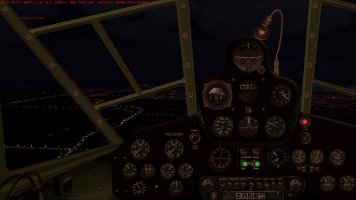
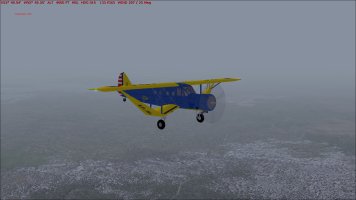
Flying the Percival Mew Gull in MSFS 2020. Using Active Sky FS for weather and Little Navmap for navigation. Using FSLTL for AI traffic.

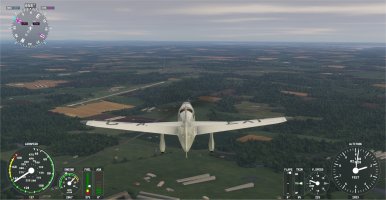
01 ready to fly.jpg
Engine started on the ramp at Falcon Field on a cloudy day. 42% fuel on board for this leg.

02 takeoff 31.jpg
After a relatively short taxi, lined up for takeoff on runway 31.

03 on way.jpg
Up in the air and on course for Greenville South Carolina.

04 at almost 3000.jpg
I climbed up to around 3000 feet altitude and this is what I encountered. For the rest of the flight stayed around 2000 feet for better visibility.

05 KWDR.jpg
Passing Barrow Count Airport (KWDR) on my left. Almost half way there now.
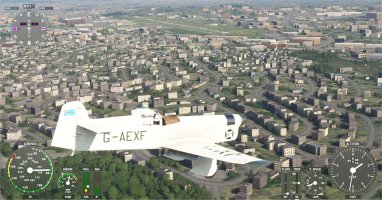
06 18A.jpg
Two thirds of the way there. Franklin County Airport (18A) is below. Weather is gradually getting better ahead.

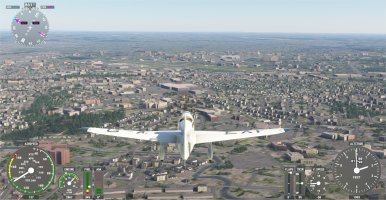
07 airport in sight ahead.jpg
Airport in sight ahead. It was harder to spot this airport in the middle of town until I got close enough. Wind was coming from the North. I banked right quickly to get on the downwind leg for runway 01.

08 base leg 01.jpg
Base leg for 01.

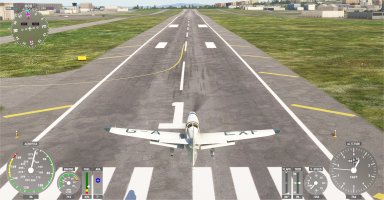
09 over numbers 01.jpg
Over the numbers on 01. Had a good landing.

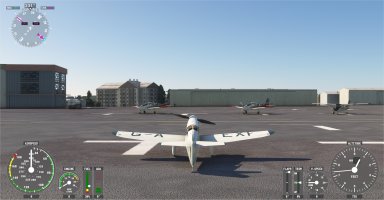
10 parked in GA area.jpg
Parked on the General Aviation ramp with lots of company. 34% fuel on board now.

Next stop is Smith Reynolds Airport (KINT) in Winston-Salem, North Carolina.
 
Back
Top