Heres some shots I'm tring to find better ones.
http://www.flickr.com/photos/43697832@N06/5273955092/
View attachment 46992
As hideous as the picture is you can see where the badge is on the port CFT. Btw all crew survived and are now back flying or so it says.
http://www.aircraftresourcecenter.com/Stories1/001-100/023_F-15 crash/05.jpg
View attachment 46993
Airborne Again
F-15E crash survivor lives
to fly another day
Capt. Don Jones is an Air Force weapons systems operator flying and training troops at a Naval air station in Pensacola, Fla. But it’s a miracle he’s still in the military at all. A year and a half ago, the F-15E fighter he was flying in at RAF Lakenheath, England, snapped in half on the runway during landing. The crash nearly tore off his arm and disintegrated his Air Force flying career.
Ten months after the Sept. 12, 2000, accident, Jones, 29, beat the odds. An F-15E weapons systems operator with the 494th Fighter Squadron at Lakenheath at the time, Jones, accompanied by his commander, flew again July 13. Shortly thereafter, he was reassigned as an Air Education and Training Command asset to NAS Pensacola, where he’s a navigator school instructor for future strike fighter weapons systems operators. He teaches air-to-air intercepts in the T-39.
Jones’ first flight back from injury was pretty tame for someone with more than 120 hours in combat. And this time the landing was typical ... unlike Jones’ last landing.
On the day of the mishap, Jones and Capt. Rex Ayers, a pilot with the 492nd Fighter Squadron, were at 29,000 feet and 310 knots over the Atlantic in an F-15E. The airmen were on day two of their return from a Green Flag training exercise at Nellis Air Force Base, Nev. The 6.5-hour mission started at Langley AFB, Va., and was nearing completion.
Ten minutes from RAF Lakenheath, Ayers piloted the Strike Eagle into a standard approach pattern. The aircraft touched down normally at about 170 knots.
Then, suddenly, something went terribly wrong.
“We both heard a ‘bang,’ or ‘popping’ sound,” Jones said. “Rex thought we had blown our left tire. It’s not a common thing, but it has happened before. It usually just means a little more drag on that side to be countered with more rudder. So that’s what we did.”
They didn’t know it then, but the left main gear connecting link failed, which caused the left main wheel to turn 90 degrees from the aircraft flight path. Once the left main gear tire and strut failed, Ayers lost directional control, initiating a horrific series of events.
At 130 knots, the aircraft whipped sharply to the left and went off the runway. The jet dug into the ground, standing the airframe vertically on its nose. In a grotesque ballet, the Strike Eagle twisted to the right and broke in half immediately behind Jones.
The wreckage slammed into the earth.
Before the aircraft had stood on its nose, Jones reached for the ejection handles.
“When we went vertical, I backed off,” Jones said. “The ejection would have skipped me across the ground. I knew I just had to ride it out. I remember hearing metal breaking and dirt going into my eyes.”
The nose section, cockpit and canopy broke off the jet, and the cockpit rolled into the dirt. Jones was momentarily stunned. He lay on his side and wondered how that was possible.
A second later, instinct and training took over. He started to safe the ejection system and work on his straps. He also started to feel pain; he was certain he had broken his arm.
Ayers was at the same angle in the seat as Jones. He had a long cut on his head, cuts to both hands and his back, and a sore neck. The seat angle caused tension on the straps and made egress difficult.
It had been less than 15 seconds since the initial “bang” heard in the cockpit.
From the 48th Operations Group conference room, 30 seconds earlier, Lt. Col. Steven Depalmer, 494th FS commander, and others watched through a window as the jets flew past on final approach. Depalmer remembers everyone was pleased the airmen and the jets were home.
Then the phone rang.
“The director of staff answered the phone,” Depalmer said. “He went pale and said, ‘Oh my God! Oh my God!’ He hung up the phone and told us the last aircraft crashed, and the aircrew hadn’t made it out.”
Everyone in the room scrambled to the runway. On the way, Depalmer looked up the names of the aircrew in the last jet. On the radio it was announced someone was alive.
The squadron commander didn’t take in the full magnitude of the crash site as he approached it; his focus was on the men.
“I looked over and saw the medics taking care of [Ayers],” Depalmer said. “He was moving, and he looked all right. I started looking for [Jones]. He was being placed on a stretcher and loaded into an ambulance.”
Jones had serious injuries to his left arm. His anti-exposure suit, harness and flight suit had been ripped in two locations, and he was losing blood.
“I knew we had to stop the bleeding to keep him alive,” Depalmer said.
In the ambulance, Depalmer applied self-aid and buddy care — placing his hands deep inside Jones open wounds in an attempt to stop or slow the bleeding. The arm was nearly severed in two locations — above the elbow and on the shoulder — slicing through the triceps and deltoid muscles, among others. His left shoulder also was broken.
Side-by-side in the hospital, a neck brace prevented Ayers from seeing what was happening with Jones. The sounds told him his “backseater” was in severe pain. Unaware of the cause of the accident, Ayers was frustrated and angry, unable to think of what had gone so wrong.
Ayers spent one night in the hospital and returned to flight status nearly three weeks after the accident.
After five weeks in the hospital and five surgeries, Jones returned home to California and underwent therapy at Travis AFB for three months.
“It was hard and very painful,” said Jones, who says he was offered a medical discharge but never considered it.
“My parents helped me get to and from rehab until I was able to do it myself,” he said.
After returning to Lakenheath, Jones monitored wing-wide electronic warfare upgrade training and did a variety of other projects. At the time, he was unable to bend his arm more than 90 degrees. Another surgery solved it. Through it all, he stayed focused on returning to full flight status.
In the base hospital, Maj. Damian Rispoli, 48th Medical Support Squadron, operated on Jones.
“His spirit and effort to heal himself and return to flight status is the real accomplishment,” Rispoli said. “No one will ever know the pain and effort and care he went through to heal his body. Many people would have given up — not pursued the extra surgeries that brought back his full range of motion. It’s a phenomenal accomplishment.”
By late April, Jones nearly had full use of his arm, and by late June he had received a medical waiver. The last step was to receive U.S. Air Forces in Europe approval for abbreviated upgrade status. He got it, and flew for the first time July 13.
Depalmer had high praise after flying with Jones.
“He didn’t miss a beat,” Depalmer said. “It’s obvious he has remained engaged in his training. We pulled more than eight Gs without a problem, and I have high confidence in him.”
Jones said, “I don’t think I can put into words what something like this does to you. It felt great to be back in the jet again.”
Both aviators credit training for their survival.
“The accident gave me an appreciation for how many things need to go right at one time for a safe flight,” said Ayers, now an instructor pilot at Seymour-Johnson AFB, N.C.
“The crash reminded me that what we do is potentially very dangerous,” Jones said. “I learned that life support training pays off, because my first thought after the crash was to immediately safe my seat [the first step of the ground egress procedure]. ... Anything can happen at anytime, so it's important to be prepared for any eventuality. ”
Sergeant Miller is with the 48th Fighter Wing Public Affairs Office at RAF Lakenheath, England. This story is courtesy of U.S. Air Forces in Europe News Service and updated by Torch.



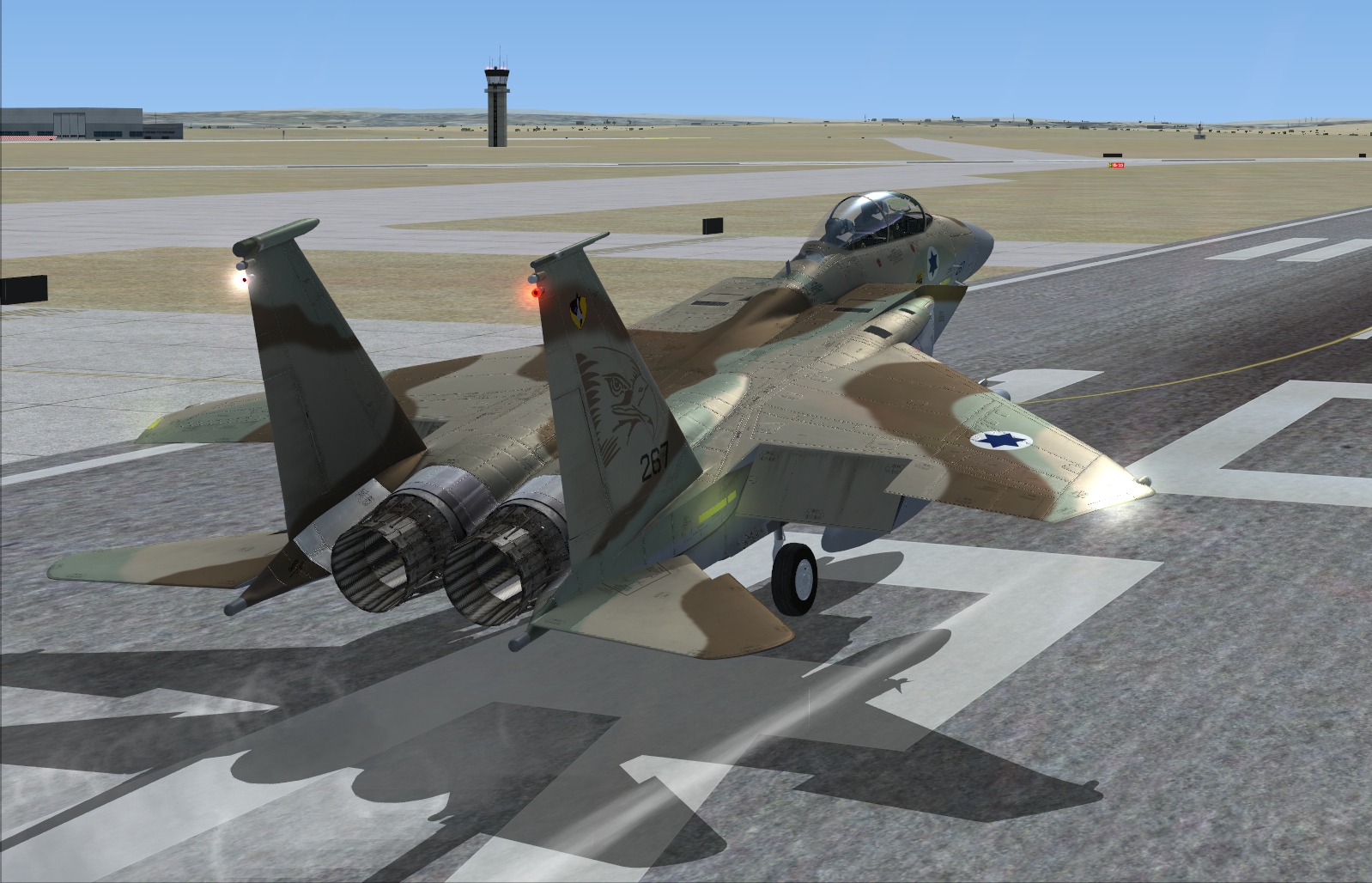
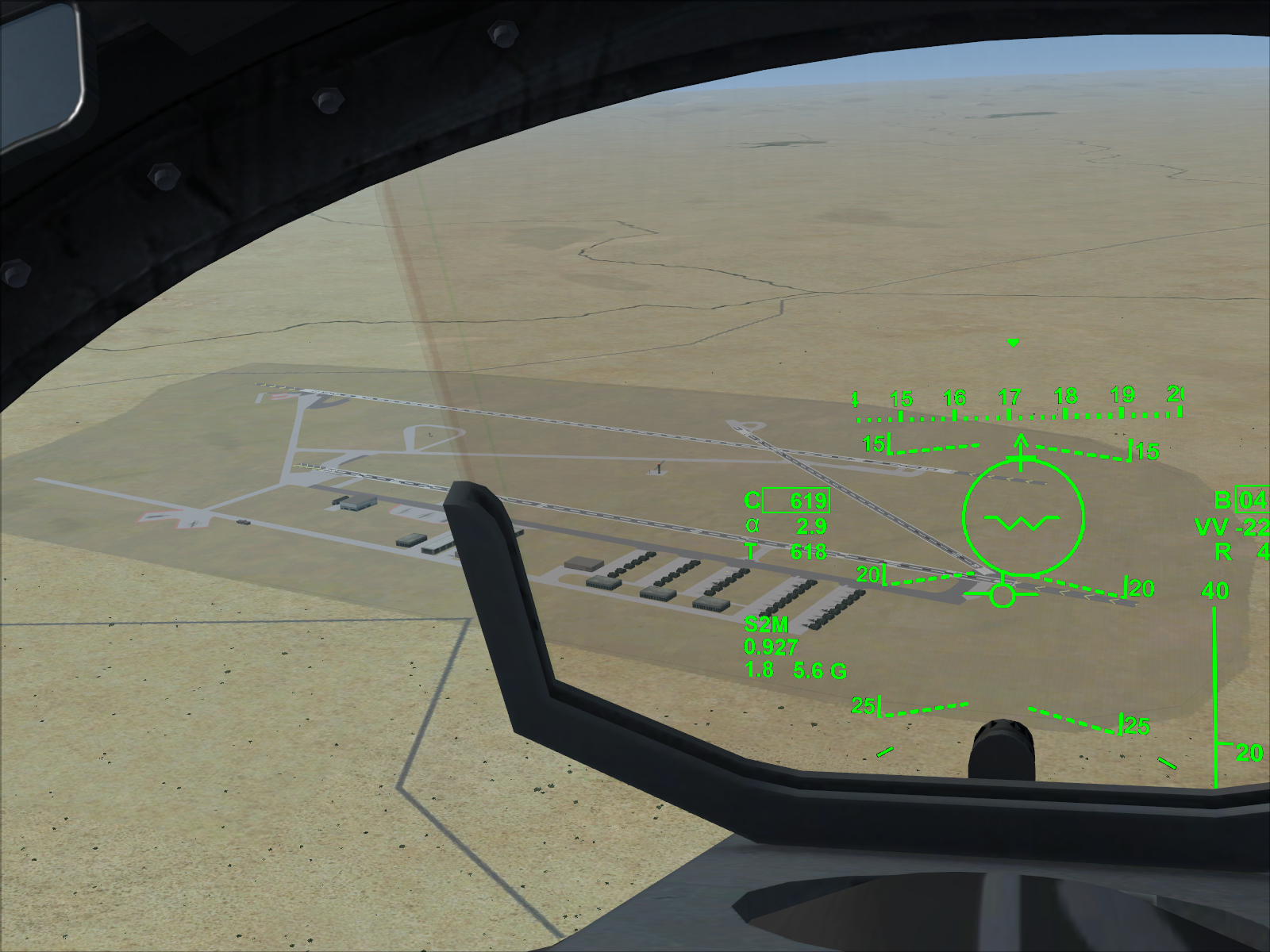


 . As one of the coders on this baby i kinda drive the others a little crazy with my perfectionism but I cant stand the thought of anything less than what it should be.