• There seems to be an uptick in Political comments in recent months. Those of us who are long time members of the site know that Political and Religious content has been banned for years. Nothing has changed. Please leave all political and religious comments out of the forums.

    If you recently joined the forums you were not presented with this restriction in the terms of service. This was due to a conversion error when we went from vBulletin to Xenforo. We have updated our terms of service to reflect these corrections.

    Please note any post refering to a politician will be considered political even if it is intended to be humor. Our experience is these topics have a way of dividing the forums and causing deep resentment among members. It is a poison to the community. We appreciate compliance with the rules.

    The Staff of SOH

  • Please see the most recent updates in the "Where did the .com name go?" thread. Posts number 16 and 17.

    Post 16 Update

    Post 17 Warning

Warbirdsim P-51D "Twilight Tear, Then and Now" Released (Payware)

Bomber_12th

SOH-CM-2025
Warbirdsim P-51D "Twilight Tear, Then and Now" Released (Payware)

For those interested, the second in the series of Warbirdsim's "Then and Now" products has been released!

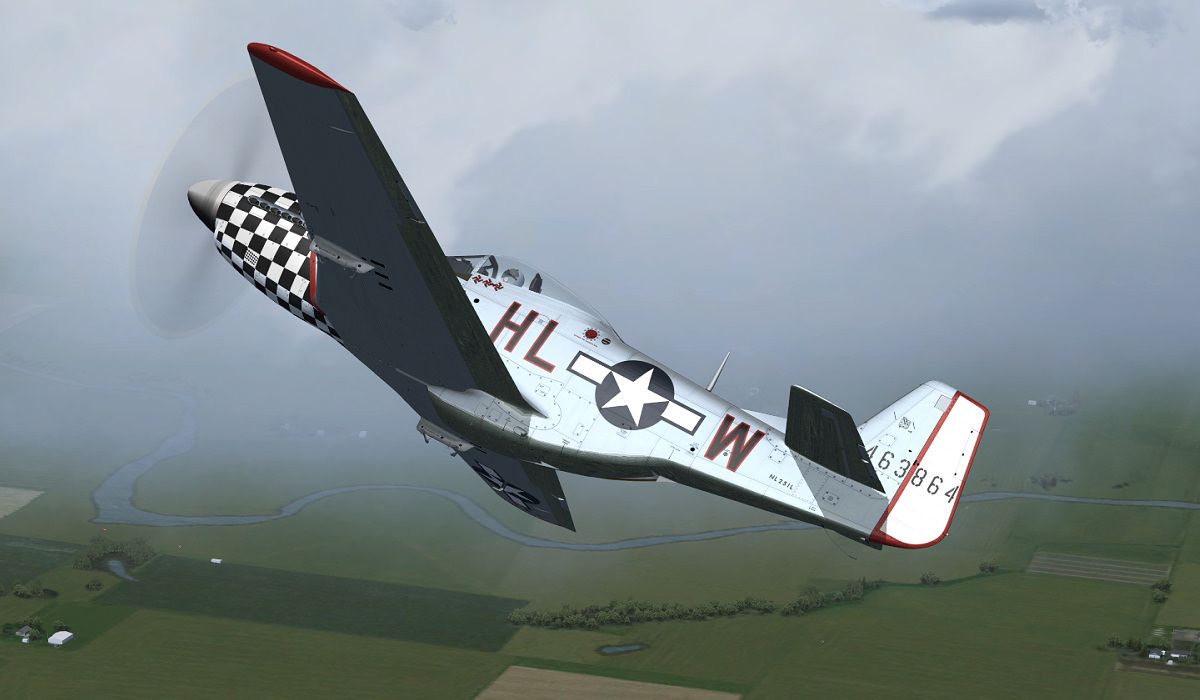
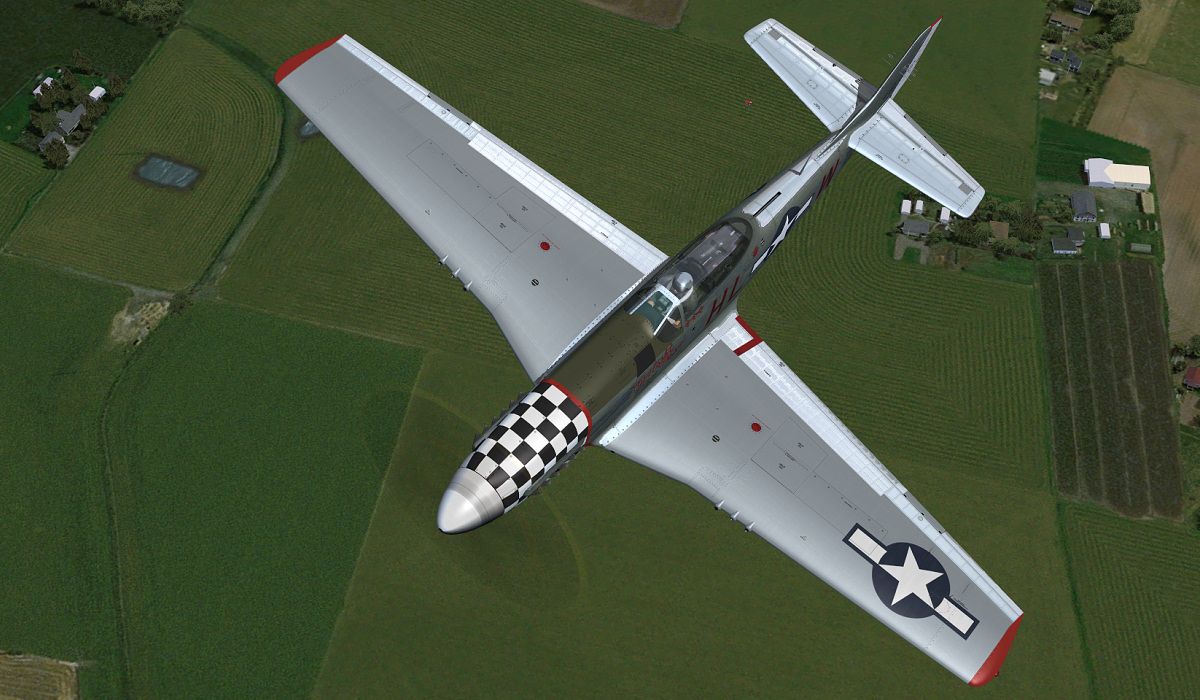
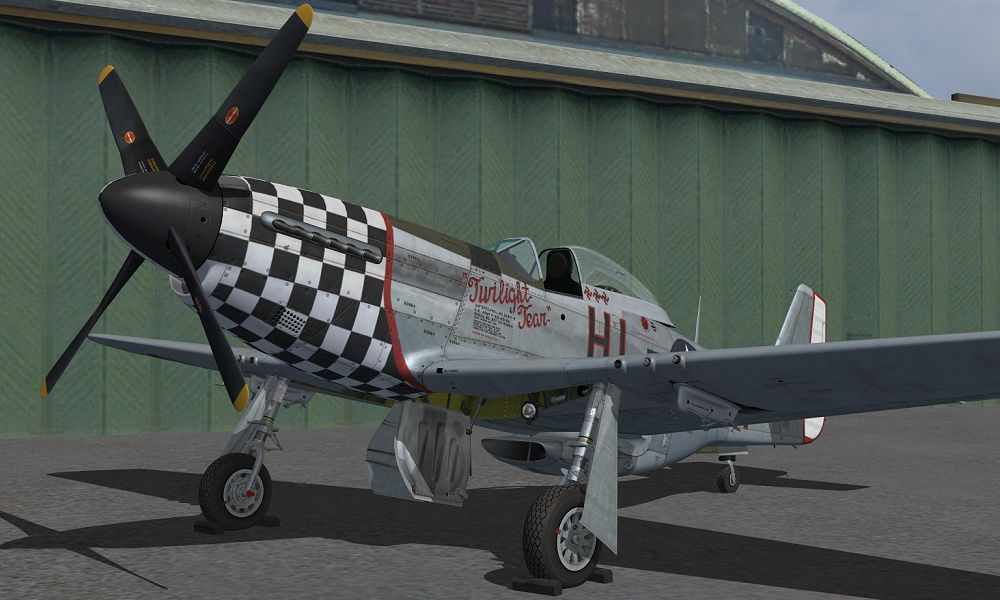
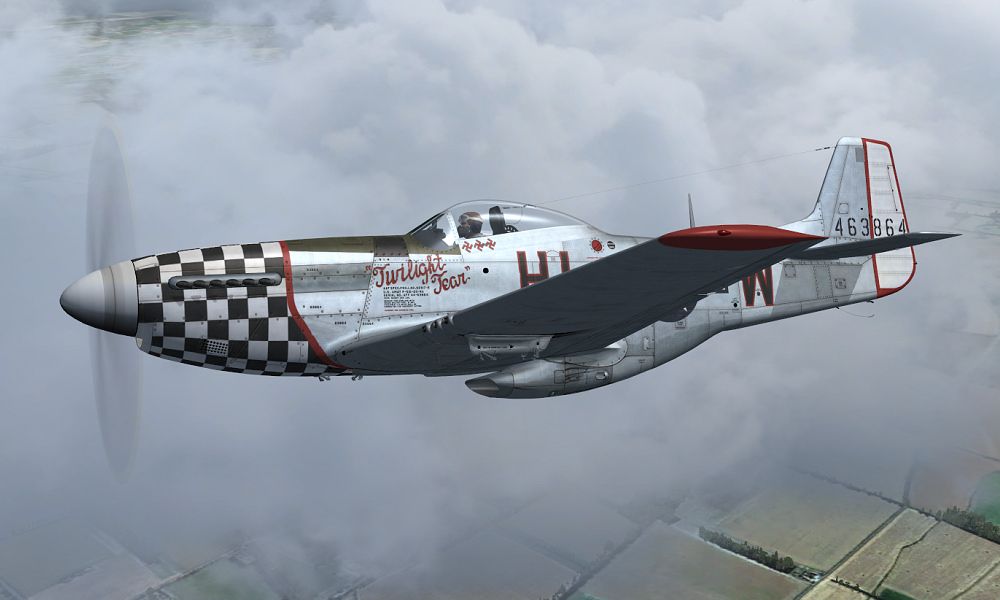
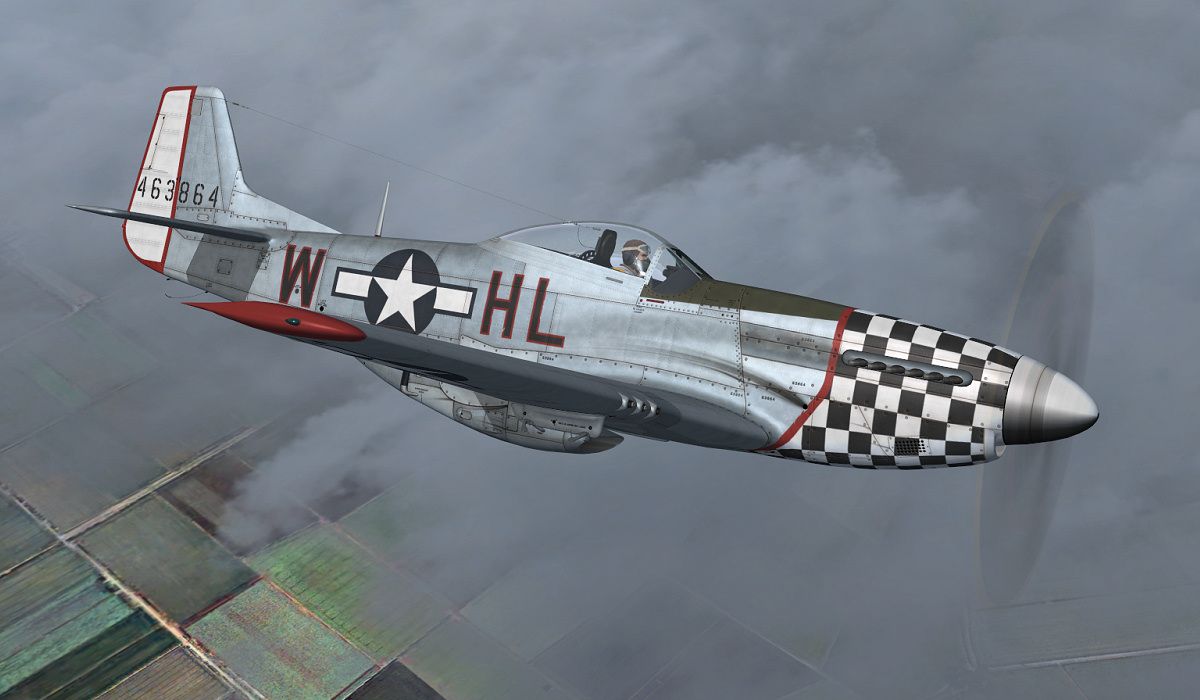
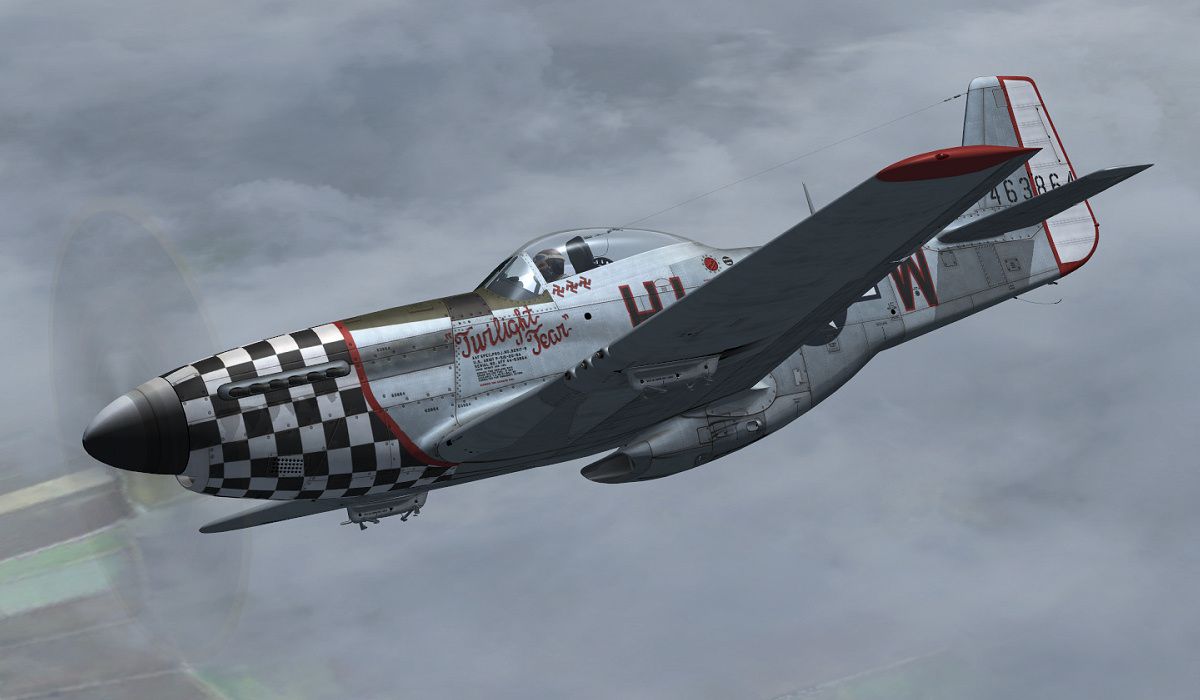
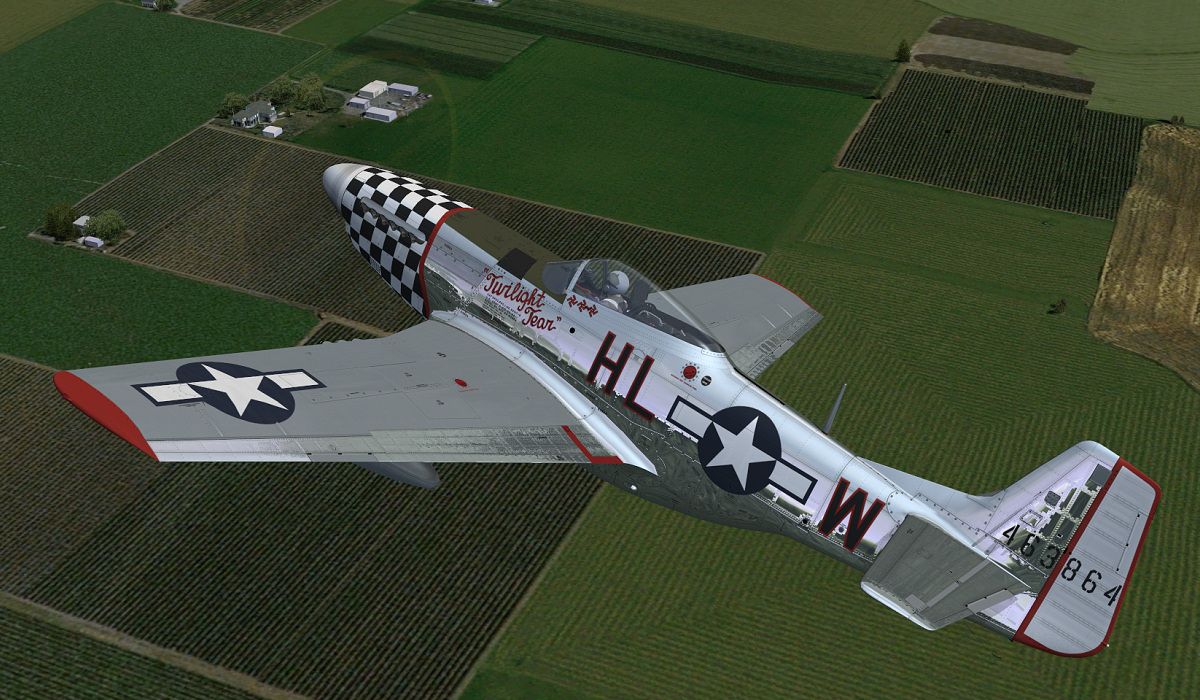
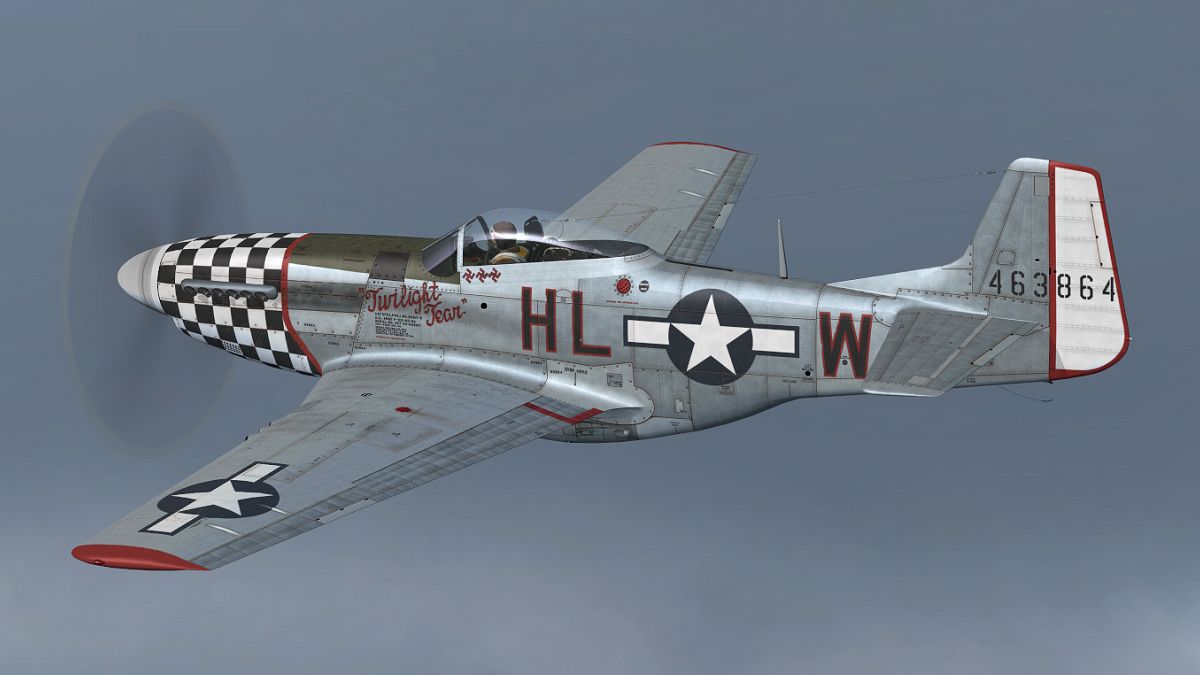
The focus this time is set on P-51D-20-NA 44-63864, that saw combat action in the later months of WWII, and still flies today. 44-63864 was built early enough in the war, that upon arrival to England it was assigned to the 78th FG 83rd FS at Duxford. From there, the aircraft became the personal mount of Lt. Hubert "Bill" Davis. Lt. Hubert named the aircraft after the "1944 Race Horse of the Year", a filly named Twilight Tear. The aircraft was credited with shooting down three enemey aircraft - 1 Me-109 on March 2nd, 1945, and 2 Me-109's on March 19th, 1945 (67-years ago today!). Following the end of WWII, the aircraft, which remained in Europe, was sold to Sweden, where it became RSwAF Fv26158 F16 coded Red D, and later Green K. Following service in the Swedish AF, the aircraft was obtained by the Israeli AF. The aircraft was then later sold to William Lear Jr. who flew it from Tel Aviv to Athens, and then to Geneva, with the aircraft registered then as N251L in 1960. In the summer of 1963, the aircraft was to be ferried accross the Atlantic to the U.S., by pilot Roger Gaston Arnoult, but Arnoult, having never flown a P-51 before, crashed on landing at Reykjavik, Iceland. The aircraft was almost sold for scrap, but the remains were rescued by Petur Jonsson and Michael Valdimarsson in 1986. The remains were then purchased by Ron Fagen, of Granite Falls, MN, who sent the project to Tri State Aviation for a rebuild to completely stock and airworthy condition. The aircraft flew again for the first time since 1963, in April of 2011. Final detailing was conducted through a joint-effort by Fagen's Warhawks Inc. restoration company, and the then newly founded Aircorps Aviation restoration company. The aircraft was then showcased at the 2011 EAA Oshkosh Airventure air show, where it won the WWII Grand Champion award for the authenticity and complexity of the restoration.

Having been provided some amazing access to this aircraft, as well as some exclusive photographs, producing this project was a must.

For more (very detailed) information and a selection of screenshots, please see the product page here: http://www.warbirdsim.com/Store.do?state=ViewProduct&product=34&category=1
 
This is amusing, usually I do not buy this quick after release but norton file insight is giving me a low maturity/download warning and deleting the download. LOL trying again to dl think i have it turned off now.
 
As with all of Warbirdsim's P-51D products, the goal with "Twilight Tear, Then and Now" is to provide the most accurate and authentic reproductions of the aircraft. In this case, that includes correctly reproducing the aircraft as Hubert Davis would have seen his mount in late March of 1945, while also reproducing the aircraft as the current-day owner/pilot would find it, this very day. There are many differences as a result of this, but also too, there are many similarities between them, due to the ever increasing desire for absolute authentic restorations, where no expense is spared to re-make the aircraft just as it was when originally manufactured.

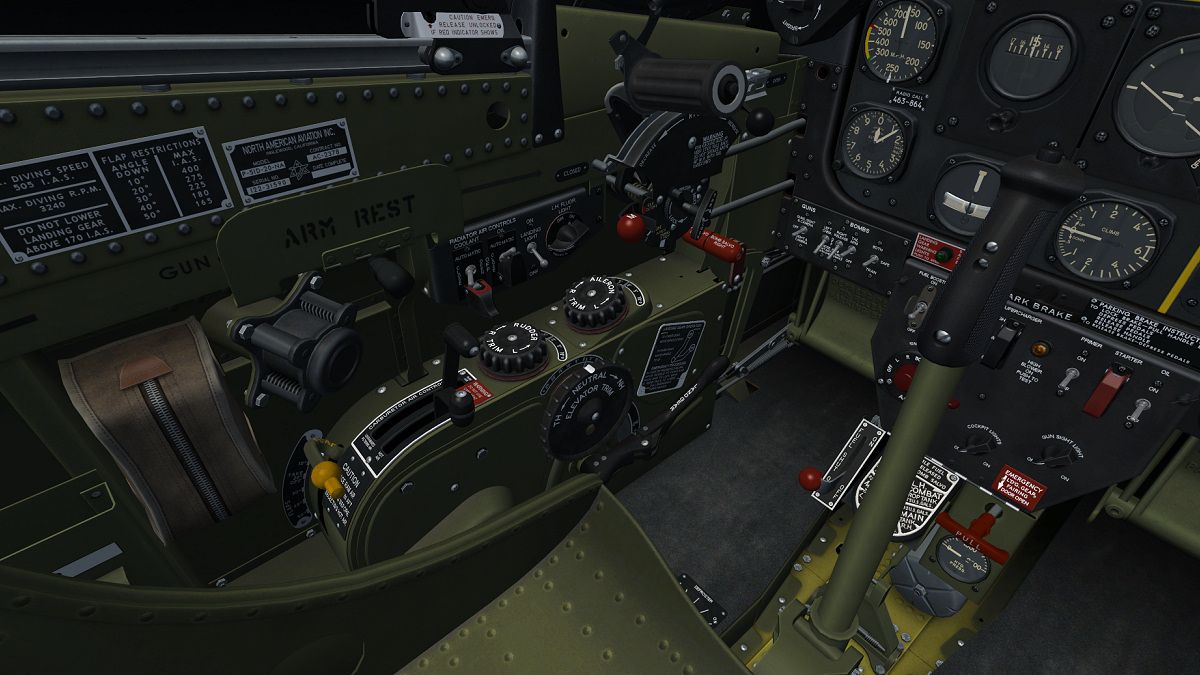
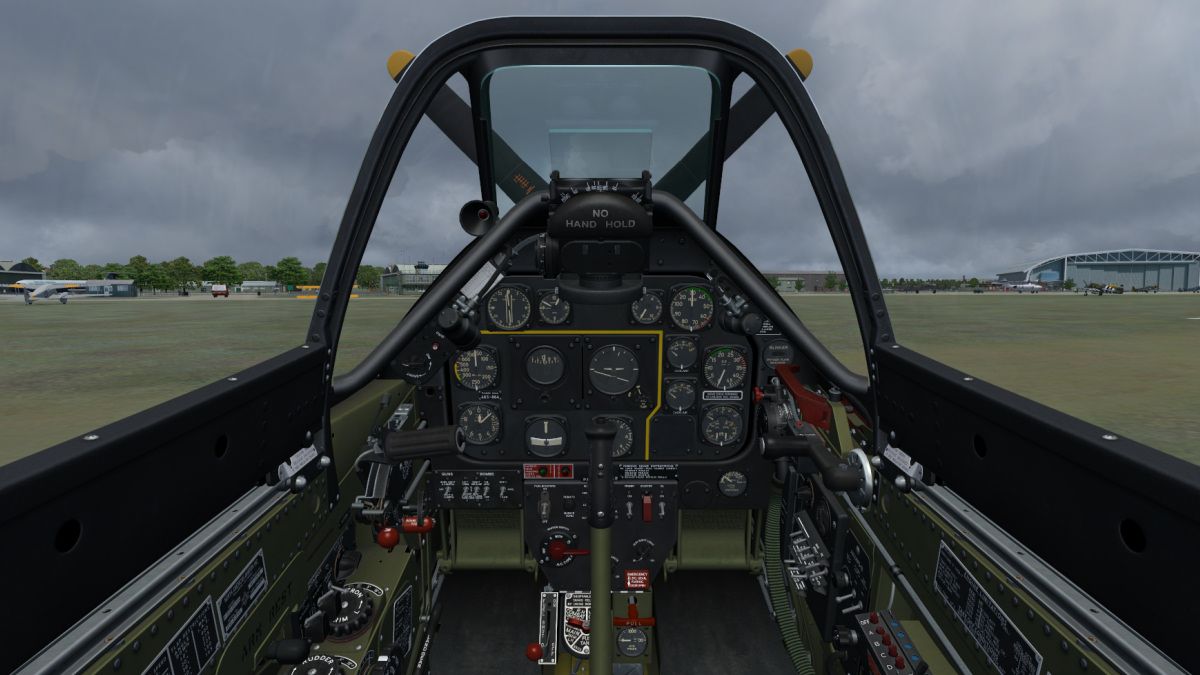
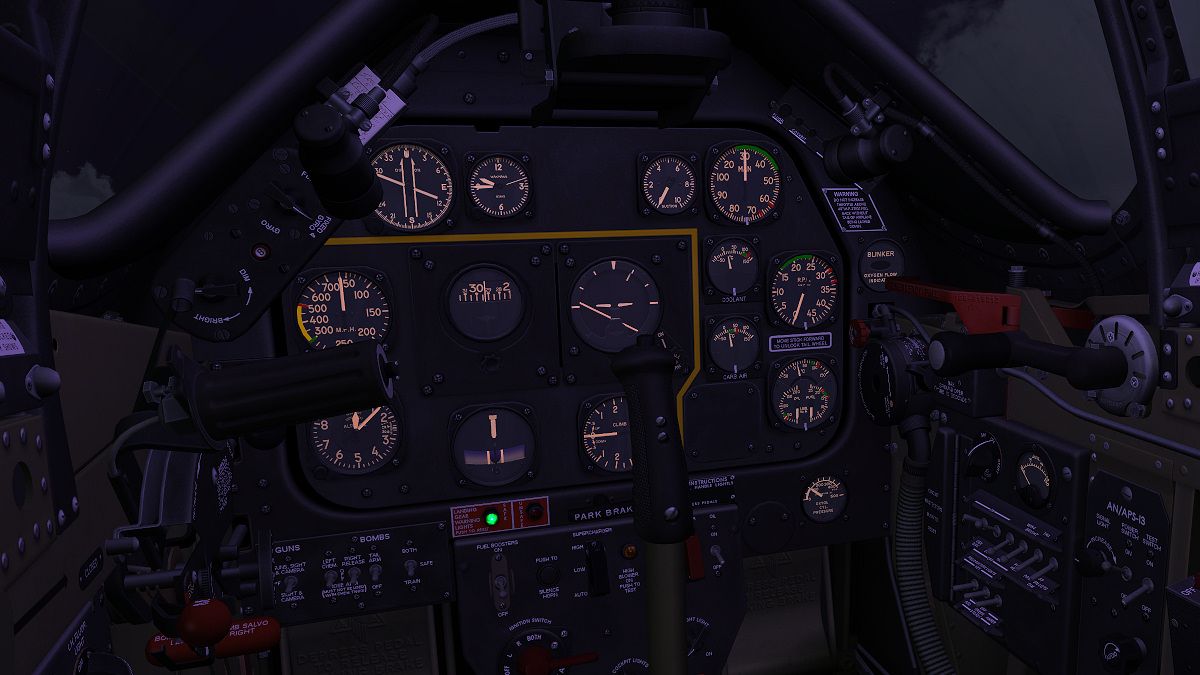
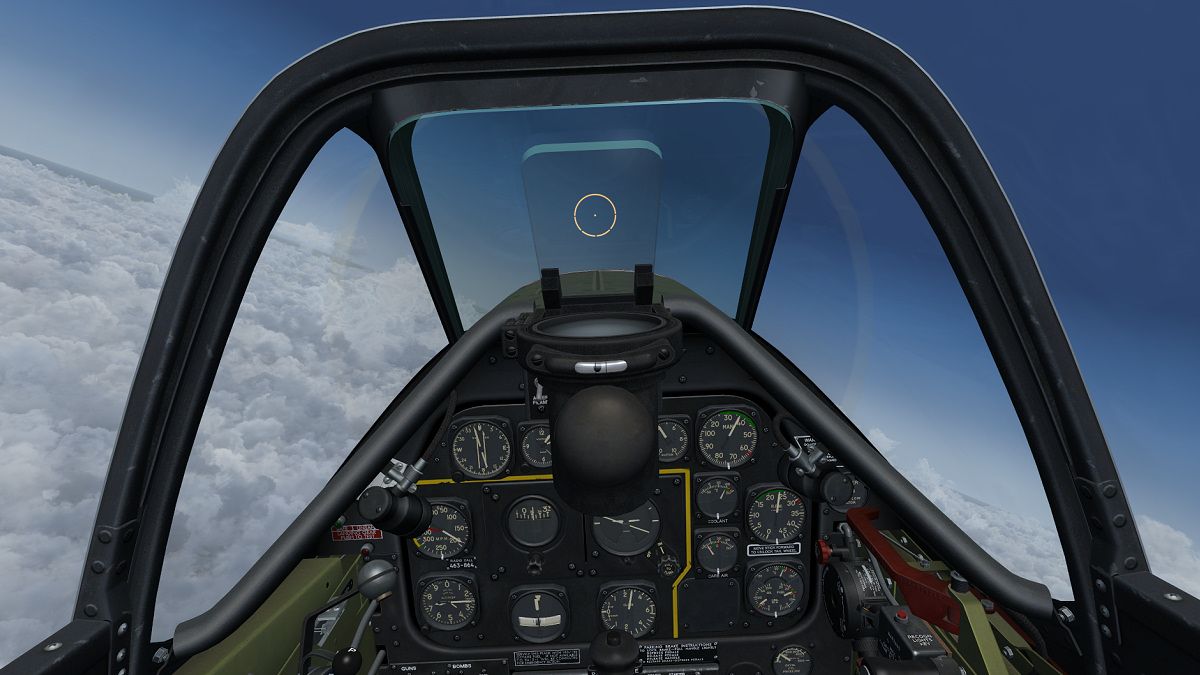
The wartime example, reproduced as the original could be seen in late March 1945, has an N-9 reflector gun sight installed, as well as a generally-early interior cockpit layout/configuration, just as it would have been before the rocket control system and tail warning radar sets were installed on later variants. The N-9 gun sight fitted within the Warbirdsim wartime 'Tear, is highly detailed, modeled from as many photos and illustrations as could be found. The authentically-drawn reticle is collimated. The restored 'Tear depicts the aircraft as it was, late in the war and post V-E day, when the aircraft was modified in the field with the removal of the N-9 sight and the installation of the K-14 gyro computing gun sight, as well as the installation of the AN/APS-13 tail warning radar set. The K-14 gun sight fitted within the Warbirdsim restored 'Tear has the option to display the authentically-drawn fixed reticle, which is collimated, or the animated and authentically-drawn gyro-controlled reticle, which due to the unique animations is not collimated. While the N-9 sight remains fixed, you can remove the K-14 within the restored 'Tear. Also, by clicking on the seat within the VC of the restored 'Tear, you can also change the pilot from modern flight gear, to period flight gear. Each version of the aircraft has a fully detailed left gun bay, that is detailed, uniquely, for these aircraft, including proper ammunition type (armor piercing and incendiary), as well as the last three digits of the serial number are stenciled on each gun, so that when they were taken out and cleaned, they knew which aircraft they belonged to, just as the serial number is also stenciled on each of the most-removed panels, so that they didn't get mixed up with any other aircraft.
 
This is amusing, usually I do not buy this quick after release but norton file insight is giving me a low maturity/download warning and deleting the download. LOL trying again to dl think i have it turned off now.

That's a bit troubling! While there shouldn't be any reason for concern, I'll pass that on to those who manage the sales and website. If anyone has any questions or concerns at all, feel free to contact Warbirdsim Support, or contact me directly via PM or e-mail, and we'll be more than happy to assist with anything and everything - even if you just want to shoot the breeze, or whish to know more about the products.
 
That's a bit troubling! While there shouldn't be any reason for concern, I'll pass that on to those who manage the sales and website. If anyone has any questions or concerns at all, feel free to contact Warbirdsim Support, or contact me directly via PM or e-mail, and we'll be more than happy to assist with anything and everything - even if you just want to shoot the breeze, or whish to know more about the products.
I don't think anything is wrong either other than Norton Nannyware.
 
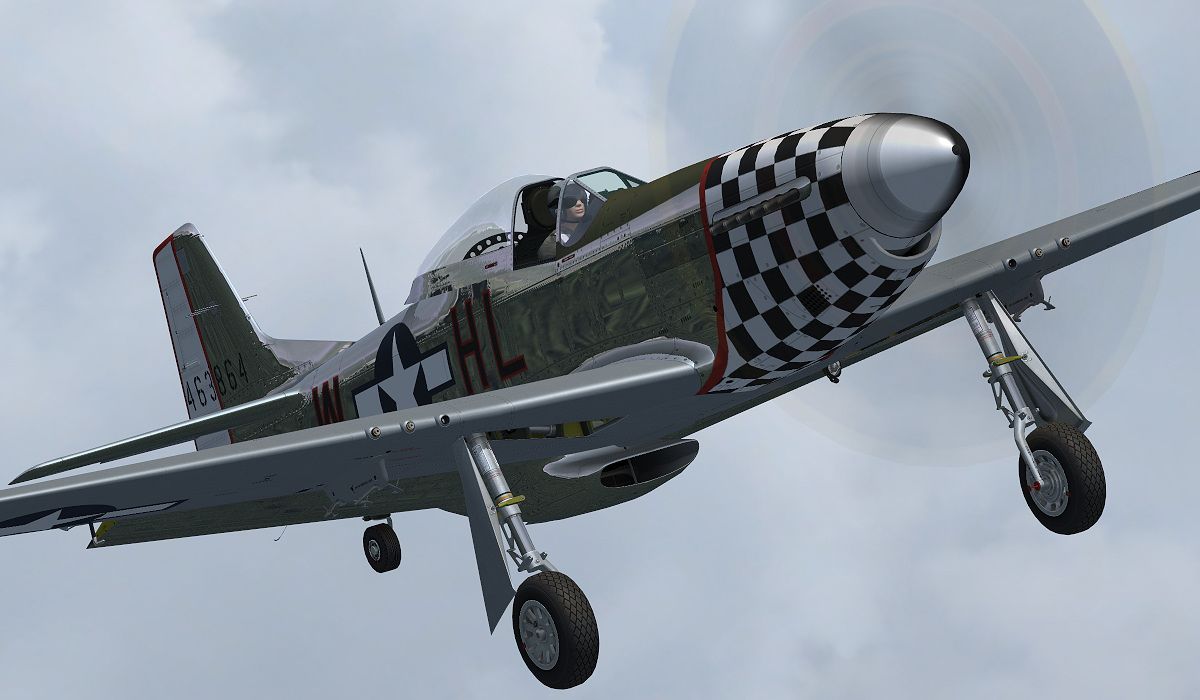
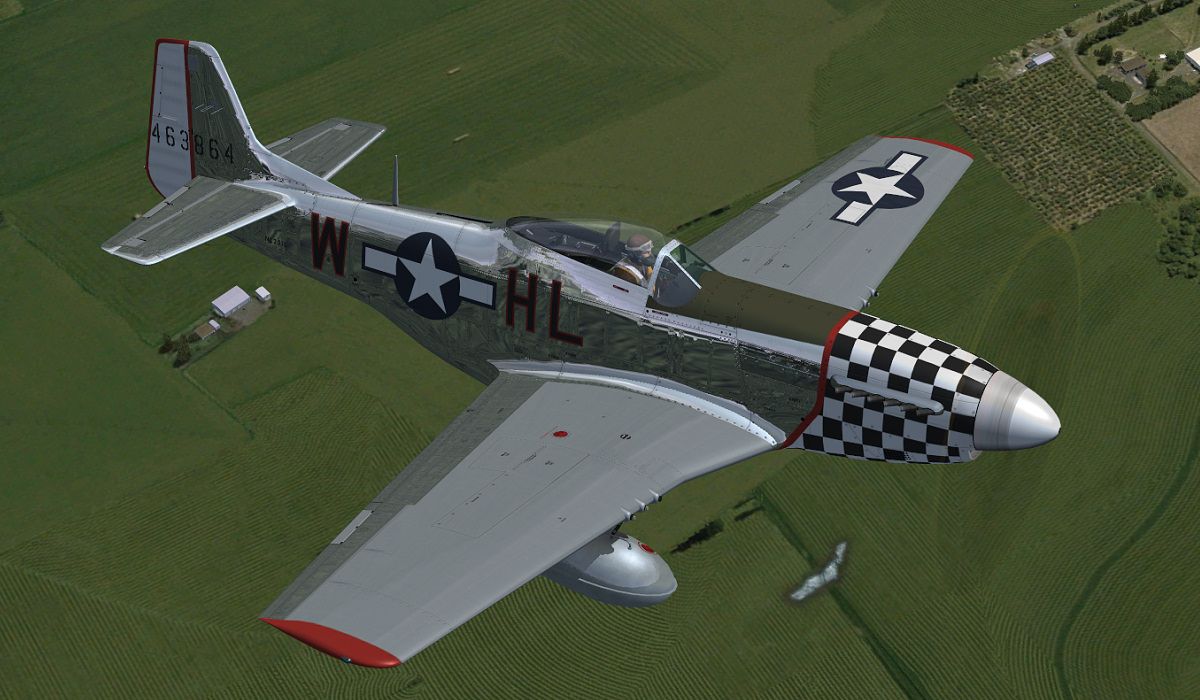
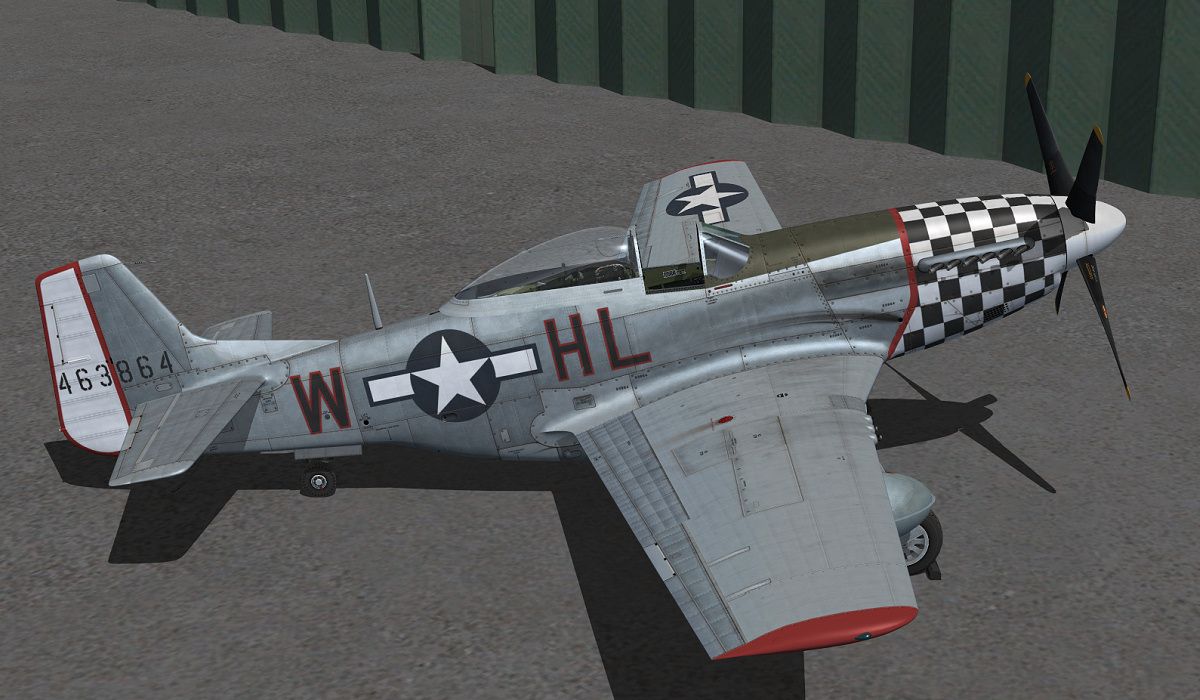
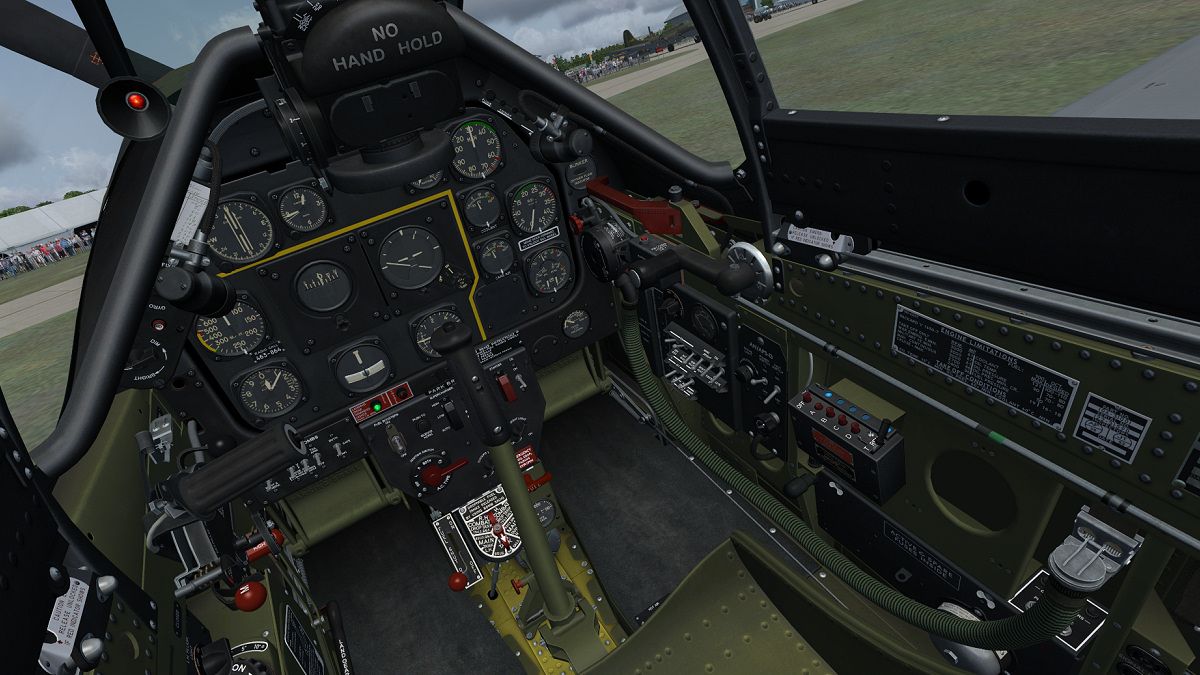
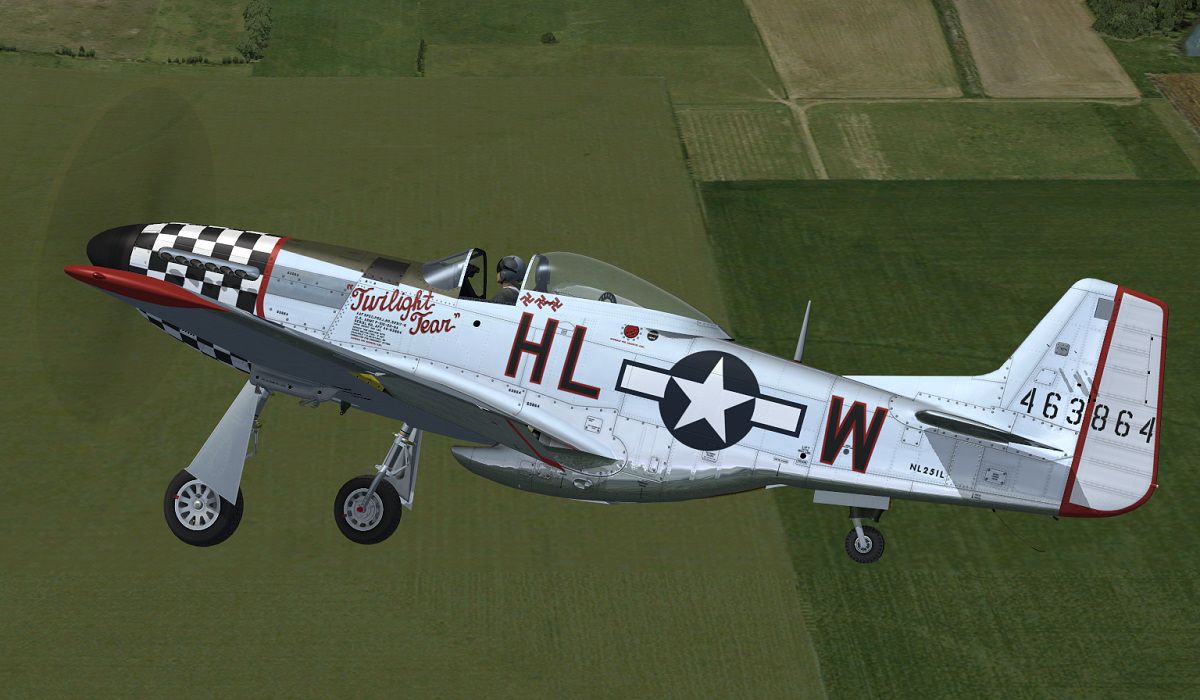
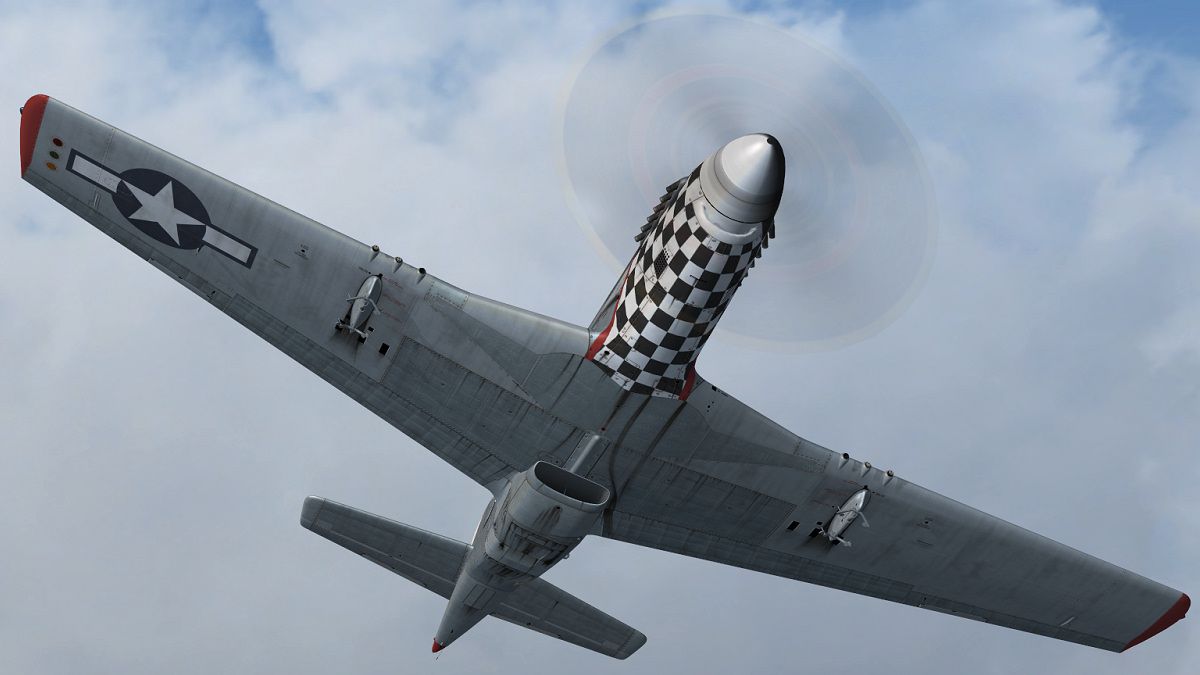
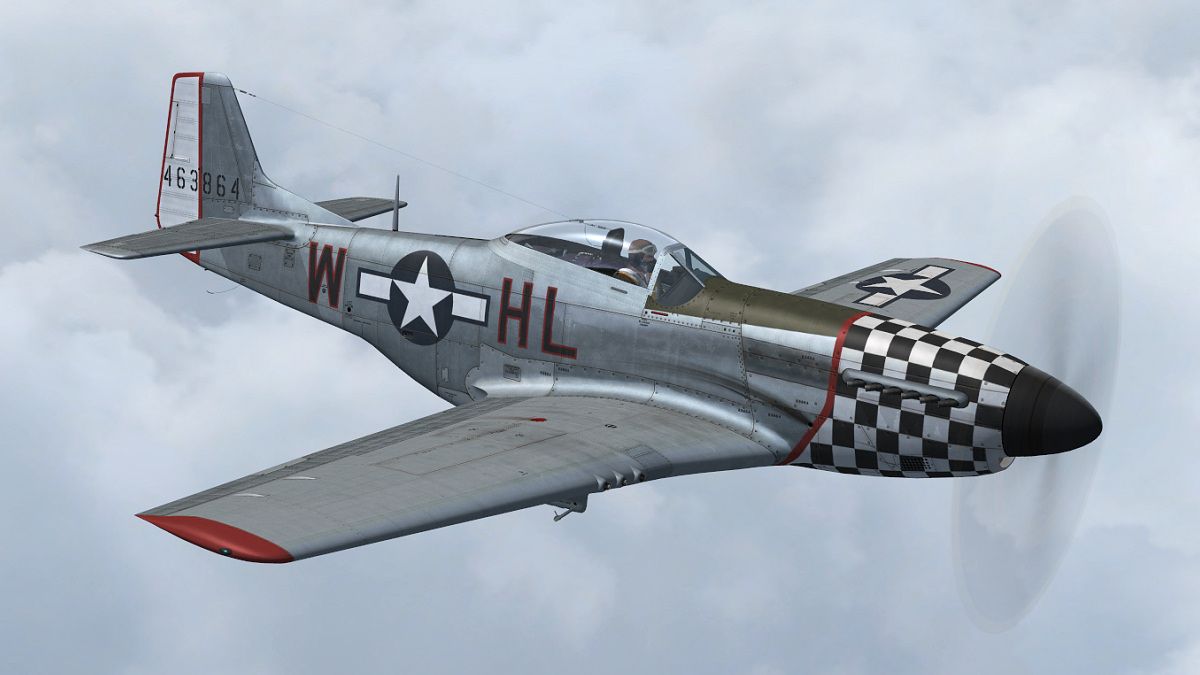
Here are a few recent screenshots of the restored variant of "Twilight Tear", as it exists today. These screenshots illustrate the modern-dressed pilot in the cockpit (which can be changed at the click of the mouse), as well as the K-14 gun sight and tail warning radar set fitted on the restored 'Tear. Also, the canopy fitted is that of the "Dallas" type, which has a very slicked-back appearance to it. All of the bare metal is polished to a mirror-finish, while the wings, trim tabs, and fabric rudder are painted in dull-silver dope, just as originally from the factory. All of the markings were applied with flat/matte paints, and all of the internals of the aircraft are finished in a variety of chromate zinc (yellow) and interior green primers. The 75-gal drop tanks, authentically detailed, also have completely accurate/authentic pressure and feed lines, all precisely modeled to match the original illustrations and drawings for these plumbing lines on the early D-model Mustangs.

TT_rest_8.jpg


TT_rest_7.jpg


TT_rest_1.jpg


TT_rest_6.jpg


TT_rest_12.jpg


TT_rest_15.jpg
 
The wartime example, in contrast, has a very mute finish to the natural metal, almost flat. This look was recommened to me while the aircraft was being beta-tested, to match the look the original period photos seemed to illustrate. The aircraft has oil and coolant over-flow stains, exhaust stains, and general weathered-stains, with just about each individual streak copied from period and modern photos, so each leak is accurate. During this time is aicraft's life, it did not yet have the tail warning radar set fitted, and it still had the N-9 reflector sight installed, from the factory. The aerial wire and beacon receiver (mounted to the right floor board) were almost always removed once the aircraft got to England, but this is a detail I wanted to keep (especially as by not having it, I'd likey get more people thinking that it was a detail I missed - especially when they see it included elsewhere).

Image8-2.jpg


Image9-2.jpg


Image14.jpg


Image15.jpg


Image10-2.jpg
 
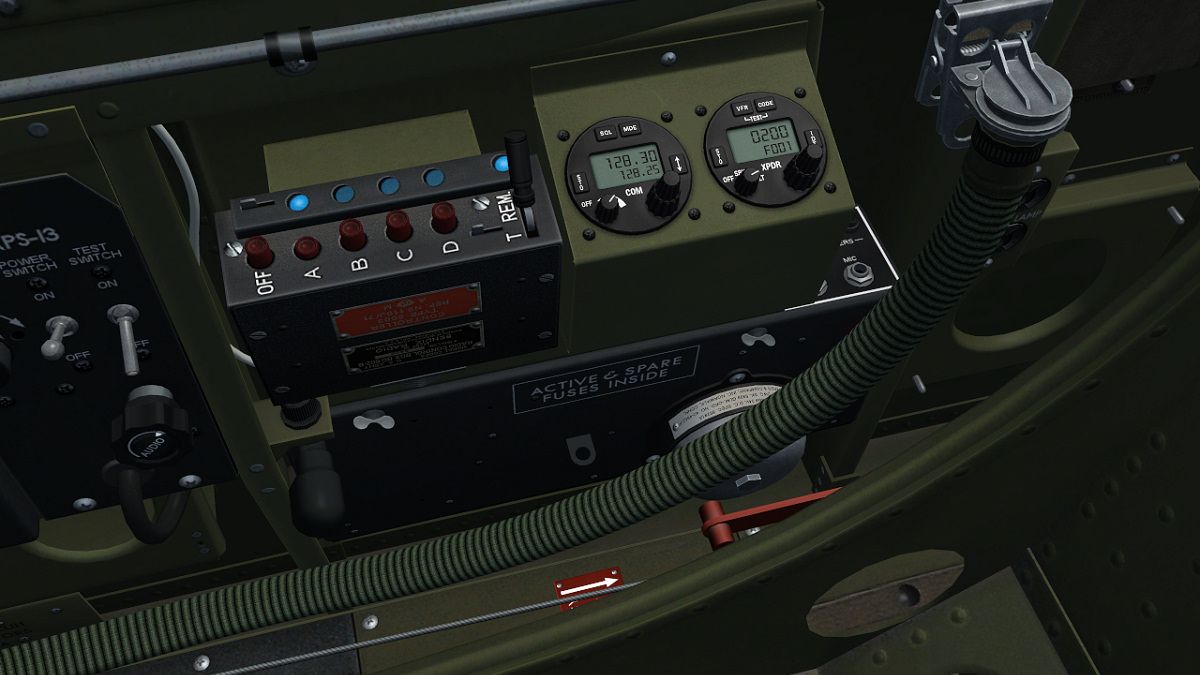
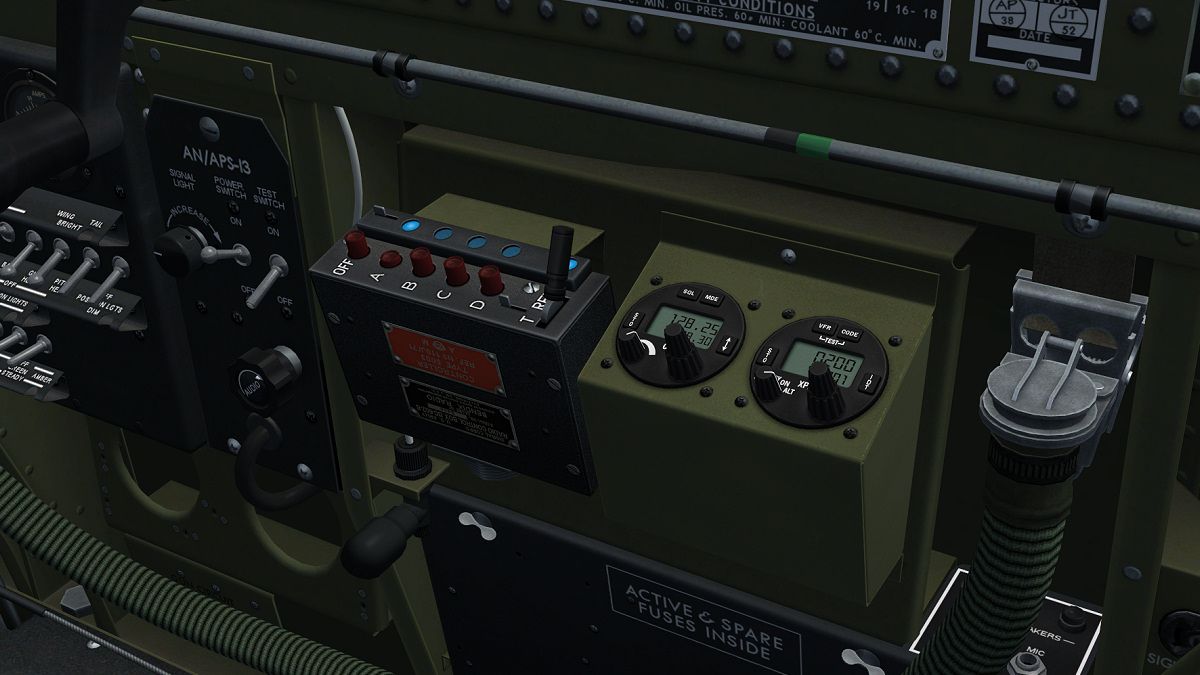
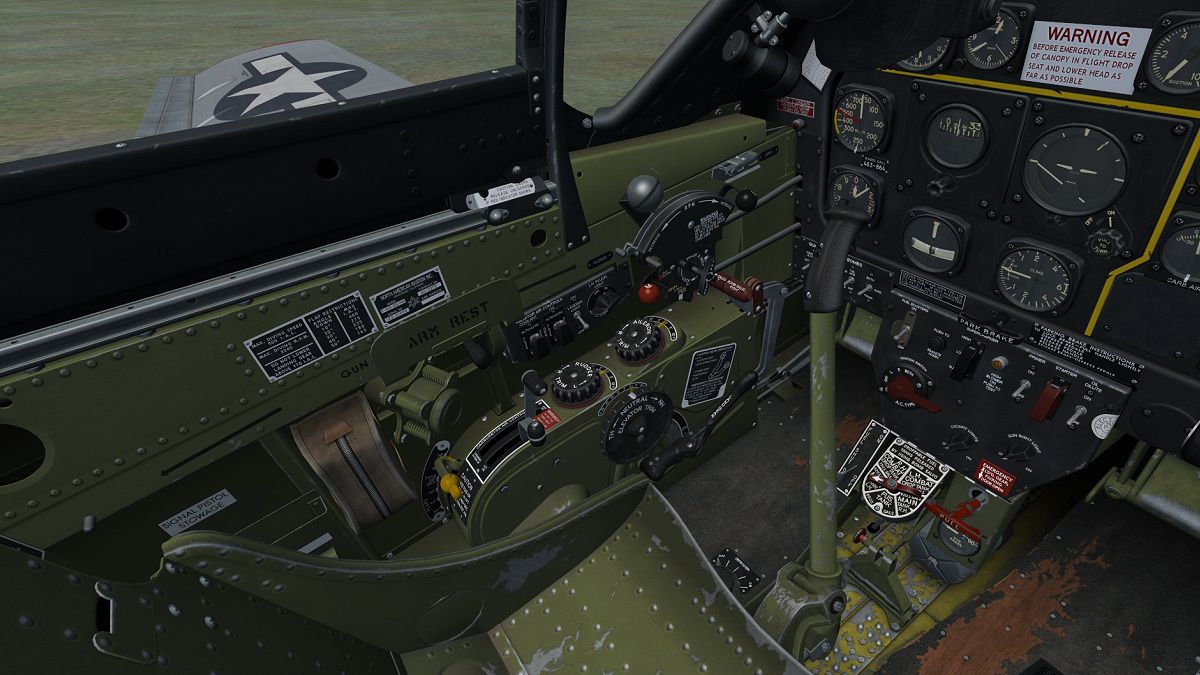
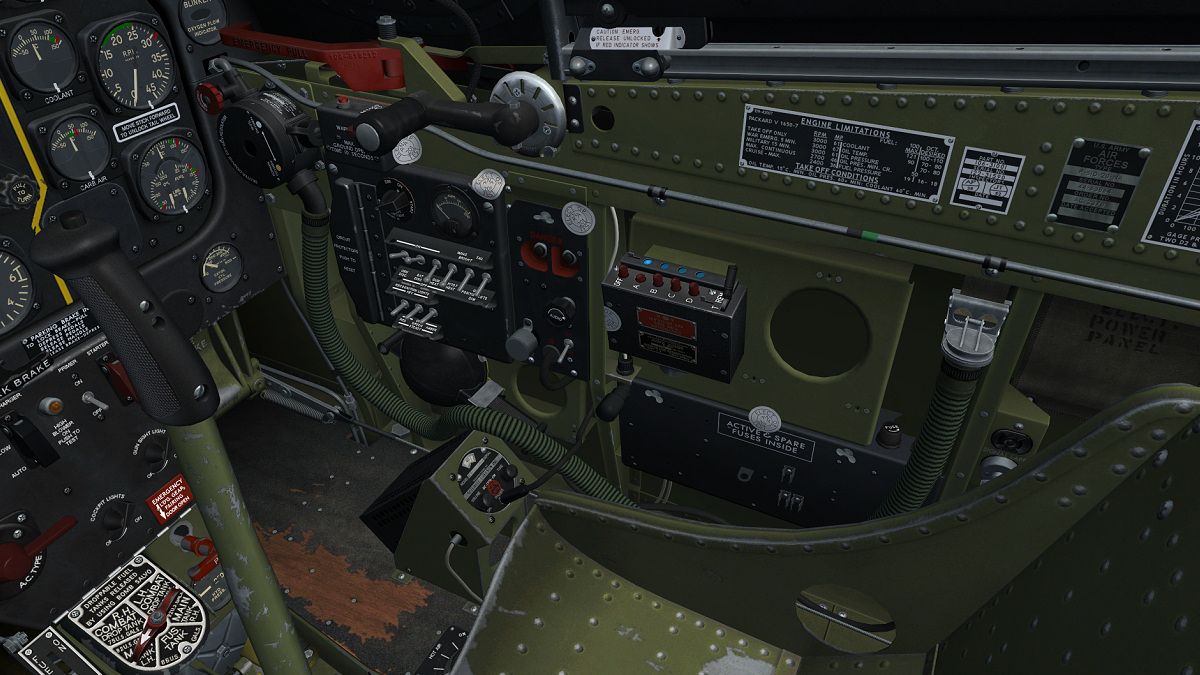
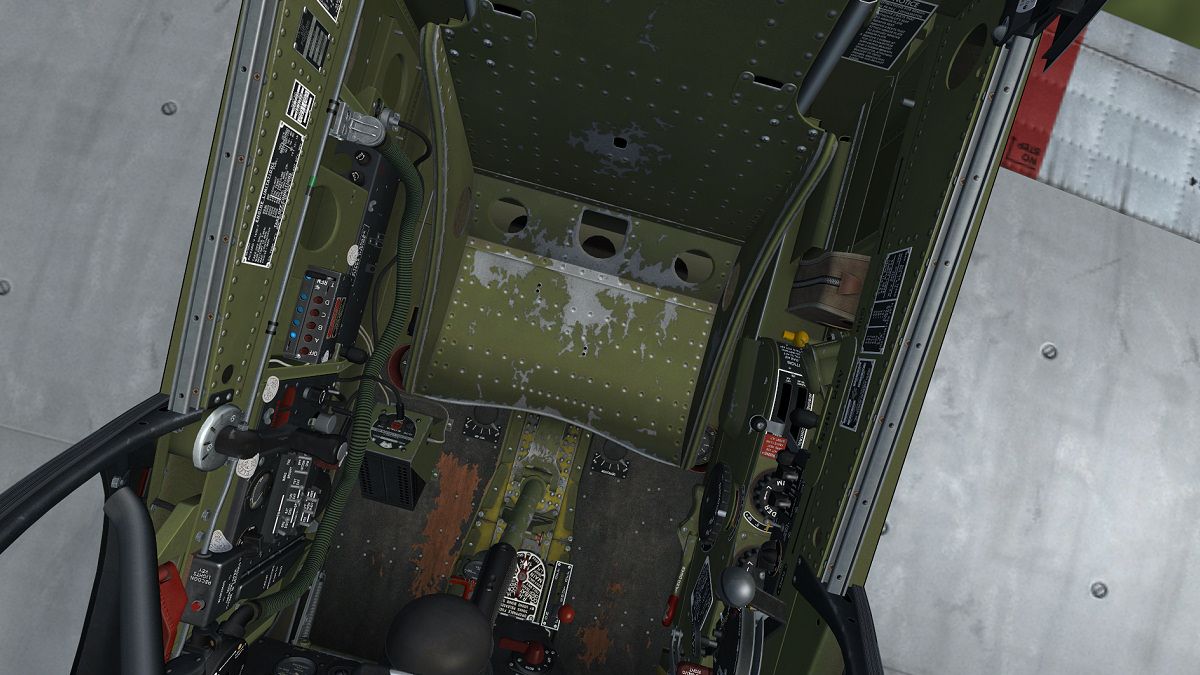
The restored "Twilight Tear" has two modern avionics control heads, com and transponder, mounted within a tray that can be easily removed. When opening the gun bay on the restored 'Tear, the avionics tray is removed, allowing you to see and display the cockpit in its most authentic to WWII-era state. The only fixed-modern aspects of the cockpit, are the phone and mic jacks, and modern avionics circuit breakers.

rest_cockpit_1.jpg


rest_cockpit_2.jpg


rest_cockpit_3.jpg


rest_cockpit_4.jpg


rest_cockpit_5.jpg


rest_cockpit_6.jpg
 
In contrast to the above images, this is the cockpit of the wartime 'Tear, as it was in March 1945, remaining un-modified from the factory. From looking between the images, you can see what changes occured when the N-9 sight was removed and the K-14 was installed, as well as the removal of the old G-Band and detonator switch panel, and the installation of the AN/APS-13 switch panel. Also illustrated, is how the warning bell, that worked with the tail warning radar, was installed onto the earlier-designed radio fuse panel (with the removal of the phone/mic chord clips), and the addition of the indicator light on the top of the instrument panel.

wwii_cockpit_1.jpg


wwii_cockpit_2.jpg


wwii_cockpit_3.jpg


wwii_cockpit_4.jpg


wwii_cockpit_6.jpg
 
Just an additional note...

* The all-white painted chin scoop is like that, because that is authentically the way it is and was, not because of any limitations with the model. ; ) Also, one of the things I didn't fully expand on previously, is that the aircraft during WWII had a "California type" canopy, having been manufactured at the Inglewood, CA plant. The aircraft today, however, sports a very apparent "Dallas type" canopy. You can quite easily spot these two different canopy shapes through the two different versions of the aircraft included. While the "California canopies" had a never-ending curve to them, the typical "Dallas canopies" had an almost straight-line to the middle-aft section.

(Personally, if I owned a Mustang, I'd put a Dallas canopy on it too.)
 
Hey John, are these stand-alone products or do I need any of the other WBS P-51D packs ? I've got the 1st one of the restored S'tangs. I like the look of the "then and now" series...
 
Hi Odie,

The "Then and Now" products are completely stand-alone. They also come with a combination of all of the key features of the various products, combined, including:

- Detailed gun bay
- Modern and vintage pilot models (interchangeable on the restored models)
- Modern and vintage interior and exterior models
- Working gun sights (and the K-14 can be removed/added at will)
- Two-stage two-speed supercharger (Acceleration)
- Engine damage in excess of 61" MP (Acceleration)
 
Update

There was a small problem found that has resulted in preventing the WWII-era "Twilight Tear" model from displaying properly in FSX. The installer files can't be updated until Monday/Tuesday, but in the mean-time, it is a simple fix.

Please take the Panel.cfg attached, and paste it into the P-51D_Twilight_Tear Panel folder, located at:

C:\Program Files\Microsoft Games\Microsoft Flight Simulator X\SimObjects\Airplanes\P-51D_Twilight_Tear\Panel

Otherwise, everything else is reporting just fine. This is the first time I've ever actually have had to release a service update, and it feels horrible! I intend to prevent this from ever happening again.
 
Thank you Torsten and Patrick!

For those interested in knowing, this aircraft lives in Granite Falls, MN, as part of the Fagen Fighters warbird museum: http://www.fagenfighters.com/ Anyone living in or near Minnesota, the Fagen Fighters museum will be having the grand opening of their new museum facilities (housed in a new, very impressive, WWII-style hangar), as well as a warbird air show, on June 16.

Also worth mentioning, is that by next week, there will be four unique repaints for this product (connected to the post-war history of the aircraft), that will be issued out via e-mail to those who have "Twilight Tear".
 
Hi Odie,

The "Then and Now" products are completely stand-alone. They also come with a combination of all of the key features of the various products, combined, including:

- Detailed gun bay
- Modern and vintage pilot models (interchangeable on the restored models)
- Modern and vintage interior and exterior models
- Working gun sights (and the K-14 can be removed/added at will)
- Two-stage two-speed supercharger (Acceleration)
- Engine damage in excess of 61" MP (Acceleration)


Thanks, John....going over to add them to the hangar!
 
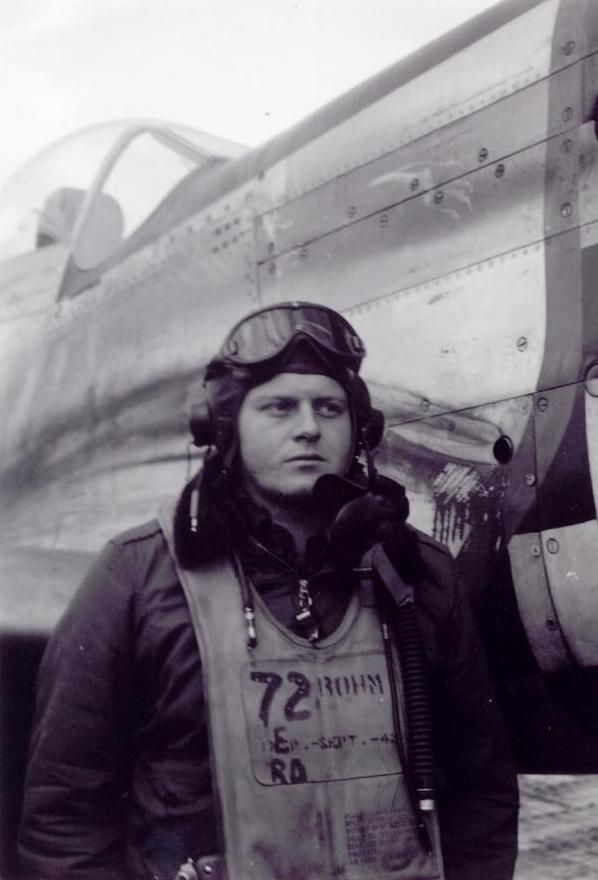
Lt. Hubert "Bill" Davis

Bill Davis, from Shoreham, NY, was a member of the 83rd Fighter Squadron of the 78th Fighter Group, based at Duxford, England, a Group that called themselves the "Duxford Eagles". Bill flew the majority of his 35 combat missions in "Twilight Tear".

This is Bill Davis' actual combat report from March 2, 1945, when he shot down his first Me 109:

"I was flying Cargo Yellow Two on Captain Higginbottom's wing, heading south-east at 21,000 feet, when enemy aircraft, approximately 24 Me 109's, were reported at six o'clock low at 15,000 feet. Cargo Squadron did a 180 left and then started a descent to 15,000 feet. Capt. Higginbottom turned into a flight of four Me 109's, but held his fire when number four proved to be a P-51. Capt. Higginbottom went after one 109 and I turned into two 109's coming at me from my right. I went after the number two man and after completing a 360 to the left, I was able to hit him with about a 30 degree deflection shot. He was in a climbing turn at the time. I saw hits on the wings, around the cockpit, and on the engine. The plane turned over, pouring out dense black smoke, and went spiraling straight down. The landing gear came down. I followed on his tail, shooting until I "hit" about 6,000 feet, then pulled off to one side as I was going about 400 mph. I followed him down through clouds and saw the plane hit. I did not see the pilot bail out nor did I see any chute open. I climbed back up to about 14,000 feet to where the fight was still in progress. I saw two 109's down on top of the clouds and dived on them. I fired at the wing man and saw hits on the wings and fuselage, but I was closing too fast so pulled up to keep from over-shooting. I did not see what became of the plane."

And this is Bill Davis' combat report from March 19, when Davis shot-down two more Me 109s:

"I was flying Cargo Yellow Three position in Cargo Squadron. We had just dropped tanks, and had climbed from 8,000 feet to about 11,000 feet going up to engage 109's above us. I looked over my left shoulder to see where my wing-man was, and saw a Me 109 at 8 o'clock on me, approximately 1000 feet below me, going in the opposite direction. I immediately dove on him and he started a turn to the left. We had made about two 360 degree turns, when I was able to get in a burst at 90 degrees. I could not see if I hit him as he was blanketed by the nose of my plane. When I saw him again, he rolled over and started spiraling straight down. First his canopy came off, and then I saw him bail out. Something, it might have been part of his canopy, hit the right side of my windshield, cracking the glass. His plane went straight on in and exploded. I was still in an almost vertical dive so I went down and took a picture of the fire. On the way back up I saw a chute and took a picture of that.

By this time I had lost my wing-man. I climbed to 13,000 feet in order to join up with some other 51's or to find another German plane. I was heading East to where it looked like there were some 51's in the distance when I saw a 109 about 1000 feet above me and going the other way. He must have seen me turn after him, because he immediately started a climbing turn to the right, pulling a trail of smoke. I was closing on him and fired at about 900 yards. I didn't see any hits. We did about another complete turn. I was right behind him at this time and just going to fire when the canopy came off and the pilot bailed out the left side. I followed the plane down and took a picture of the fire."

Lt. Davis flew "Twilight Tear" on what would be the 78th Fighter Group's last mission of the war, when on April 25, 1945, after taking-off from Duxford, the Group was assigned to protect 12 RAF Lancaster bombers on a mission to drop tallboy bombs on Hitler's Eagle's Nest.

hubertbilldavis.jpg
 
"Twilight Tear"

Lt. Bill Davis named the aircraft after a Kentucky filly that was born in 1941, that through its exceptional performance, had been named Horse of the Year in 1944. Following VE-Day, Lt. Davis was shipped back to the U.S., arriving back home in July of 1945. His Mustang, however, remained in Europe, moving to Germany, where it was placed in storage for a couple of years until purchased by the Royal Swedish Air Force. The RSwAF took delivery of the aircraft in June of 1947. After serving for four years, the aircraft was acquired by the Israeli Air Force, and was eventually delivered to Israel in February of 1953. Having been assigned to 101 squadron, the aircraft could possibly have seen additional combat during the mid-50's, during conflicts with Egypt. By the late 1950's, Israel phased out their Mustang force, in favor of jets. In 1954, Twilight Tear, the filly back in the U.S. for which the aircraft was originally named after, passed away. In the early 60's, the aircraft was acquired by Bill Lear Jr., who used the aircraft as a business plane, actively flying it in and around Switzerland. The aircraft was sold to William Pierce, of California, in December of '62. Bill Lear delivered the aircraft to Paris, where the new owner had enlisted a French pilot, by the name of Roger Arnould, to ferry the P-51 across the Atlantic to the U.S. Evidently unkown by William Pierce at the time, was that Roger Arnould had never flown a P-51 before. He crashed the aircraft in Iceland, on June 6, 1963, during what was likely Arnould's first ever attempt at landing a P-51.

This was actually written by Bill Lear Jr. on an internet warbird forum several years back, while the aircraft was in the process of the rebuild:

"Indeed, N-251L was my P-51. I bought it from the Israeli Air Force through Israel Aircraft Industries (IAI)who modified it to a two-place, installed all new Lear avionic and autopilot systems, painted it and obtained FAA Limited Category Airworthiness (1960). I flew it from Tel Aviv to Athens across the Med (IFR) and from there to my home in Geneva, Switzerland where I kept it until I sold it to an American buyer (name forgotten)in 1963. I modified the aircraft by installing the Trans-Florida Aviation (Cavalier) tip-tanks and larger canopy.

The American buyer hired a French pilot to ferry the aircraft back to the U.S.. This pilot had never flown a P-51 before. His first landing was at Kevlavik, Iceland after a non-stop flight from Paris Toussus-le-Noble airport. The pilot flared too high and while at low airspeed apparently applied full 61" of noise. The aircraft rotated leftward, the wing struck the runway and the aircraft began to cartwheel down the runway. The engine broke off as did both wings and the aft fuselage leaving the cockpit section intact and on its side. There was no fire. The pilot was alive but during these violent maneuvers his head got pretty busted up. He later died of these injuries. He had worn no crash helmet and the shoulder-harness was found tied in a knot and dropped behind his seat. This was a survivable accident, but some folks know better than others.

The data plate from my P-51D, N-251L, which crashed in Iceland, was apparently removed by someone as it is no longer there and, I am told, there is evidence of it having been chiseled off. What confuses me is that another P-51D has been registered in Europe bearing the same serial number as mine (44-63864). There is evidently some mix-up here but I have a solution to discovering if the recently registered P-51 with the same S/N is indeed my former aircraft. An examination of the wings should reveal the installation of two-to-three additional spars which were installed to accommodate the extra weight/load the TransFlorida 110 gal (ea) tiptank installation kit required. The wing skins were removed and replaced for this "no-small-job" installation. There should also be evidence of tank brackets, fuel line plumbing and electrical wiring - or the removal of same. The additional wing spars are the key, however. If they ain't there, then that rebuilt airplane isn't my N-251L S/N 44-63864 - period."

Following the aircraft's crash in Reykjavik/Kevlavik, Iceland, the aircraft was stored, outside, for more than 20 years. During the time, while the aircraft had been all but completely forgotten, Twilight Tear, the race horse, had been posthumously inducted into the National Museum of Racing's Hall of Fame. In 1986, the aircraft was rescued by Icelanders, Petur Jonsson and Michael Valdimarsson, before the aircraft could be scrapped. In 1991, the aircraft was purchased by warbird restorer Ken Hake, who had the aircraft shipped to his facilities in Kansas, with plans to restore it. Ken ended up retiring before he could ever turn attention to it, and offered the project (along with about seven to eight P-40 projects) to Ron Fagen of Granite Falls, MN. The aircraft was immediately registered in 2005. Within a few years later, the aircraft was sent to Tri-State Aviation for rebuild, with the wings being sent to Odegaard Wings (both located in North Dakota). Final authentic detailing and out-fitting was carried out by Aircorps Aviation, of Bemidgi, Minnesota. The aircraft is one of the three/four most authentic P-51D's flying today (there's not really one that can stand fully above the others in that group).
 
Back
Top