-
Please see the most recent updates in the "Where did the .com name go?" thread. Posts number 16 and 17.
You are using an out of date browser. It may not display this or other websites correctly.
You should upgrade or use an alternative browser.
You should upgrade or use an alternative browser.
Liberty Bell accident, hopefully the truth.
- Thread starter AussieMan
- Start date
 -
-
StormILM
Charter Member
I have something to add to this. I am a former Firefighter/EMT/Fire Engineer & Certified Line Fire Officer with a decade of high call volume experience. I have actually responded to multiple aircraft related emergencies including remote crash sites. First off, there are varying conditions and landscapes which do not allow heavy fire apparatuses to be deployed due to their weight and being top heavy plus most fire apparatus do not have low pressure tires designed to cope with soft ground. Looking at the amount in which the B-17's large/wide tires sank into the soil, there's zero question it would have easily caused any street type fire apparatus to become stuck well before reaching the burning aircraft. I have participated in multiple investigation boards where an Engineer made a decision to drive into a scene with soft soil or a sloped incline which caused an apparatus to become stuck or roll over causing injury and great damage if not the total loss of very expensive equipment & vehicles. It takes very little for one of these apparatuses to get stuck all the way up to their bottom and worse, suffer axle and PTO transfer case damage rendering the pump completely useless. I have on many occasions made the call to not proceed down certain roads or through fields that were an obvious risk to the fire apparatus becoming stuck, disabled/damaged and I stand by every single decision I ever made in such matters even though property was lost in the event. One other matter to consider is this. Most fire apparatuses have very limited water supply on board. Let's just say that my primary attack pumper is equipped with a 1000 gallon tank and multiple hand lines capable of discharging 125 to 250 gpm(gallons per minute) on a given fire. That gives between 8 to 4 minutes of water flow at those gpm rates but in most aircraft fires, the btu's being emitted by the fire exceed the available gpm needed to knock the fire down. If I were able to safely get an apparatus into a remote spot, I would most likely blitz attack the fire using the deck gun(deluge gun) capable of 1500 gpm discharge(depending on pump capacity) to try and get an upper hand on such a fire(much like a airport crash/fire apparatus does). Even then that gives 45 seconds of water flow and the tank is dry without a hydrant, tanker or catch-all portable tank being nearby. Even then, there's no guarantee the aircraft would have or could have been saved. I've been through enough training classes with airport fire crews and seen quite clearly that even with maximum AFFF foam flow, the aircraft on fire was most often lost. Once the metals in the airframe ignite, its very difficult to extinguish them. So in hindsight, I'm inclined to support the primary incident commander in not risking immobilization/damage to fire apparatus/equipment which might have placed equipment vital to the public safety of their community at risk of damage/loss when the total loss of the B-17 was likely unpreventable. The loss of the B-17 is sad, yes, but in the end, to condemn the fire crews for the loss is 100% wrong.

StormILM
Charter Member
I would also add, I am certain those firefighters felt badly in holding back for the reasons they did(even fully justified) and I've been in those boots before and it's not an easy decision to make and in fact, very painful considering what we're charged to do in the performance of duty. However, it's a rule without exception that we never place personnel or equipment at unnecessary risk. We're no good to the public if we end up dead or lose vital equipment in the process of a bad decision.

Bomber_12th
SOH-CM-2025
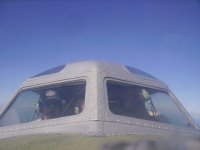
Awesome photo, Witt, I love it! That type of angle can make the aircraft look quite docile.

Wittpilot
Warbird Guru
Awesome photo, Witt, I love it! That type of angle can make the aircraft look quite docile.
Maj. Fowler can pretty much make anything look docile John... I guess when he flew the Belle in Duxford they were rocking that thing back an forth pretty tightly... Since there they don't really fly in giant ovals like they do at shows here... It's almost like figure 8 patterns.