
Manual and Performance Overview
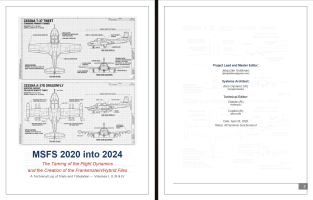
This project represents a comprehensive refinement of the flight dynamics for both the A-37 and T-37 platforms, developed as a functional bridge between the MSFS 2020 and 2024 SDKs. Beyond correcting performance deficiencies, it serves as a demonstration of what becomes possible when human domain expertise and AI-assisted analysis are applied in concert to a complex engineering problem.
The documentation contained herein functions as a technical addendum to the standard SDKs, addressing aerodynamic behaviors that fall outside the simulation engine's native logic and therefore require a customized approach to critical flight parameters. Where the SDK imposes constraints on authentic modeling—particularly in the relationship between engine output and pitch authority—targeted recalibrations have been applied to restore as much as possible accurate rotation, climb, and cruise performance profiles.
These modifications are the product of a diagnostic methodology: real-world flight behavior was used as the benchmark, deviations were systematically identified, and parameter adjustments were validated against observed performance data. The result is a stable and realistic flight envelope across all phases of operation, grounded in the actual performance characteristics of both aircraft.
Though SDK constraints place a ceiling on full fidelity, the recalibrations push as close to authentic behavior as the simulation engine permits. This is fitting—the A-37 and T-37 share a common DNA, one a highly maneuverable basic trainer, the other a combat-ready tactical fighter carrying a full operational load.
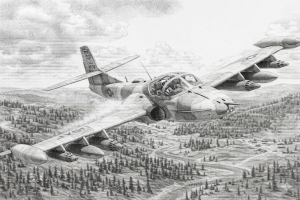
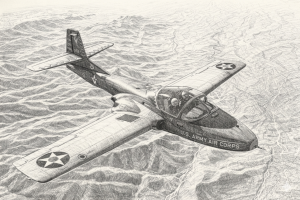
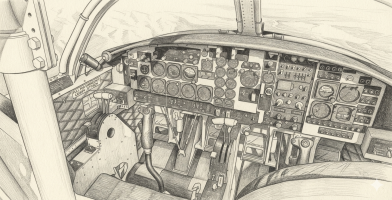
This file also contains updated performance files for the Cessna A-37B “Dragonfly” and the Cessna T-37B “Tweet”.
This project represents a comprehensive refinement of the flight dynamics for both the A-37 and T-37 platforms, developed as a functional bridge between the MSFS 2020 and 2024 SDKs. Beyond correcting performance deficiencies, it serves as a demonstration of what becomes possible when human domain expertise and AI-assisted analysis are applied in concert to a complex engineering problem.
The documentation contained herein functions as a technical addendum to the standard SDKs, addressing aerodynamic behaviors that fall outside the simulation engine's native logic and therefore require a customized approach to critical flight parameters. Where the SDK imposes constraints on authentic modeling—particularly in the relationship between engine output and pitch authority—targeted recalibrations have been applied to restore as much as possible accurate rotation, climb, and cruise performance profiles.
These modifications are the product of a diagnostic methodology: real-world flight behavior was used as the benchmark, deviations were systematically identified, and parameter adjustments were validated against observed performance data. The result is a stable and realistic flight envelope across all phases of operation, grounded in the actual performance characteristics of both aircraft.
Though SDK constraints place a ceiling on full fidelity, the recalibrations push as close to authentic behavior as the simulation engine permits. This is fitting—the A-37 and T-37 share a common DNA, one a highly maneuverable basic trainer, the other a combat-ready tactical fighter carrying a full operational load.
This file also contains updated performance files for the Cessna A-37B “Dragonfly” and the Cessna T-37B “Tweet”.