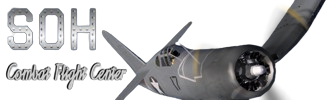
A new Focke-Wulf FW190 sub-type, the FW190F-8/R1 fighter bomber

I've been testing about every Fw-190A Airfile/Aircraft.cfg I can get my hands on and they all seem to do very well in straight line performance. The problem is when I get into a dogfight with them and they start pulling hard turns. The bleed off speed like a truck stomping on the brakes and hitting the Jake at the same time. They then go into these sub-100 Knt. climbs and stall over the top manuvers, at which point they're about sitting still and have made themselves cannon fodder. Some are better than others but all of them get the stuffing beat out of them by two of the Fw-190's main opponents, the Spitfire IX (using the 1GB PR Spit IX) and the Typhoon (a new set I'm working on that is dead on the numbers from 1000' to 25000').

I'm thinking this is a Pitch/Drag issue but I'm not sure what numbers need to be tweaked to improve things....

BC, SC, CK???

PS. I also noticed that if you lead a formation of these Fw-190's as the Player your AI wingmen cannot keep up with you. You run away from them at anything more than about 80% throttle. There may be something here too that is keeping the AI's from performing to their fullest.....???
 
IMO, as far as prop fighters are concerned in CFS2, the problems seem to start with the way in which the AI engine interprets and uses the performance data. You can build a perfect flight model to fly strictly by the numbers as a player model, only to find that the AI perform at a sub par level with the same model. This indicates to me that this $35.00 AI engine isn't built to push flight models to their limits in ACM as an aggressive, well-trained human pilot would. That's why its sometimes a good idea to build a lighter, more powerful AI version of your "authentic" player flight model for extreme AI maneuvering -- a cheater model to give the AI a decent chance against a good human adversary.

But flight modeling aside, there are also those boneheaded, scripted evasive maneuvers that the AI does no matter what model its flying, like suddenly going vertical, cutting the power and hanging by the nose presumably to get the player to fly by. It wouldn't look so stupid if the script would allow the model to drop the nose or finish with a tight power loop and try to get guns on the player as he blows by in a missed shot, but not so. This isn't limited to the 190 only -- every model i've fought against does this, beginning with the stock Zero. Some programming limitations you just learn to accept and take advantage of in a fight. I just blast them while they hang there on the hook and move on to the next sucker.

Now, if you want to see some real flying from the AI, when the fight is on, increase your sim speed to 2x. Sometimes it seems as if the relevant modules have a built-in processing governor that limits the computing speed for AI performance and forces them to fly the "script". By increasing the sim speed while in ACM, the sim engine thinks quicker, tosses out the script and behaves MUCH more intelligently. If you get sloppy, AI adversaries will quickly turn the tables on you in any maneuver. They get very jumpy, highly maneuverable and trigger-happy, shooting at you the instant you come within their firing cone. Unless you're a damned good fighter pilot in the defensive, if a bogey gets on your six you may as well call for help because it takes some serious skill and reflexes to shake them and go offensive. Needless to say, your kill count will decrease and your workload will increase... significantly...LOL. The good news is your wingies will also perform like DFC winners.
icon14.png
 
BC;

I've got some that will fly well with the player A/C and others that can't even scratch its itch. The ones that do seem to stick to the simple stock Aircraft.cfg format, though this is not always the case. I just may have to go the "AI Only" method to get a 190 that can give my Tiffies a good fight. The funny thing is my 9800 lb. Typhoon AI wingmen can fly with me by the book, 310knts @ 1000', 337knts @ 8100', 351knts @ 20,800, etc. And they can even drop bombs on a moving ship/tank/truck!!! LOL

Now the Tiffie could both run down and turn inside the Fw-190 below 15,000, above that things started swing back the other way. I'm starting my test @ 20K and the 190's can't even hold their own up that high, and this is AI vs AI. ???

I agree BC and wrote about that very thing early on in the thread. It seems the AI engine was geared to "A6M Zero" style of dogfighting. Now when I test, I use multiple formations that are well apart. One will be AI EA vs. Player Led Formation. The other is AI Formation vs. AI Formation of the same A/C, same skill levels etc.

I'm going to have to try the 2x trick and see if the results differ greatly.

Thanks Again for your insight..
 
I don't fly 190s much, except for a nightfighter someone made, is there a 190 for CFS2 that duplicates the water/methanol injection feature?

Bones
 
Working on it Tony.

The flight model development has proved to be a real bear. I've got the high altitude model including the Methanol injection working pretty well, but low level is out of whack. When I fix that, it screws up the high altiude model.

I have to be missing something in the design that I have not been able to find. I just sent the files off to Rami and SC7500 to test and do further work on. I am hoping one of them will spot what I am missing. I'm crosseyed at this point and probably can't see the forest for the trees anymore.

Anyone else want to give it a shot? I'd be happy to send along the development files.
 
Captain,

I'm assuming you're using Airwrench for your baseline work. Once you're satisfied with all other performance gains in Airwench, open your air file in Aired and make sure you have these settings in section 505:

Negative G Effects = 0

Turbo/Supercharged = TRUE

Supercharger Low Alt. Boost = 9.0 <<-----this one's specially designed for what you're seeking

Emergency Power Type = 2 (Methanol-Water in CFS2)

Most air files seem to have a default value of 1.0 in the Supercharger Low Alt. line, which makes no sense to me personally. All of my favorite high performance, high altitude fighters have a 9 or 10 in this department to keep the low altitude performance in line with their known performance at higher altitudes.

Also, if you have a flight tuning section in your cfg, lower the induced drag to something between 0.8 and 0.65. This will reduce the amount of airspeed bleeding during high G maneuvering in the denser air of lower altitudes. If you have the horses, as the 190 does, you get a greater sense of your engine's power in a turning fight. Induced drag is the incidental drag which you personally force upon an airframe in hard maneuvering. The lower you go, the more speed you sustain in tight turns -- you can hold a tight 360 longer. Parasite drag is connected to the overall shape and size of the airframe relative to horsepower. You play around with this one to fine tune top speed -- the lower you go, the faster you get in level flight at all altitudes, regardless of your horsepower setting. So if your current top speed meets with historical specs, you might not want to mess with this one too much.
 
Thanks Bearcat. I have all of that set already with the exception of the Supercharger Low Alt. Boost = 9.0.

There is no line entry for that in the cfg or the airfile. I can't find it in other turbocharged aircraft files either. Please tell me what the exact line terminology is. Is it the *Boost Gain= line in section 505, or something else entirely?

Your help is much appreciated. :salute:
 
Capt., its solely in the air file, the 11th sub-entry in section 505 Engine blah blah, just above Boost Gain. Which version of Aired are you using? If you don't have v1.52, get it. That's what i'm using and it has more data points to work with.
 
"Also, if you have a flight tuning section in your cfg, lower the induced drag to something between 0.8 and 0.65. This will reduce the amount of airspeed bleeding during high G maneuvering in the denser air of lower altitudes. If you have the horses, as the 190 does, you get a greater sense of your engine's power in a turning fight. Induced drag is the incidental drag which you personally force upon an airframe in hard maneuvering."

BC, what, if any, entry in the Airfile would this be? Or is it several Entries within the airfile?

This just might be the key to getting the Fw-190's, or any other "Zoom and Boom" fighter to act more realistically.
 
Hey Pen32Win, I am approaching it differently as part of the development. Reducing the induced drag allows them to hold their turn longer so I didn't think that was the answer. Turning is already too much of an advantage for the AI.

I checked on the square ft. of the ailerons on all of the other FW airfiles I collected and they all have way too much area making the aileron too effective. Based on scaling out the Eduard and Dragon Fw190 models I got a pretty close number for what the square ft area of the ailerons was and input that into the airfile. Seems to work pretty well. With the ailerons having more accurate size, the AI no longer engages in exclusively turn and zoom but now extends out before turning back, then making more straight runs before turning again. I see less climbing and hanging now. It seems to happen mostly when thay are close to the deck. Don'[t know if there is anything to be done about that.

If you will test them out, I can send you 2 different development airfiles I am working on - one for the A-8 and one for the A-5. These are not finished files but I would like to know what you think of the new AI characteristics. Eventually I will choose one as the better for use on all FWs with weight and boost adjustments for each version.
 
Capt., its solely in the air file, the 11th sub-entry in section 505 Engine blah blah, just above Boost Gain. Which version of Aired are you using? If you don't have v1.52, get it. That's what i'm using and it has more data points to work with.

Hi Bearcat, That's what I am using. The 11th entry above *Boost gain= is *Manifold pressure min=

As I said, I am not finding an entry for Supercharger Low Alt. in any other turbocharched aicraft airfiles either. ?????????
 
Wait, I found an airfile - Aeroplane Heaven Spitfire has it in the 505 for the Merlin engine. I will copy and paste that into the Fw airfile and make the adjustments. I'll report back on how it works.
 
I intentionally truncated the actual entry name to save typing, but its formal name is Supercharger Low Altitude Boost Related. So, in your section 505 you don't have this entry?
 
Nope. Just cut and pasted the 505 entry into it though and adjusted the figures for the Fw190. I'm sorry to report the net effect was the loss of 5 mph at sea level. Going in
the wrong direction I'm afraid.
 
Nope. Just cut and pasted the 505 entry into it though and adjusted the figures for the Fw190. I'm sorry to report the net effect was the loss of 5 mph at sea level. Going in
the wrong direction I'm afraid.

Hmmm...that's interesting :ques: Try lowering that incrementally, maybe that's the ticket.

Pen, to answer your question, yes this can be adjusted in several places of the air file, section 1101. But it has to be done in a combined way -- all the different settings done together in small ticks or as you do you run the risk of creating cascading problems in other performance parameters. Its much more complicated to adjust with any satisfaction in the air file than the cfg. That's why you use the cfg for finer tuning after the base work is done in Airwrench or the 1% Workbook.
 
Not much difference really. There is only 2 mph difference between the setting at 9 and at 1. 9 being the faster.
 
Well bummer, I just checked the top end at altitude. It's gained 12 mph in addition to losing 5 mph on the low end. Opposite of what was needed. Back to the original file and try something else.

I just can't figure out why it is so slow at sea level. It can only do 224 mph unboosted in the file I started from. As far as I can tell, all the figures in the airfile and config are correct but there must be something in one entry somewhere that is holding it back.
 
Sounds like you've reached the point of diminishing returns. Perhaps its time to pack it in and just say close enough is good enough. If you spend enough time in the dark art, you'll soon come to realize the first rule: There's no such thing as perfect historical accuracy in a retail flight simulator. Given the fact that most of our varying performance data is handed down from multiple sources in the distant past with no means of current authentication, i have no qualms with building some tolerance into a flight model...and i always prefer to err on the high side.
icon23.gif


Bear in mind that the restored warbirds gracing the skies today are really just modified versions of the factory models produced during their times.They aren't rebuilt with the exact same materials and parts 100 percent and they aren't rebuilt with such things as a "hard number" for top speed, for example. Their owners and mechanics get close enough and just let them fly. Due to the aftermarket modifications, most are very likely slightly faster than they originally were on their factory roll outs.

If you've given your best effort, got a general thumbs up from your beta guys and you still get some complaints after distribution, its usually gonna be from those meticulously flight testing your work rather than fighting with it, which is your prime objective. They're missing the point anyways so don't sweat the small stuff. :guinness:
 
Back
Top