-
Please see the most recent updates in the "Where did the .com name go?" thread. Posts number 16 and 17.
You are using an out of date browser. It may not display this or other websites correctly.
You should upgrade or use an alternative browser.
You should upgrade or use an alternative browser.
Boeing Vs Airbus
- Thread starter Naismith
- Start date

I saw that earlier and found it slightly amusing that the female Boeing pilot was getting guidance on how to fly an Airbus from her own son who is an Airbus captain and Airbus instructor! 
Victory103
SOH-CM-2026
I'm spoiled on the Bus, love watching the faces of 737 pilots when they need to ride the jumpseat with all the flightdeck space.

Sure, Boeing is waaaay better at shedding choice parts of their anatomy in flight.Found this little vid - Cllearly Boeing is better. (just imo only, I have a bias)
Priller
At least the battery fires on the early B787 Screamliners kept you warm on the way to the ground!

Boeing never had a crash because they used the rudder after flying though another aircraft's wake.

 en.wikipedia.org
American Airlines Flight 587 - Wikipedia

I have never taken a flight aboard an Airbus aircraft, only on Boeing aircraft.
In the upcoming "All Sims Air Tour" I plan to fly a Boeing airplane befitting of the appropriate Time period.
In the upcoming "All Sims Air Tour" I plan to fly a Boeing airplane befitting of the appropriate Time period.

My experience (25 years buying, selling, maintaining commercial aircraft at several U.S. air carriers) is that both aircraft manufacturers have their strengths and weaknesses. There is the yin and the yang, the wax and the wane, all based on a point in time. Airbus was a long time imitating and catching Boeing. Boeing may now be chasing Airbus. But if anyone thinks either manufacturer has not had its share of accidents just look at this link (Priller).... https://www.1001crash.com/index-pag...rbus-plane-accident-aeronautical-history.html .
They are all mechanical devices and there hasn't been a mechanical device of any sort that hasn't failed at some point in it's history and if it hasn't failed up to now it's not reached it's failure point yet!

Naismith
Charter Member
I have to say even though I am a Boeing fan essentially, the calmest, quietest flight ever experinced was in a 340 Airbus LHR to YVR. The descent into YVR did not have the agonizing earache of previouse 767 flights. My worst ever experience was a rickety old noisey L1011 with Transat, it must have been near end of service.

Panther_99FS
Retired SOH Administrator
Has everyone seen this?
Let the lawsuits begin...
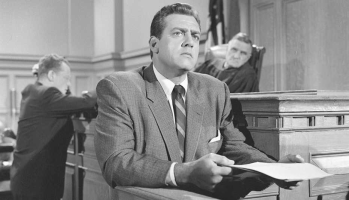
[This response was prompted by the picture of the original Perry Mason. Somehow I went back in time to a former life!]
Somewhere in Section 121 of the Federal Aviation Regulations (or a companion statute) is a provision that requires a "121 carrier" (or a carrier certificated pursuant to Section 121 of the FARs; or a large commercial carrier; or a major U.S. airline) to maintain minimum levels of liability insurance for the benefit of both passengers and third parties (innocent victims on the ground). (Passengers may be innocent victims also, but you decide....they could have taken the train.) So, an airline needs to maintain (1) at least $300,000 per passenger seat (minimum $20 million per aircraft of 30+ seats), and (2) 3rd party liability of $2 million to $300 million depending on MTOW of the insured aircraft.
Additionally, Boeing carries product liability insurance primarily for design and manufacturing defects. In an aircraft purchase contract the manufacturer (Boeing) will require the purchaser to insure the operation of the aircraft (liability insurance, like what is required by law) and name the manufacturer (Boeing) as an "additional insured" under the insurance policy. I was an airline representative and would always get a "carve out" for incidents or events caused by the gross negligence or willful misconduct of the manufacturer (one can never be too careful).
Also, with respect to the insurance coverage between insurer and insured, if the insured was grossly negligent or engages in willful misconduct, the insurer can attempt to recoup all monies paid out under the insurance policy from the insured. Boeing's product liability insurance is also at risk if there was gross negligence or willful misconduct.
The squeeze of potential gross negligence or willful misconduct by Boeing is why Boeing may have some BIG $$$ EXPOSURE for the recent spate (last 10 years ??) of accidents. Bottom line is that Boeing and its insurance companies and the airline insurance companies will be battling / litigating for a long time (years and years) and most likely all will feel some sting of $$$ lost. No where near the cost some have paid for the corners that were cut in building some of these aircraft. You will likely never hear how Boeing, the insurers and air carriers settled the issues.
(Unlike the "new" aircraft accidents, the failure of the McDonnell Douglas (UPS MD-11) (note to self....this aircraft was not designed by Boeing) engine pylon / pylon wing attach point will not be a Boeing responsibility because it is likely a maintenance issue which is the carrier's responsibility or is contracted to a 3rd party (in this case a repair shop in Texas). The event is eerily similar to a 1979 DC-10 crash in Chicago.)
Somewhere in Section 121 of the Federal Aviation Regulations (or a companion statute) is a provision that requires a "121 carrier" (or a carrier certificated pursuant to Section 121 of the FARs; or a large commercial carrier; or a major U.S. airline) to maintain minimum levels of liability insurance for the benefit of both passengers and third parties (innocent victims on the ground). (Passengers may be innocent victims also, but you decide....they could have taken the train.) So, an airline needs to maintain (1) at least $300,000 per passenger seat (minimum $20 million per aircraft of 30+ seats), and (2) 3rd party liability of $2 million to $300 million depending on MTOW of the insured aircraft.
Additionally, Boeing carries product liability insurance primarily for design and manufacturing defects. In an aircraft purchase contract the manufacturer (Boeing) will require the purchaser to insure the operation of the aircraft (liability insurance, like what is required by law) and name the manufacturer (Boeing) as an "additional insured" under the insurance policy. I was an airline representative and would always get a "carve out" for incidents or events caused by the gross negligence or willful misconduct of the manufacturer (one can never be too careful).
Also, with respect to the insurance coverage between insurer and insured, if the insured was grossly negligent or engages in willful misconduct, the insurer can attempt to recoup all monies paid out under the insurance policy from the insured. Boeing's product liability insurance is also at risk if there was gross negligence or willful misconduct.
The squeeze of potential gross negligence or willful misconduct by Boeing is why Boeing may have some BIG $$$ EXPOSURE for the recent spate (last 10 years ??) of accidents. Bottom line is that Boeing and its insurance companies and the airline insurance companies will be battling / litigating for a long time (years and years) and most likely all will feel some sting of $$$ lost. No where near the cost some have paid for the corners that were cut in building some of these aircraft. You will likely never hear how Boeing, the insurers and air carriers settled the issues.
(Unlike the "new" aircraft accidents, the failure of the McDonnell Douglas (UPS MD-11) (note to self....this aircraft was not designed by Boeing) engine pylon / pylon wing attach point will not be a Boeing responsibility because it is likely a maintenance issue which is the carrier's responsibility or is contracted to a 3rd party (in this case a repair shop in Texas). The event is eerily similar to a 1979 DC-10 crash in Chicago.)
Last edited: