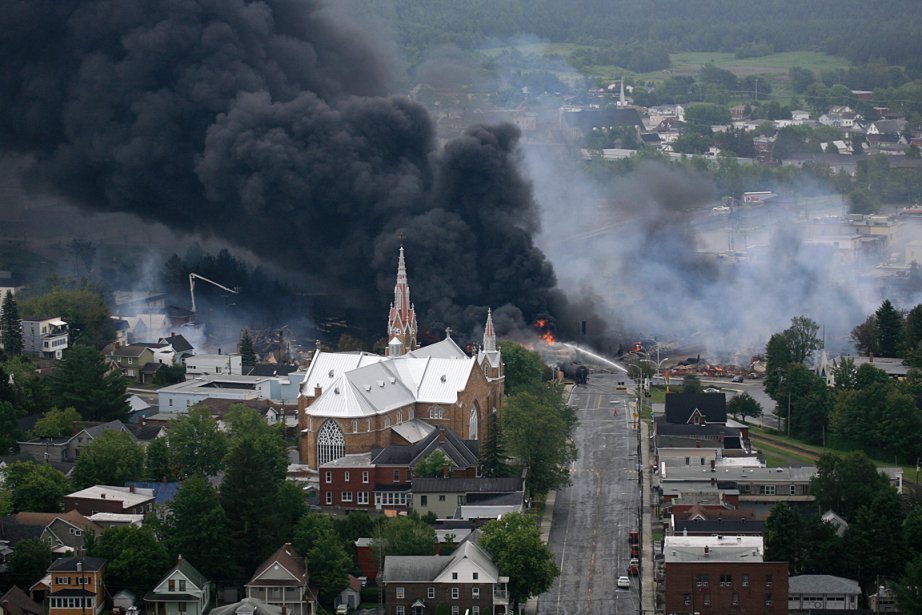
Read up on this a little to discover the crew were to have set the brakes on the train, which was apparently stopped. In the US railroads have what are called "hours of service" laws, a crew can not spend more than 11 hours and 59 minutes on duty before they run out of time and have to stop exactly where they are, and be relieved. Railroads try never to let that happen (if the crew went over 11/59 they drew a day's pay for this violation when I was on the RR, and the Federal Railroad Administration (FRA) would fine the railroad as well). They usually put a train in siding for this event, and set the brakes on the engines plus the train to lock it in place. This is a tedious process that in part involves climbing up and setting the hand brake on the first dozen or so cars of the train, plus some on the rear end as well. What some guys do is cheat and just rely on the engine brakes to hold the train. They don't always hold, and sometimes they slip. When I was an operator in Michigan, we had a runaway like that one morning that rolled for several miles down a grade that was just steep enough to let this happen. We sent a switch engine very quickly from the yard I was working at to catch the head end, tie on and apply its brakes. At the same time a clerk at a yard office several miles away on the downhill side ran out to the tracks, climbed aboard the other end and began the monkey bar drill of clambering over the moving cars and setting the hand brakes, one at a time, on a moving train. He actually set the brakes on the last six or so cars, which really helped bring it to a stop. I remember dropping by the head end on the way home (this was late in the midnight shift, around 730 or so in the morning). You could feel the friction heat radiating from the steel wheels on the engines. It just about matched the heat being radiated by the Terminal Superintendent, Terminal Trainmaster, and duty trainmaster who were all present.