
Bomber_12th
SOH-CM-2025
Drop Tanks
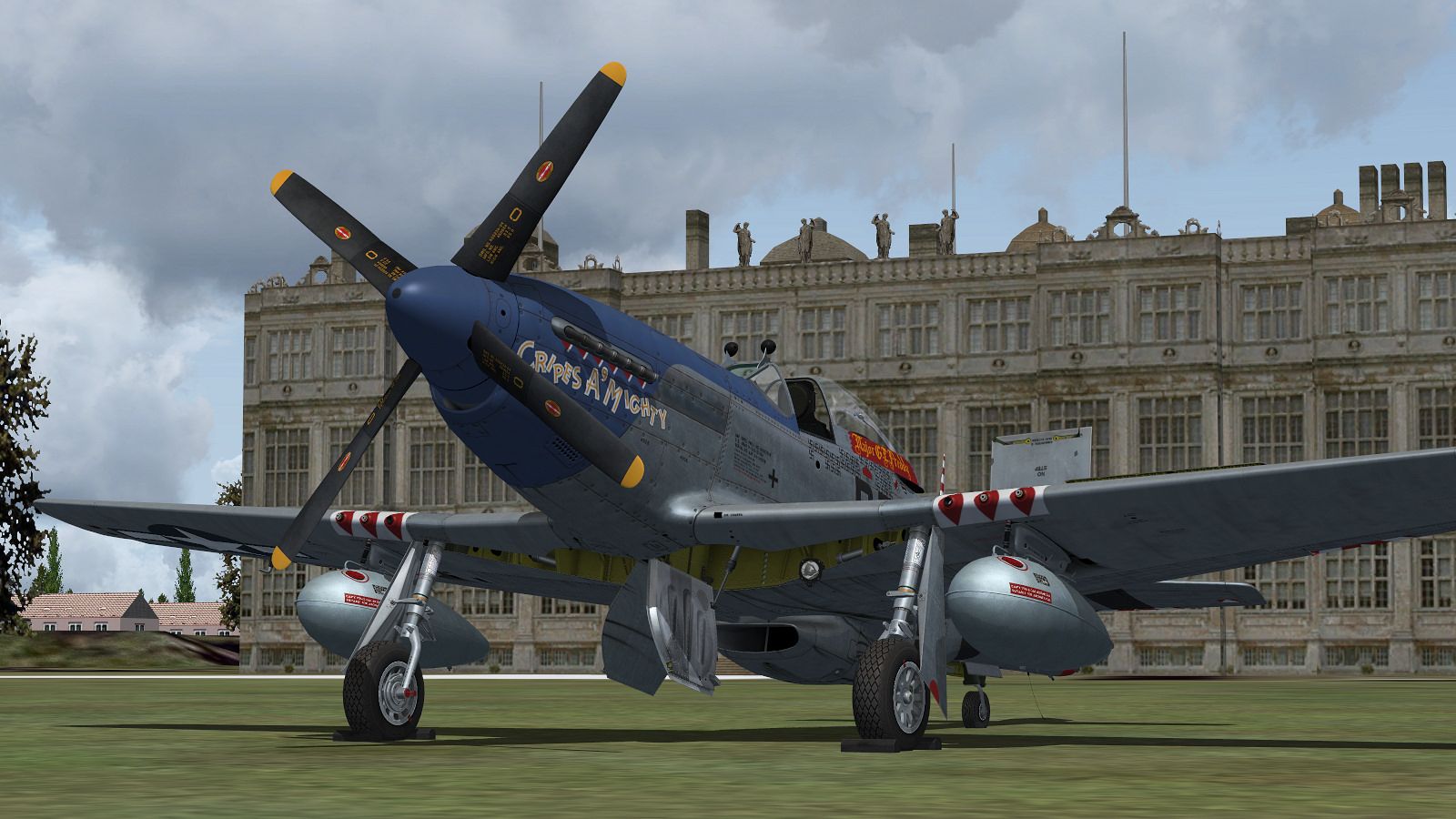
When fitting drop tanks to an aircraft like the Mustang, there are two sets of plumbing lines - one is for providing pressure to the tank, and the other is of course the feed from the fuel tank to the aircraft. On all early to mid production P-51D's, the two lines connected to the bottom of the wing in two different locations, rather spread out. However, on late production P-51D's, these two connections were postioned right next to each other, immediately in front of the bomb/drop tank shackle. As a result, the plumbing was different between the early and mid production examples, and that of the late examples (as most of the restored Mustangs today, are).
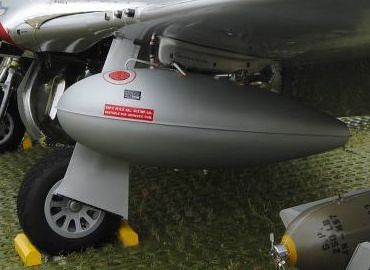
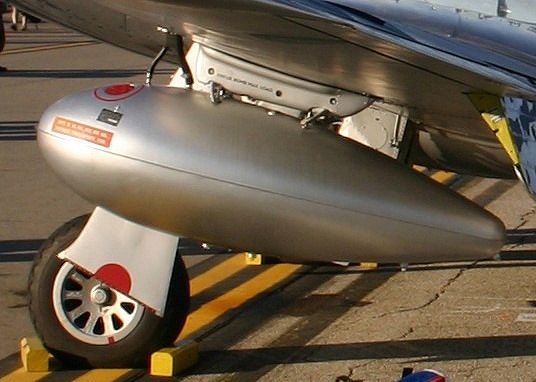
The drop tanks themselves were also marked up with placards and stencils just like the aircraft. Getting these markings and the finishes correct, for the era, is also something that is quite important to me. Early on, with grey and olive drab painted drop tanks, the warning placards on the drop tanks were white with red lettering, so as to see the placards very easily. However, when the tanks began to be left simply in natural aluminum, the placards were changed from light backgrounds with dark lettering, to dark backgrounds with light lettering, so as to improve the ease of seeing them - so at this point the main placards were now red with white lettering.
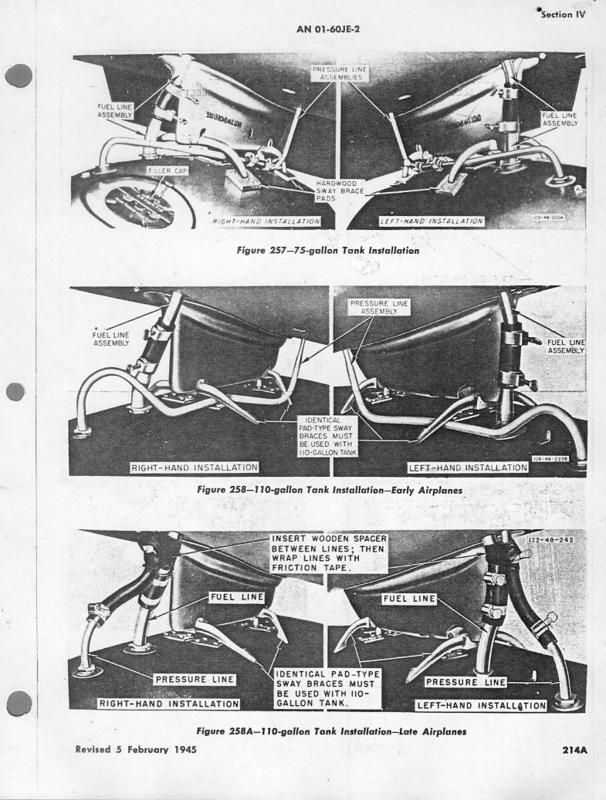
This first illustration, from one of the later-produced manuals of the war, shows three of the different plumbing configurations for the drop tanks. The very top illustration is what was used with 75-gal tanks on all of the early to mid production P-51D's, and as reproduced for the wartime "Cripes A' Mighty" in this product - a good amount of very careful pipe bending for those pressure lines!
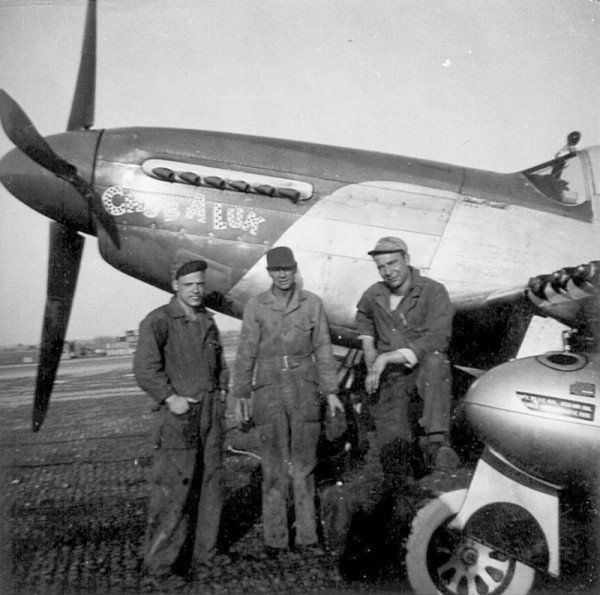
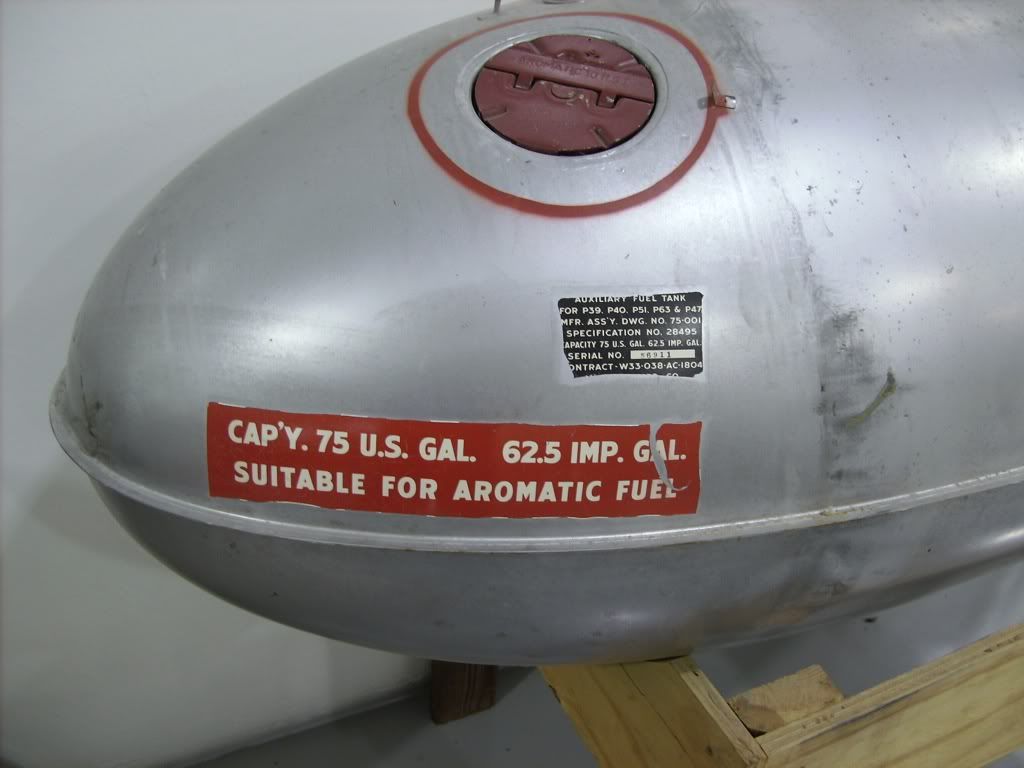
These next two photos show the type of markings/finishes on the 75-gal tanks from the era that "Cripes A' Mighty" saw action. The modern photo is of an example produced during this time period, which has never been restored.
These two photos directly illustrate the difference between the plumbing for the tanks on the early to mid production P-51D's (as reproduced on the wartime "Cripes") and the plumbing used on the late production P-51D's (as reproduced on the restored "Cripes").
When fitting drop tanks to an aircraft like the Mustang, there are two sets of plumbing lines - one is for providing pressure to the tank, and the other is of course the feed from the fuel tank to the aircraft. On all early to mid production P-51D's, the two lines connected to the bottom of the wing in two different locations, rather spread out. However, on late production P-51D's, these two connections were postioned right next to each other, immediately in front of the bomb/drop tank shackle. As a result, the plumbing was different between the early and mid production examples, and that of the late examples (as most of the restored Mustangs today, are).
The drop tanks themselves were also marked up with placards and stencils just like the aircraft. Getting these markings and the finishes correct, for the era, is also something that is quite important to me. Early on, with grey and olive drab painted drop tanks, the warning placards on the drop tanks were white with red lettering, so as to see the placards very easily. However, when the tanks began to be left simply in natural aluminum, the placards were changed from light backgrounds with dark lettering, to dark backgrounds with light lettering, so as to improve the ease of seeing them - so at this point the main placards were now red with white lettering.
This first illustration, from one of the later-produced manuals of the war, shows three of the different plumbing configurations for the drop tanks. The very top illustration is what was used with 75-gal tanks on all of the early to mid production P-51D's, and as reproduced for the wartime "Cripes A' Mighty" in this product - a good amount of very careful pipe bending for those pressure lines!
These next two photos show the type of markings/finishes on the 75-gal tanks from the era that "Cripes A' Mighty" saw action. The modern photo is of an example produced during this time period, which has never been restored.
These two photos directly illustrate the difference between the plumbing for the tanks on the early to mid production P-51D's (as reproduced on the wartime "Cripes") and the plumbing used on the late production P-51D's (as reproduced on the restored "Cripes").