Alexander Belov
Members +
Historical background of the scenery.
This route was initially operated by RAF.
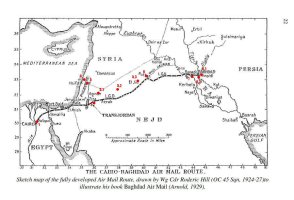
The route was 866 miles long, it took an average time of just over twelve hours, excluding stops. The route consisted of two sections. The Western third was about 330 miles from Heliopolis to Ziza for which five hours of fuel was carried. This section was mostly over the well populated coastal plains between the Nile and the Dead Sea, where there were plenty of landmarks by which to steer. The Eastern section (540 miles) was over the Jordanian and Iraqi deserts, uninhabited except for nomadic tribes and with few landmarks. At Rutbah Wells, which lay on a high plateau halfway between Damascus and Baghdad, the airline developed an overnight resthouse in an old fort.
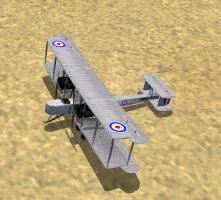
The first aircraft on the route were two-man, single-engined bombers, the De Havilland DH9A, flown in pairs as a precaution in case of engine failure. Later two-engine heavy bombers Vickers F.B.27 Vimy and bomber-transport Vickers Vernon were used.
At the end of 1926, the RAF handed over the Cairo-Baghdad route to Imperial Airways, formed two years earlier, for incorporation into their Britain-India service. Since 1931, the Gaza airfield and the seaplane airport on Lake Tiberias have been put into operation.
Sketch map of the airfields:
Cairo Heliopolis:
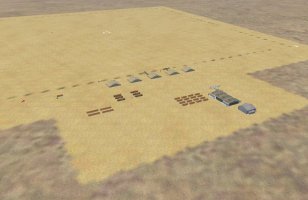
Gaza Airfield, Impeial Airways:
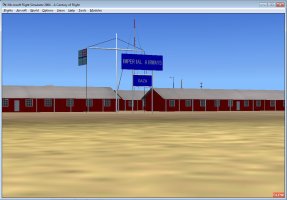
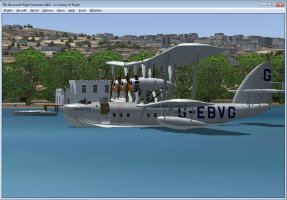
Lake Tiberias Seaplane Aerodrome:
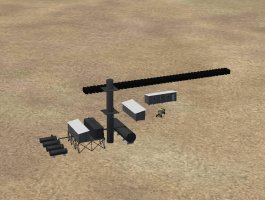
Auxiliary landing sites along the route of the trans-Arab oil pipeline. H-5 H-5 pumping station landing ground:
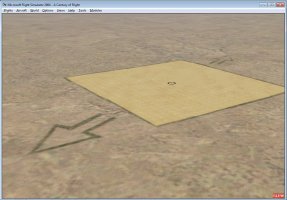
Directional arrows for the route:
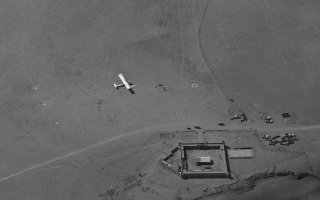
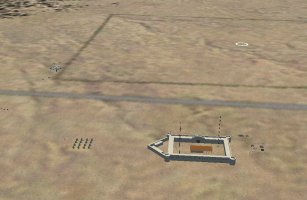
Rutbah Wells:
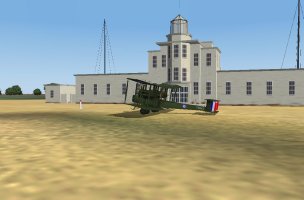
Hinaidi airfield, Baghdad:
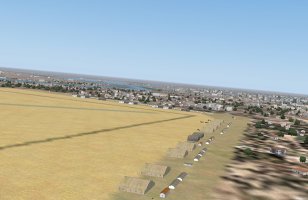
The Baghdad Western airport:
This route was initially operated by RAF.
The route was 866 miles long, it took an average time of just over twelve hours, excluding stops. The route consisted of two sections. The Western third was about 330 miles from Heliopolis to Ziza for which five hours of fuel was carried. This section was mostly over the well populated coastal plains between the Nile and the Dead Sea, where there were plenty of landmarks by which to steer. The Eastern section (540 miles) was over the Jordanian and Iraqi deserts, uninhabited except for nomadic tribes and with few landmarks. At Rutbah Wells, which lay on a high plateau halfway between Damascus and Baghdad, the airline developed an overnight resthouse in an old fort.
The first aircraft on the route were two-man, single-engined bombers, the De Havilland DH9A, flown in pairs as a precaution in case of engine failure. Later two-engine heavy bombers Vickers F.B.27 Vimy and bomber-transport Vickers Vernon were used.
At the end of 1926, the RAF handed over the Cairo-Baghdad route to Imperial Airways, formed two years earlier, for incorporation into their Britain-India service. Since 1931, the Gaza airfield and the seaplane airport on Lake Tiberias have been put into operation.
Sketch map of the airfields:
Cairo Heliopolis:
Gaza Airfield, Impeial Airways:
Lake Tiberias Seaplane Aerodrome:
Auxiliary landing sites along the route of the trans-Arab oil pipeline. H-5 H-5 pumping station landing ground:
Directional arrows for the route:
Rutbah Wells:
Hinaidi airfield, Baghdad:
The Baghdad Western airport: