In keeping with the original subject, this is the article I did for Scale Modeling magazine back when we were all young, LOL. Long, hope you enjoy.
Model Subject: Lockheed-Vega PV-1 "Ventura"
Kit Used: ACADEMY/MINICRAFT, kit number 1677
History of the aircraft modeled:
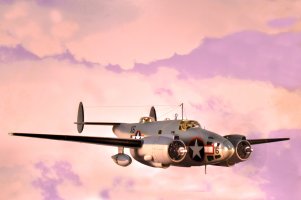
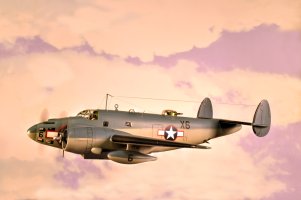
Perhaps the most unheralded aircraft to serve during World War II, the Lockheed-Vega PV-1 would serve in roles far beyond its Patrol designation. Ordered by the British to replace the smaller Lockheed "Hudson", the "Ventura" (a named loosely translated as "Lucky Star") was based on Lockheed's Model 18 Lodestar airliner and work was assigned to Lockheed's Burbank subsidiary Vega.
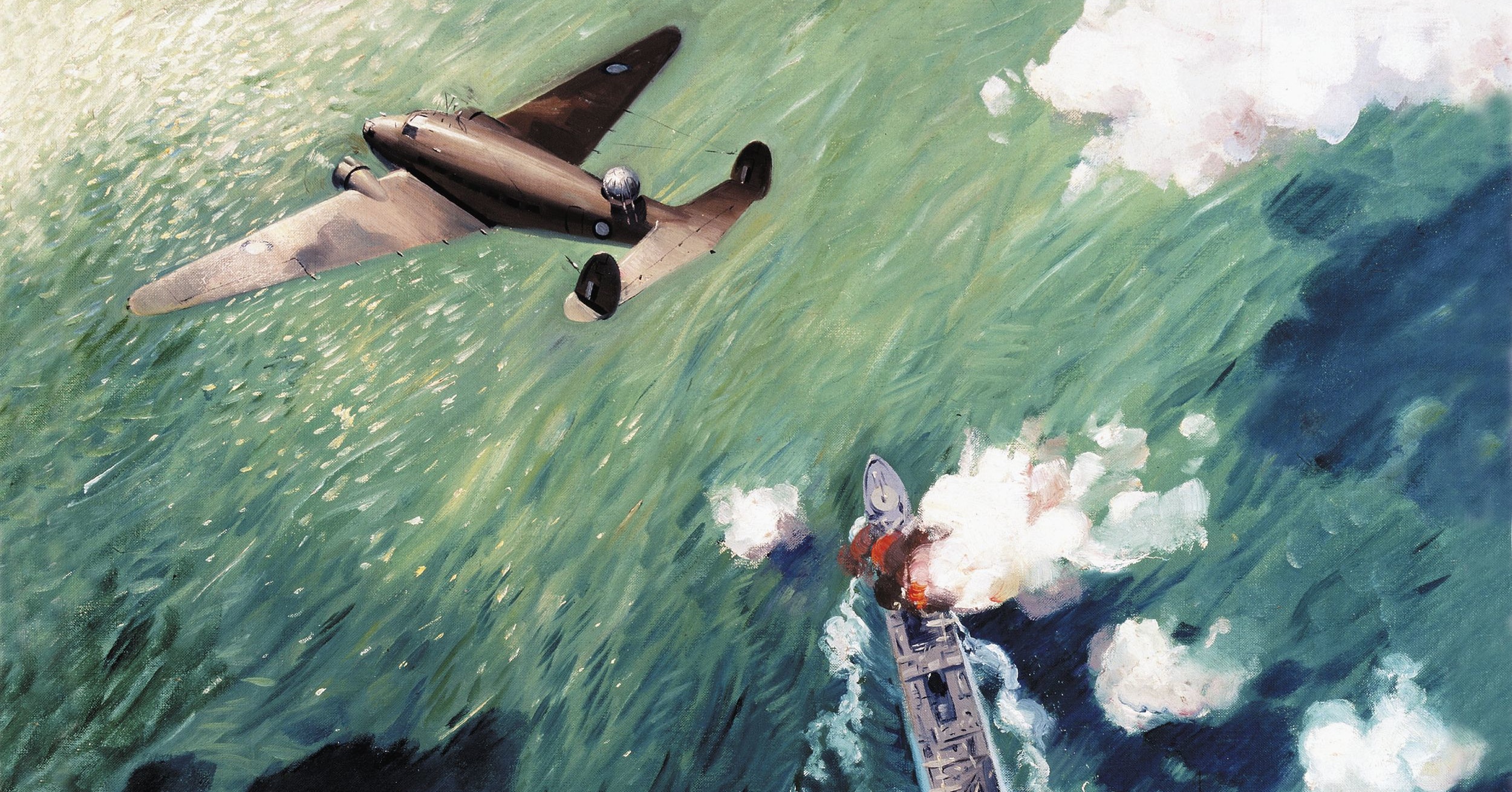
The RAF did not like the aircraft and even referred to it as a 'hot' aircraft. They used the "Ventura" for low-altitude attacks on well-defended areas, a role the plane was never designed for due to its high speed.
The USAAF, however, saw an immediate need for the airplane as an interim medium bomber to fill an acute shortage of this type in its inventory and requisitioned 208 machines off the Vega production line. Since they did not qualify for a USAAF designation in the 'B - for - Bomber', they operated under the designation Lockheed Model 37 and used their original RAF serial numbers. These aircraft eventually became 'R Model 37' to indicate their restricted/obsolete status. The USAAF ordered 200 more "Ventura"s and designated them B-34 (later to become RB-34). These served until the end of the war as coastal patrol aircraft, then as bomber, gunnery, and navigation trainers, and finally as target tugs. A further 18 were powered by Wright Cyclone R-2600 engines replacing the "Ventura"'s standard Pratt & Whitney R-2800s and designated B-37s.
It was in the U.S. Navy that the "Ventura" would find its "Lucky Star". Realizing the heavy losses sustained by the slow-but-steady PBY "Catalina"s in early offensive operations during World War II, the Navy sought an aircraft with the same range as the "Catalina", but with the speed, defensive firepower, and ability to survive in a combat environment involving reconnaissance and interdiction strikes against Japanese bases and convoys.
Designated PV-1 (Patrol Vega - 1st type), the "Ventura" would serve the Navy in every role save that of strategic bomber. Not noted in most World War II aircraft histories, on November 16, 1943 a PV-1 from VB-136 stationed at Adak in the Aleutian Islands became the first U.S. aircraft to fly over Japan since Doolittle's raid, when they made a patrol to Paramashiro in the Kurile Islands. The "Ventura" with its venerable P & W R-2800 engines could also outrun any Japanese fighter, including the "Zero" during the first two years of the war. Although records were not kept other than diaries and letters home, several "Zekes", "Hamps", "Rufes", and "Bettys" fell to the "Ventura"s firepower, which could be as much as nine .50 caliber machine guns. In the five gun nose version bore sighted at 1200 feet, it was said that when carried out by an experienced pilot, a strafing attack could cut a small ship in half. The PV-1 would serve in every theater of war for the Navy.
In all 2,493 "Ventura"s would be built with the majority of these being operated by the Navy. It was also used by the RAF, the SAAF, and the RAAF in the Mediterranean and the RAAF and RNZAF in the Pacific. Used PV-1s and their upgraded sister PV-2s were sold through the Foreign Military Assistance Program (MAP) in the late 1940s to Brazil, Portugal, Italy, France, Holland, and Japan and some of these are flying to this day. The U.S. Navy lost about 250 "Ventura"s in training or combat operations and an additional 160 were accountable in foreign losses. For any former Naval aviator familiar with the PV-1, the name will always ring a note of reverence.
The model I have done represents an early PV-1 that served with squadron VB-136 on Adak in the Aleutians Islands from April until December of 1943. VB-136 would serve a second tour of duty from April 1944 to March 1945. The squadron would lose eight aircraft during the two tours, three of these coming during actual combat. Due to their constant raids on Japan's outposts in the Kuriles, VB-136 along with VB-135, VPB-131, and VPB-139 were affectionately known as "The Empire Express".
Additions, modifications, etc.:
Interior:
The kit provides a very good cockpit lay-out, but the forward glass area, dorsal turret guns, and ventral guns are lacking a bit. I added bulkheads to the front and rear of the front glass to conceal what was the radar unit and the cockpit assembly when viewed through these glass areas. I also added two breeches and ammo boxes for the bow mounted .50 calibers. All of these items were constructed using sheet styrene. I also added a couple of radar relay wires from small gauge bead thread.
Nothing was done to the cockpit with exception of adding the pilot and co-pilot figures and using masking tape strips for their shoulder harnesses and buckles cut from True Details photoetched American belt set. All interior surfaces were painted interior green and given a black wash to shadow the recesses. The instrument panel was painted flat black, glossed, and the kit's instrument panel decal was used as it very well represented the actual panel of a PV-1.
The dorsal turret only included the gun mount and guns and since I wanted a gunner, I had to scratch-build a seat for the figure I used. Believe it or not, this was the toughest part of the entire model, constructing a seat in which the figure did not sit too high for the rather thick clear plastic cover or too low to be properly represented. Gun barrels for the turret guns, as well as the ventral and bow guns were done using two sizes of hypo tubing. The slot-opening shields for the turret were done with sheet styrene as was the reflector gun sight. The ventral gun received a ring sight from a Fotocut photoetched sheet and some ammo feed tubes from sheet styrene. The guns were permanently attached to the prone figure I used for the gunner and painted as one unit.
The figures are all IPMS buddy stock and were primed in neutral gray before hand painting with acrylics. The ventral gunner originally came from an old Airfix kit and was molded with both arms and legs as a solid unit. The figure's head was also a blob of unrecognizable plastic. I reschulptured the arms and legs using square and round Dremel engraving bits, cut off the figure's head and remounted a better molded one cut from figure stock. Even this was not as difficult as the aforementioned turret seat.
Engines:
The kit's engines were exceptional, but failed to show the twin magnetos and control box so prominently seen on P & W 2800 radial gear housings. I built these units from styrene rod and tube. I added an ignition wiring harness from small gauge aluminum wire to each engine. Engines were painted oxidized aluminum, with the gear housing painted engine gray, pushrods painted black, and wiring harness painted silver. The engines were given a black wash after all painting.
Exterior:
I replaced the D/F loop antenna with fine wire, cut the two dipole antennas from the same wire stock, and added a bead sight from fine wire forward of the pilot's windshield, otherwise the exterior is box-stock. The kit's starboard fuselage half had a door recess molded into it in the same location as the door on the port side, but PV-1s nor any "Ventura" to my knowledge possessed a door on the starboard side. I had to fill in the starboard door recess and rescribe panel lines as needed. I lightly drilled out the exhausts ports starting with a small drill bit and progressively working up to the proper size bit for the opening. This works better than trying to drill out with the proper size bit alone, as it aids in keeping your bit centered and the less plastic that has to be drilled, the less likely one is to have the drill bit slip.
Painting and decaling:
After masking the clear areas with Bare-metal foil and giving them a coat of interior green, I primed the entire model in the undersurface color of Navy light gray. Once dried, I cleaned up any discrepancies and reprimed these areas before masking the undersurfaces and shooting the top surfaces with Navy blue-gray. After removing the masking I gave the model a coat of clear gloss to prepare it for decals.
I substituted SuperScale decals for the National Insignia, as the kit's decals were too small and too light a shade of blue. All other markings are from the kit's decals. The wing, and tail plane de-icing boots were done with Black Chrome Bare-metal foil and touched up where necessary with black paint. The curtains inside the navigator's station were previously done with clear decal that had been painted a blue-gray and shadowed with a deeper blue. Stiffeners inside the Martin turret plexiglass were done with clear decal film that had been given a coat of clear flat and cut into strips. After the decals had dried, I washed the model and gave it another coat of clear gloss. I applied a black wash to all control recesses, access recesses, and engine cooling slats. The model was lastly treated to a coat of clear flat. I removed the Bare-metal masks from all the clear areas and polished out the residue before brushing a coat of FUTURE in the clear areas (interior glass areas had previously be given a treatment of FUTURE). Wing and fuselage navigation lights were done with Waldron punched disks of Bare-metal, given a drop of Kristal Kleer, and painted clear red, clear green, and clear white as per reference.
Caz Dalton

 warfarehistorynetwork.com


 A wartime morale booster for sure! Well worth watching and then some. Definitely three stars.