
-
Please see the most recent updates in the "Where did the .com name go?" thread. Posts number 16 and 17.
-
IMPORTANT DOWNLOADING INFORMATION - ALL MEMBERS PLEASE READ
Please see this thread for updates. Update Thread
SOH ADMINISTRATION
You are using an out of date browser. It may not display this or other websites correctly.
You should upgrade or use an alternative browser.
You should upgrade or use an alternative browser.
New ship conversions released by Thudman
- Thread starter Thudman
- Start date
Thudman submitted a new resource:
KM_Bussard_Class - KM Bussard Class seaplane tender for CFS3
Read more about this resource...
KM_Bussard_Class - KM Bussard Class seaplane tender for CFS3
Stuart277's gmax model KM_Bussard Class_ST originally built for CFS2 converted to CFS3 using the gmax source files Stuart included with his CFS2 ship.
There are 2 ships in this file:
KM_Bussard
KM_ falke
Read more about this resource...

gecko
Charter Member
I have found one stray barrel on the foremost octuple mount that still fire 90 degrees off.Good to know it is working now.
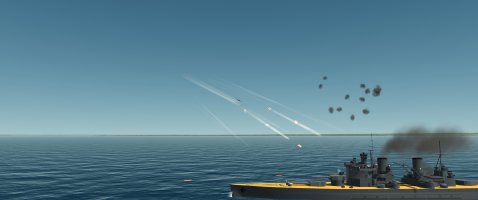
On a different note, the heavy AA is acting really funny, and I don't know why. On initial approach to the ship, they will not fire until after I have made several passes, but afterward will fire on me as I fly away out to an appropriate distance. Every single time, the shots are aimed offset to the right of target from the turret's perspective. AA gun AI is weird in CFS3, but this seems unusual. I wondered if the initial delay on engagement could be due to the guns not being present in the more distant LODs, but nothing I can think of accounts for their always shooting right of target.
Ship is set up armanent wise per the CFS3 german destroyer.LOD_100 and LOD_70 have all guns displayed. LOD_50 has only the large caliber guns. The lowest LOD (LOD_20) displays no guns. I have added to 90mm AA guns to the LOD_50. I think I found the issue with firing off to the right. I can have a more accurate Prince of Wales for you in a couple of days. Her turrets did not have the octo-guns mounted
Attachments
gecko
Charter Member
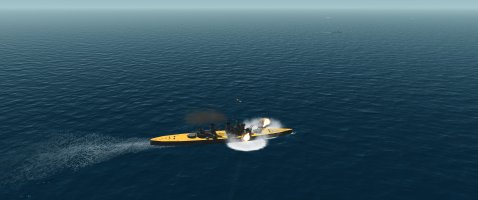
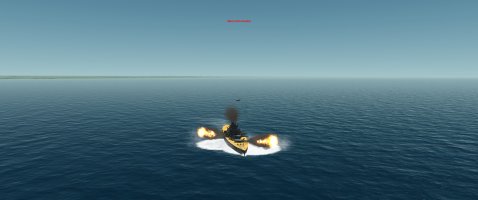
Naval gun effects are getting close. This is the 46cm for Yamato, so a bit large for King George's 14in guns, but once complete it will be scaled down for all the different calibers. Apparently there's an alignment issue with the twin 14in turret as well. The rear turret wouldn't engage at all. I know the picture shows the target out of the field of fire, but it wouldn't engage it when it was.
Thudman submitted a new resource:
KM_Type1934_Destroyer - KM_Type1934_Destroyer for CFS3
Read more about this resource...
KM_Type1934_Destroyer - KM_Type1934_Destroyer for CFS3
The Type 1934 destroyers, also known as the Z1 class or Leberecht Maass class after the lead ship, were a group of four destroyers built for the German Navy (initially called the Reichsmarine and then renamed the Kriegsmarine in 1935) during the mid-1930s, shortly before the beginning of World War II.
Read more about this resource...
Thudman submitted a new resource:
HMS_Prince_of_Wales - HMS Prince of Wales battleship for CFS3
Read more about this resource...
HMS_Prince_of_Wales - HMS Prince of Wales battleship for CFS3
This Stuart277's gmax model originally built for CFS2 converted to CFS3 using the gmax source files Stuart included with his CFS2 ship. The Prince of Wales is a King George V battleship in the appropriate 1941configuration for Force Z. The Prince of Wales and the accompanying Repulse were sunk by Japanese aircraft on 10 December 1941, becoming the first capital ships moving at sea to be sunk solely by enemy aircraft.
Read more about this resource...

dombral
Charter Member
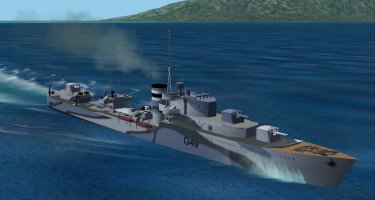
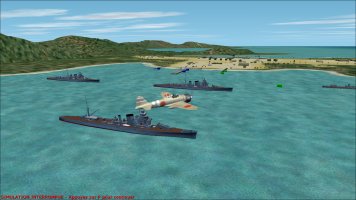
Bonjour , excusez moi de vous écrire en français car mon Anglais est très insuffisant et je n'ai pas confiance dans les traducteurs habituels . Je vois que vous est très actifs pour la création de la marine de CFS3 et que vous avez effectué avec beaucoup de réussite les conversions de notre ami commun Stuart277 , qui malheureusement semble avoir arrèté ses magnifiques productions . J e ne savais pas que vous utilisiez aussi mes repaints de ses navires , évidemment je vous encourage à continuer , mais vous savez ils sont très nombreux ; en fait je pense avoir fait le tour de la question à part quelques lacunes . Je crois que je vais rouvrir mon CFS3 pour voir mes paintures en action .
Amicalement et tous mes encouragements
Dombral
PS je vous envoie quelques photos qui devraient vous donner des idées
Amicalement et tous mes encouragements
Dombral
PS je vous envoie quelques photos qui devraient vous donner des idées
Attachments
-
 HMAS Norman 1942e.jpg198.9 KB · Views: 15
 -
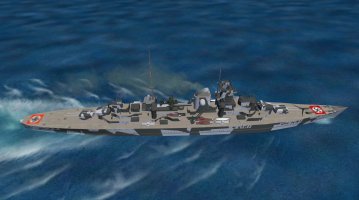 Amiral Hipper 1944a.jpg298.9 KB · Views: 11
 -
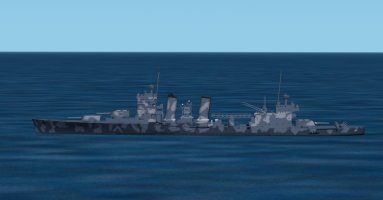 CA44 Vincennes 1942 08.jpg179.1 KB · Views: 15
 -
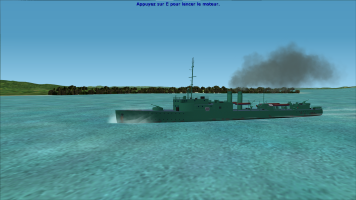 Capture d’écran 2025-10-09 094716.png1.5 MB · Views: 11
 -
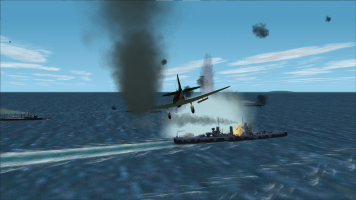 Capture d’écran 2025-10-19 152426.png2.1 MB · Views: 11
 -
 CL52 Juneau 11 1942b.jpg232.2 KB · Views: 16
 -
 snap88183.jpg553.3 KB · Views: 13

MajorMagee
SOH-CM-2022
Merci!

Pat Pattle
SOH-CM-2026
They look great, thank you! 
Thudman submitted a new resource:
CFS3_HMS_Ruler - HMS Ruler Escaort Carrier for CFS3
Read more about this resource...
CFS3_HMS_Ruler - HMS Ruler Escaort Carrier for CFS3
Lend-Lease Bogue Class CVE in use by the Royal Navy. This Stuart277's gmax model originally built for CFS2 converted to CFS3 using the gmax source files Stuart included with his CFS2 ship. The only gmax work I did was converting the files to the CFS3 heirarchy and adding LOD 095 using Corrado's paper on CFS3 carriers
Read more about this resource...
Thudman submitted a new resource:
KM_Flak_MFP - KM_Flak_MFP for CFS3
Read more about this resource...
KM_Flak_MFP - KM_Flak_MFP for CFS3
This Stuart277's gmax models of the KM Flak MFP originally built for CFS2 converted to CFS3 using the gmax source files Stuart included with his CFS2 ship.
The Marinefährprahm (MFP), "naval ferry barge", was the largest landing craft operated by Germany's Kriegsmarine during World War II.
It served a variety of roles (transport, minelayer, escort, gunboat) in the Mediterranean, Baltic and Black Seas as well as the English Channel and Norwegian coastal waters.
There are three ships in...
Read more about this resource...
Thudman submitted a new resource:
HMAS_Wilcannia_PB - HMAS Wilcannia PB for CFS3
Read more about this resource...
HMAS_Wilcannia_PB - HMAS Wilcannia PB for CFS3
HMAS Wilcannia (FYP2, WN) was a 1,049-ton anti-submarine and patrol vessel of the Royal Australian Navy (RAN).
Built as Wyrallahin 1934 by Burmeister & Wain, Copenhagen as a cargo passenger motor vessel for the North Coast Steam Navigation Company. In February 1942, her name was changed to HMAS Wilcannia, to avoid confusion with the new Bathurst-class corvette, HMAS Whyalla.
Read more about this resource...
Thudman submitted a new resource:
SS_Alagna - SS Alagna for CFS3
Read more about this resource...
SS_Alagna - SS Alagna for CFS3
SS Alagna was a 750 ton cargo ship working with the Royal Australian Navy in WW2 that operated in Australian waters during World War II, primarily in 1943-1944
Read more about this resource...
Thudman submitted a new resource:
British_Small_Merchant_Ships - Small Britich Merchant Ships for CFS3
Read more about this resource...
British_Small_Merchant_Ships - Small Britich Merchant Ships for CFS3
These Stuart277's gmax model of the SS Alagna and HMAS converted to small british cargo ships originally built for CFS2 converted to CFS3 using the gmax source files Stuart included with his CFS2 ship.
There are two ships in the folder:
b_small_merchant (750 tons)
b_small_merchant1 (1049 tons)
Read more about this resource...
Thudman submitted a new resource:
German_Small_Cargo_Ships - Small German Cargo Ships for CFS3
Read more about this resource...
German_Small_Cargo_Ships - Small German Cargo Ships for CFS3
These Stuart277's gmax model of the SS Alagna and HMAS Wilcannia converted to small german cargo ships originally built for CFS2 converted to CFS3 using the gmax source files Stuart included with his CFS2 ship.
There are two ships in the folder:
g_small_cargo (750 tons)
g_small_cargo1 (1049 tons)
Read more about this resource...
