
bosspecops
Members +
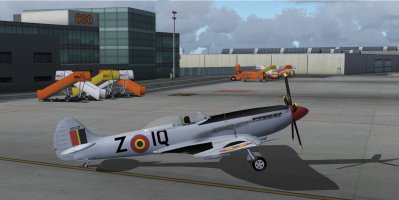
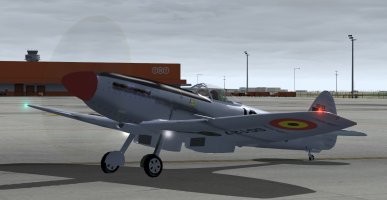
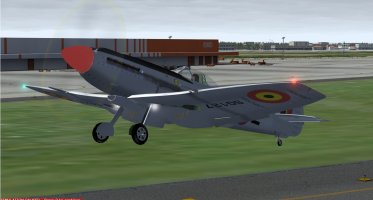
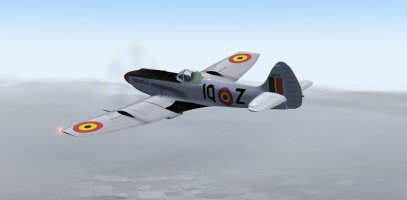
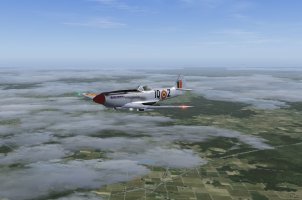
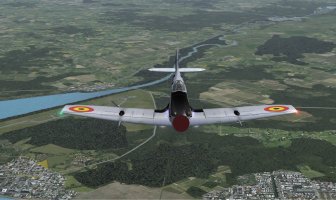
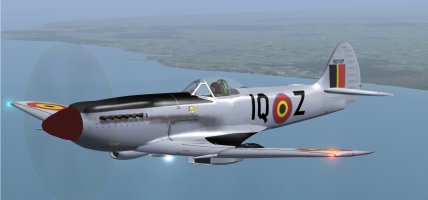
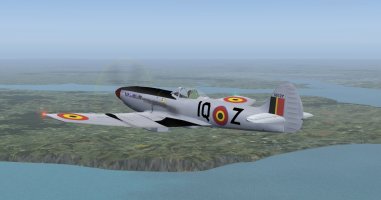
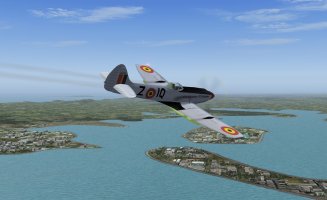
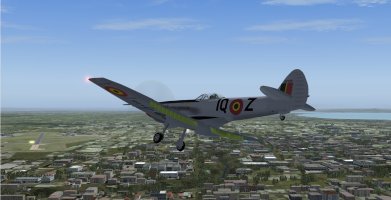
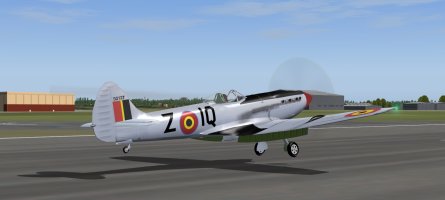
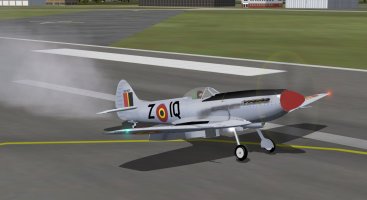
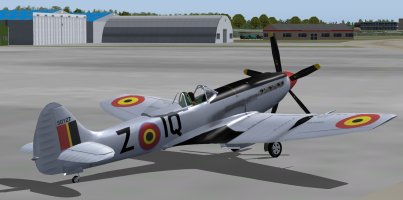
I've positioned my 'What If' PRXI(T) PL839 to Southampton prior to the event itself, and took in a couple of 'Spitfire Significant' places en route.
Leaving from my 'local field', Dean Forest Regional EGDF, at around 0730 this morning with real world weather provided by Active Sky and flying FSX.
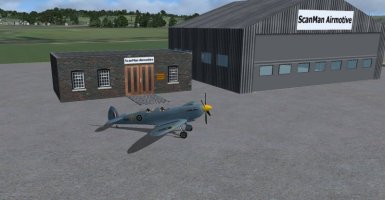
Just for a change take-off was to the north, but all SIDs from EGDF have to head south west to start with for reasons that will become clear later. My old house is about where the red arrow points, but there's a lot more town in the real world than the Just Flight and FSX scenery would have you believe here!
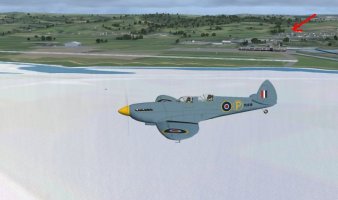
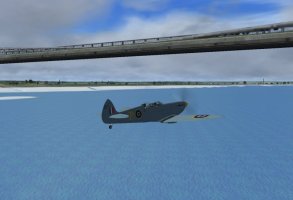
The reason for the south westerly departure is the two Severn Bridges about 12 miles away toward the mouth of the largest River in the UK. As both bridges were built with significant amounts of headroom they became an obvious 'target' once Melo had built EGDF for me many years ago now. Approaching at around 250 kts and 50 ft off the water is an integral part of our STAR from Dean Forest usually.
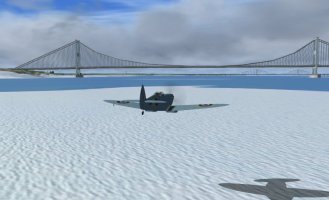
This time I avoided the dog leg further west toward the New Bridge, and turned off to the east after sliding underneath the Old Bridge.
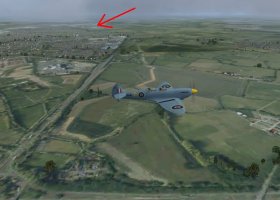
The cloudbase was un-seasonably low so I kept below it at around 1500 ft, and maintained my 250 kt cruise speed if only to see the scenery provided by the Just Flight Photo Real files. I can navigate by the roads with this scenery installed, it's that good! A bit further east I passed south of Swindon, and just on the other side of the town I could see the site where the very last Spitfire/Seafire was built, the South Marston works, arrowed, just north of the M4 motorway.
After reaching the only real turning point on my flight plan, the Compton VOR, I turned almost due south, paralleling the A34 trunk road, and before long I passed almost directly overhead Popham Airfield EGHP, a lovely all grass field that I've flown from a few times, albeit not in the left hand seat.
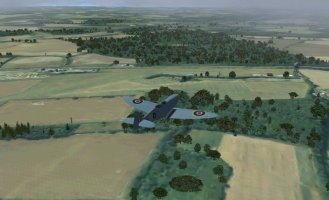
Before very long Southampton Int. EGHI hove into view and I asked the Tower if I could do a low pass down the runway before turning for landing on the 02 runway. Nice chaps that they are, they let me do the pass, and great fun it was too.
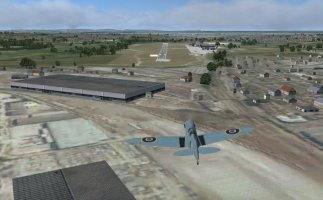
The approach to 02 passes right overhead the city, which can't be much fun for the inhabitants, but it gave me a chance to turn right above where the real K5054 was built, in Supermarine's factory at Woolston on the banks of the River Itchen. That's the building arrowed below, and it still exists.
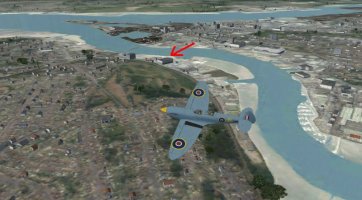
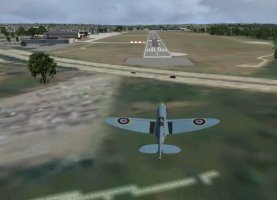
In a very short while I was heading back toward EGHI, wheels and flaps down and lined up (almost....) on the 02 centreline. The main M27 motorway runs just south of the runway threshold, and some aircraft have overshot while using 20 and ended up actually ON the motorway! I made sure I didn't undershoot from this direction and do the same thing, and I got PL839 down reasonably well.
Taxxi-ing in was easily done, EGHI having some nicely positioned taxi-ways and I was soon parked up in the GA park.
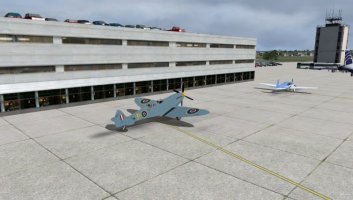
So here I am, where Spitfire flying really began, although it looked a bit different then, and even had a different name as in those days it was called Eastleigh.
My flight was only around 130 nms. and I averaged around 230 kts over the route, burning 29 galls of AVGAS and still leaving enough in the large tanks of the PRXI for a few legs of the tour yet.
Leaving from my 'local field', Dean Forest Regional EGDF, at around 0730 this morning with real world weather provided by Active Sky and flying FSX.
Just for a change take-off was to the north, but all SIDs from EGDF have to head south west to start with for reasons that will become clear later.
My old house is about where the red arrow points, but there's a lot more town in the real world than the Just Flight and FSX scenery would have you believe here!The reason for the south westerly departure is the two Severn Bridges about 12 miles away toward the mouth of the largest River in the UK. As both bridges were built with significant amounts of headroom they became an obvious 'target' once Melo had built EGDF for me many years ago now. Approaching at around 250 kts and 50 ft off the water is an integral part of our STAR from Dean Forest usually.
This time I avoided the dog leg further west toward the New Bridge, and turned off to the east after sliding underneath the Old Bridge.
The cloudbase was un-seasonably low so I kept below it at around 1500 ft, and maintained my 250 kt cruise speed if only to see the scenery provided by the Just Flight Photo Real files. I can navigate by the roads with this scenery installed, it's that good! A bit further east I passed south of Swindon, and just on the other side of the town I could see the site where the very last Spitfire/Seafire was built, the South Marston works, arrowed, just north of the M4 motorway.
After reaching the only real turning point on my flight plan, the Compton VOR, I turned almost due south, paralleling the A34 trunk road, and before long I passed almost directly overhead Popham Airfield EGHP, a lovely all grass field that I've flown from a few times, albeit not in the left hand seat.
Before very long Southampton Int. EGHI hove into view and I asked the Tower if I could do a low pass down the runway before turning for landing on the 02 runway. Nice chaps that they are, they let me do the pass, and great fun it was too.
The approach to 02 passes right overhead the city, which can't be much fun for the inhabitants, but it gave me a chance to turn right above where the real K5054 was built, in Supermarine's factory at Woolston on the banks of the River Itchen. That's the building arrowed below, and it still exists.
In a very short while I was heading back toward EGHI, wheels and flaps down and lined up (almost....) on the 02 centreline. The main M27 motorway runs just south of the runway threshold, and some aircraft have overshot while using 20 and ended up actually ON the motorway! I made sure I didn't undershoot from this direction and do the same thing, and I got PL839 down reasonably well.
Taxxi-ing in was easily done, EGHI having some nicely positioned taxi-ways and I was soon parked up in the GA park.
So here I am, where Spitfire flying really began, although it looked a bit different then, and even had a different name as in those days it was called Eastleigh.
My flight was only around 130 nms. and I averaged around 230 kts over the route, burning 29 galls of AVGAS and still leaving enough in the large tanks of the PRXI for a few legs of the tour yet.
Last edited: