
Bomber_12th
SOH-CM-2025
Largely unknown, the National Advisory Committee for Aeronautics (NACA), the precursor to today’s NASA, operated 4 P-51D's as test airframes for various roles, in the immediate post-WWII era. The most significant use of these aircraft by the NACA, was in acquiring data on the then top-secret Bell X-1 design. The Mustang was chosen for this role, due to its stability, even while exposed to compressibility at high speeds. In order to make the Mustang even more stable, NACA designed and retrofitted their Mustangs with taller vertical fins, which effectively helped to further stabilize the aircraft at speed. Later on, Cavalier would use this same NACA tail modification in their Mustangs (now largely thought of as a ‘TF’ tail fin).
<?xml:namespace prefix = o ns = "urn:schemas-microsoft-com fficeffice" /><o></o>
The Mustangs were put to work, conducting wing flow pressure distribution tests, with scale models of various airfoils and X-1 designs mounted on top of the wings for the test purposes. Contained within each gun bay were optical balances and strain gauges, which were wired directly to the models. Flown to 30,000 ft, and then put into a 30-degree dive, the top speeds usually would max-out at around 475-mph within the dive. The critical test-moment, however, occurred during the 4G pullout at the end of the dive, when the air travelling over the wings became supersonic, at which point the proper test-data could be collected.
<o></o>
P-51D-25NT, 44-84900, was manufactured in 1945, at the Dallas, Texas, North American Aviation plant, and became one of the four P-51D’s obtained by the NACA the same year. When in service with the NACA, the aircraft was given the number 127 (Mike Coutches’ airworthy P-51D, 44-84864, was NACA 126, and still features the taller NACA tail, to this day). After NACA 127's service, the aircraft went to the Pennsylvania Air National Guard in 1952, and eventually wound up on a pole, painted in ANG markings, where it remained until 1994. Rescued by the late David Tallichet, the aircraft was eventually purchased by Bill Allmon, who sent the still very complete airframe to Pacific Fighters for restoration. Amazingly, after all the years the aircraft had been displayed outside, it still retained much of its original NACA equipment. Completed in 1998, the aircraft was finished in original NACA-configuration, with original NACA equipment installed, including original scale model airfoils on top of the wings. Setting a benchmark in Mustang restorations at the time, the aircraft won Oshkosh Post WWII Warbird Grand Champion, 1998. Just this past September, the aircraft won the Rolls-Royce Heritage Trophy, at the Reno National Aviation Heritage Invitational.<o></o>
<o></o>
During the restoration program, it was decided to restore the aircraft to original NACA-modified, factory condition. As a result, much of the interior is factory-original, just as it originally was, with the exception that the instrument panel features the original NACA modifications, including the addition of an outside air temperature gauge and a mach meter, both critical instruments for use in collecting data during the dive-tests. While all of the gun sight equipment is removed, the working AN/APS-13 tail-warning radar remains in place, with the signal light mounted atop the instrument panel shroud.
<o></o>
The only real departure from the original interior configuration is the addition of a rear seat, allowing the carriage of a passenger, providing them the experience of what a flight in a Mustang is like. During the aircraft’s time with the NACA, the area behind the pilot, where the fuselage fuel tank would be located, was filled with all of the data-recording equipment. To provide easier access to the rear seat, the front seat is modified to tilt forward, held in place at the top using quick-release locking-pins.
<o></o>
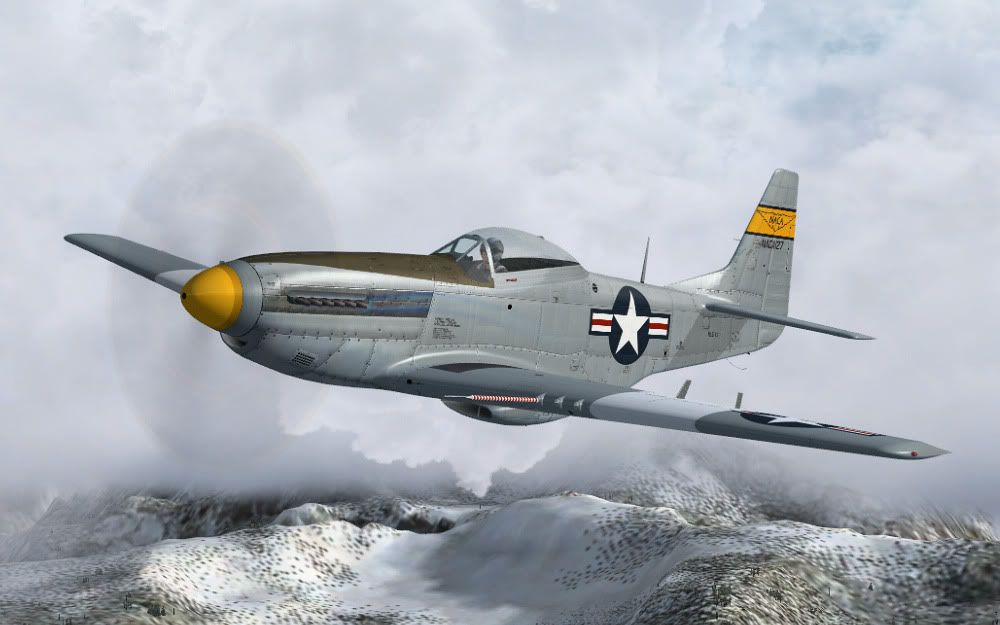
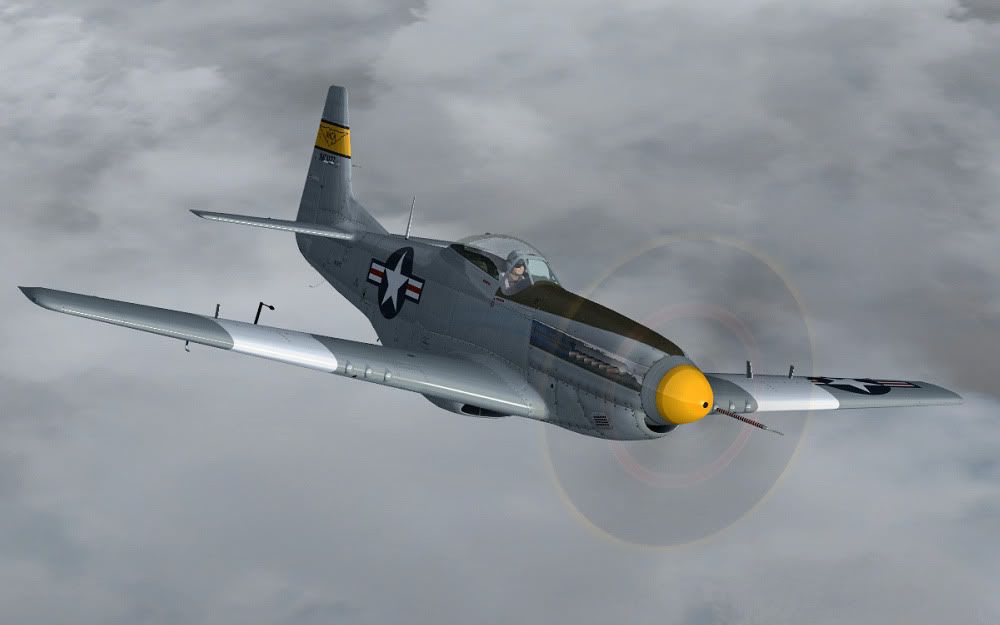
In this first exterior view, one can see the taller, NACA vertical fin, as well as the test airfoil models mounted to the wings, and the barbershop-pole, outside air temperature probe.
<o></o>
<o>
 </o>
</o>
<o></o>
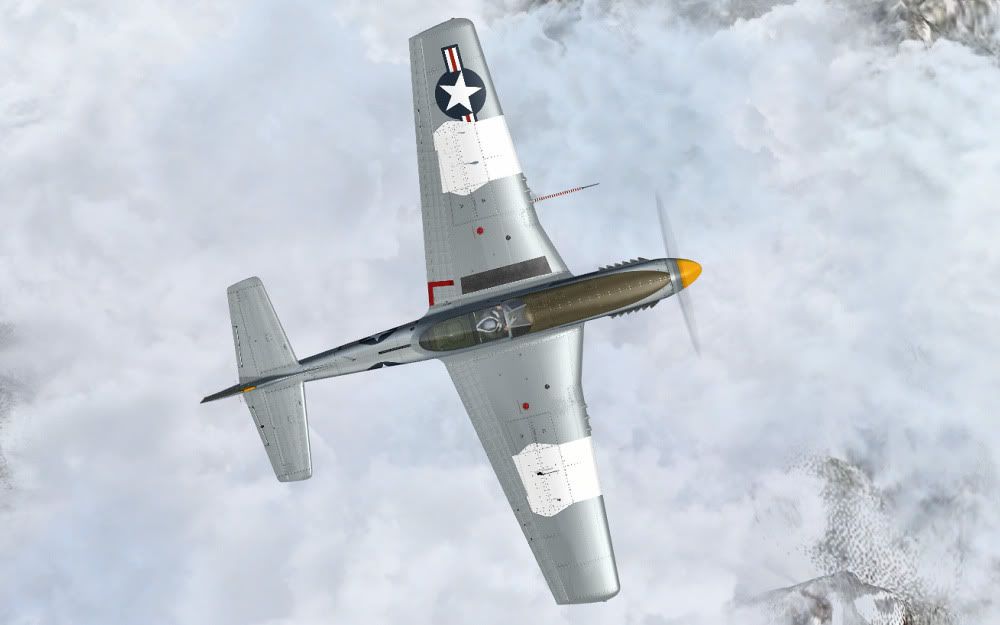
From a top-down angle, the white air-distribution test zones on the wing upper-surfaces can be clearly seen.
<o></o>
<o>
 </o>
</o>
<o></o>
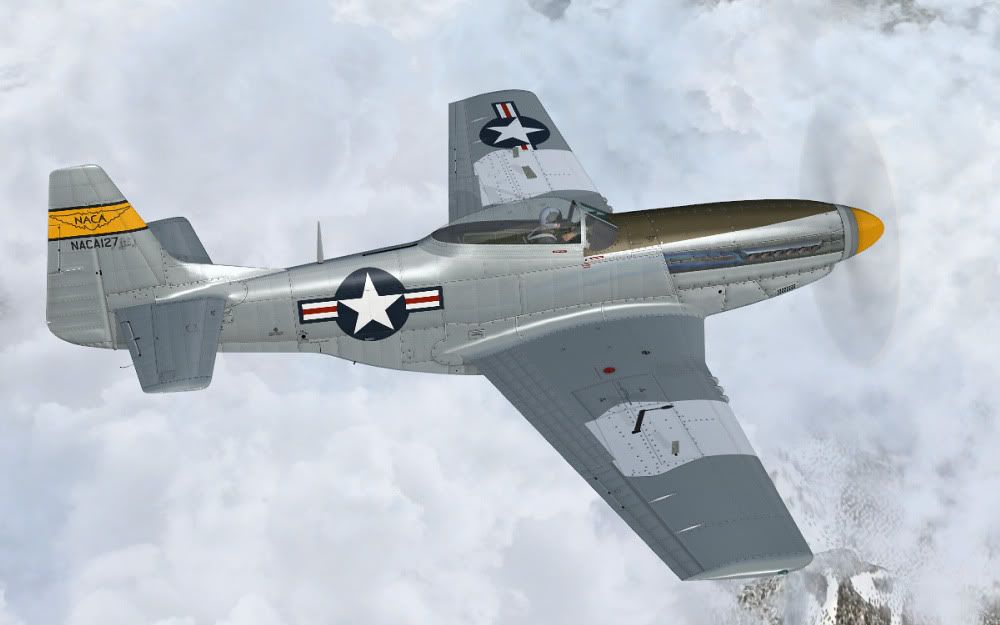
The three polished models mounted to the wings, are strictly airfoil-concepts. The black-painted model however, is a then-radical, wing design, fitted above the aircraft’s wing, on the end of a test-stand.
<o></o>
<o>
 </o>
</o>
<o></o>
<o>
 </o>
</o>
<o></o>
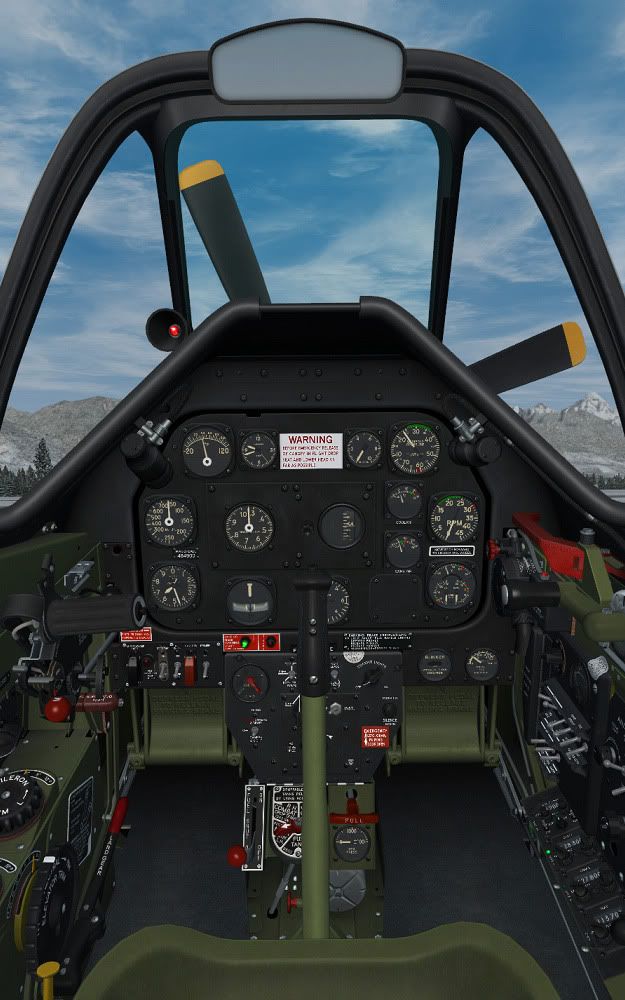
This overall view of the cockpit, demonstrates the aircraft’s level of originality, as well as the NACA modifications to the main instrument panel. When on the ground, with the angle of the aircraft as it is, the tail-warning radar picks up on the ground behind the tail, and becomes activated, as seen in this shot, with the red signal light atop the instrument panel.
<o></o>
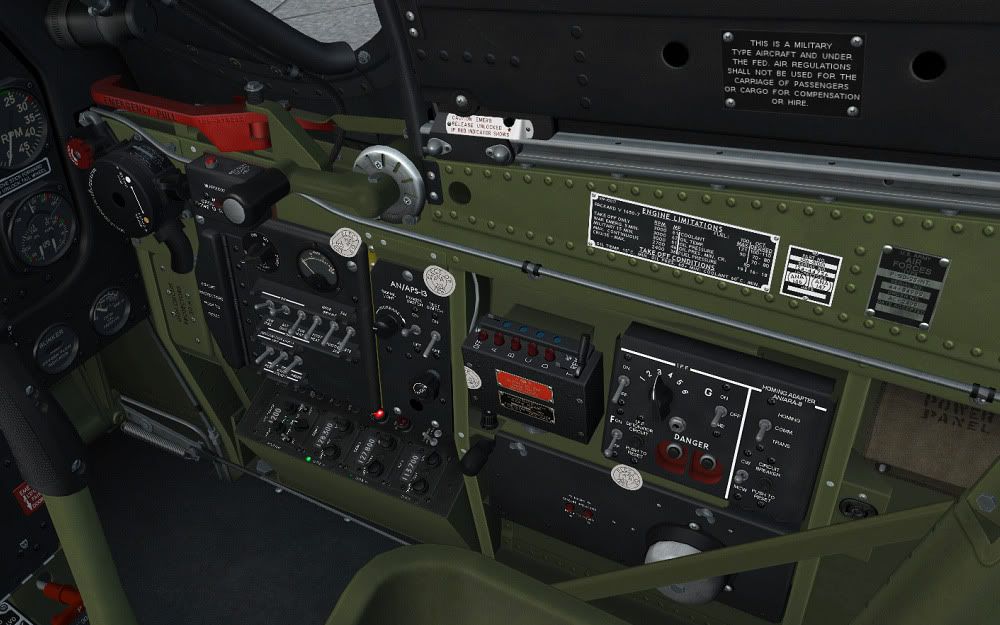
A general view of the right side of the cockpit, showing the accurate application of authentic Electrical Operation Inspection stickers, the accurate AN/APS-13 control panel, the accurate I.F.F. panel, and the tail-warning radar bell, mounted to the radio-fuse panel. The placard mounted to the canopy frame, is required within all dual-seat Mustangs based within the <?xml:namespace prefix = st1 ns = "urn:schemas-microsoft-comffice:smarttags" /><st1lace w:st="on"><st1:country-region w:st="on">U.S.</st1:country-region></st1lace>, by FAA regulations – basically informing that the Mustang is not to be used to make a regular income, flying passengers from point to point.
<o></o>
<o>
 </o>
</o>
<o></o>
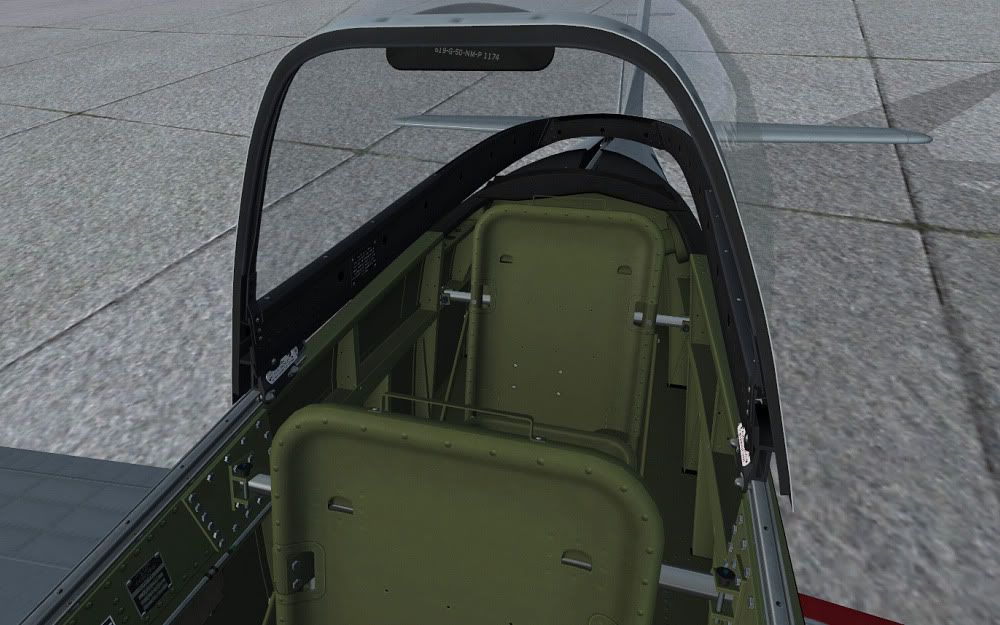
A general view looking aft behind the pilot’s seat, showing the installation of the rear seat.
<o></o>
<o>
 </o>
</o>
<o></o>
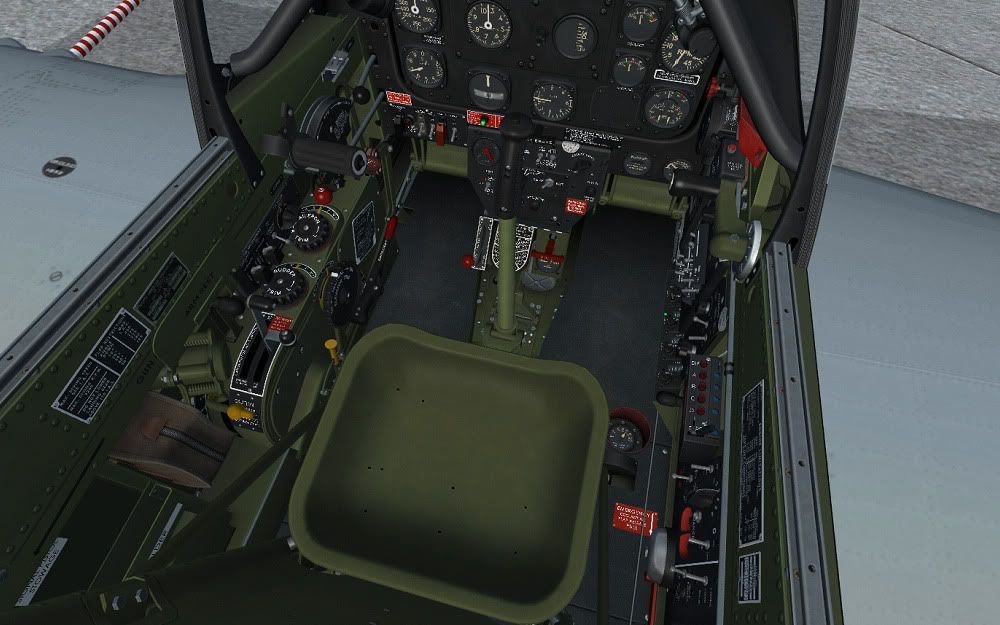
Another general view, showing details of the floor and a bit of the left-side cockpit.
<o></o>
<o>
 </o>
</o>
<o></o>
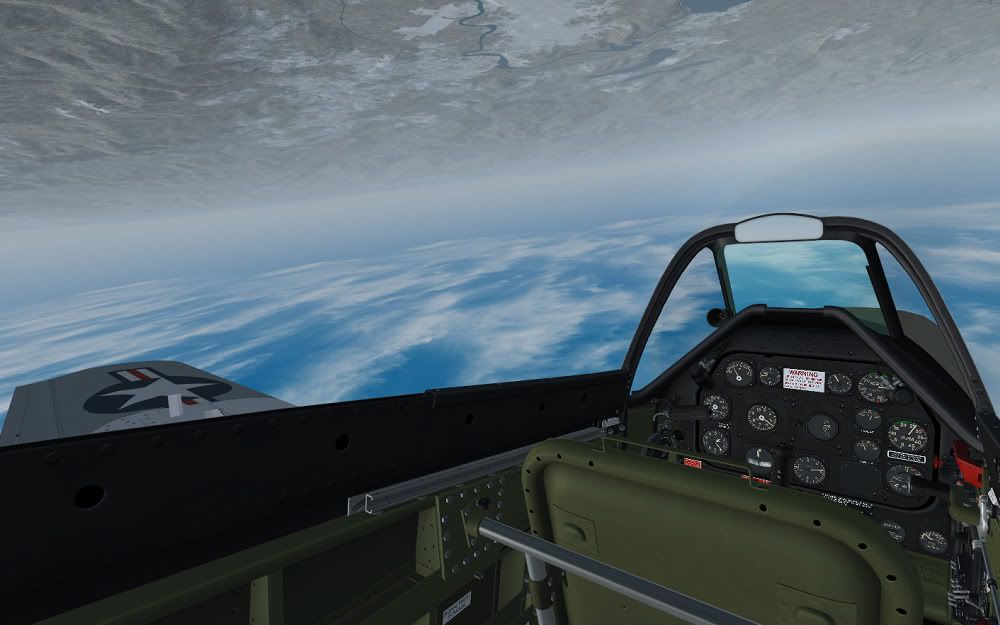
In the air, the view from the back-seat can be quite exhilarating, as the field of view out the aircraft is unrestricted.
<o></o>
<o>
 </o>
</o>
<o></o>
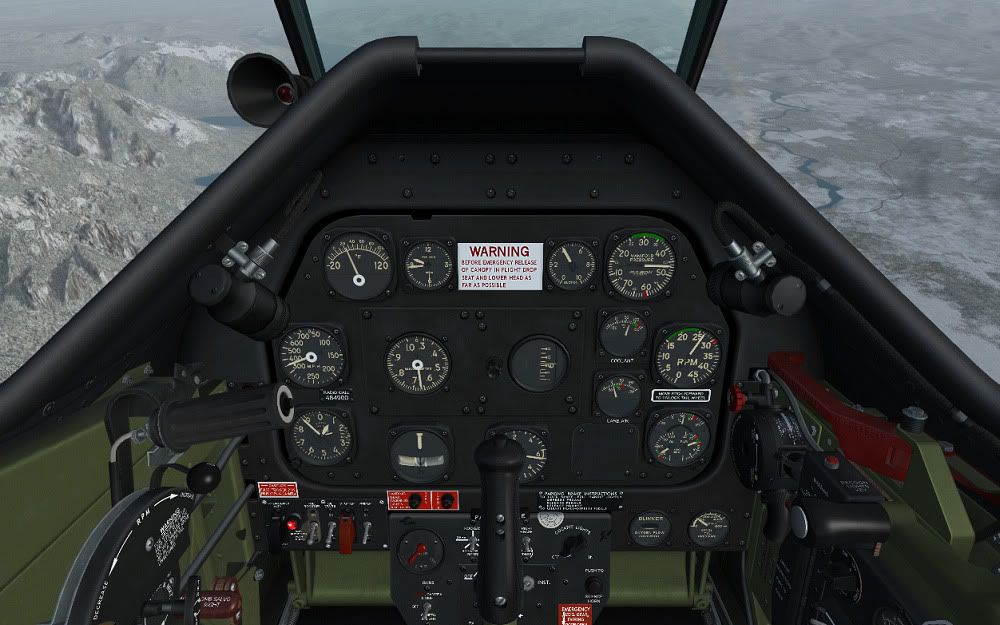
A closer look at the NACA-modified instrument panel, showing the aircraft in a moderate dive. The three critical instruments for use during the dive-tests – the airspeed indicator, outside air temp, and mach meter – are highlighted by the application of white circles on the gauge faces. During the time this shot was taken, the aircraft was being put through a moderate dive – with the airspeed and mach-meter picking up.
<?xml:namespace prefix = o ns = "urn:schemas-microsoft-com
fficeffice" /><o></o>The Mustangs were put to work, conducting wing flow pressure distribution tests, with scale models of various airfoils and X-1 designs mounted on top of the wings for the test purposes. Contained within each gun bay were optical balances and strain gauges, which were wired directly to the models. Flown to 30,000 ft, and then put into a 30-degree dive, the top speeds usually would max-out at around 475-mph within the dive. The critical test-moment, however, occurred during the 4G pullout at the end of the dive, when the air travelling over the wings became supersonic, at which point the proper test-data could be collected.
<o
></o>P-51D-25NT, 44-84900, was manufactured in 1945, at the Dallas, Texas, North American Aviation plant, and became one of the four P-51D’s obtained by the NACA the same year. When in service with the NACA, the aircraft was given the number 127 (Mike Coutches’ airworthy P-51D, 44-84864, was NACA 126, and still features the taller NACA tail, to this day). After NACA 127's service, the aircraft went to the Pennsylvania Air National Guard in 1952, and eventually wound up on a pole, painted in ANG markings, where it remained until 1994. Rescued by the late David Tallichet, the aircraft was eventually purchased by Bill Allmon, who sent the still very complete airframe to Pacific Fighters for restoration. Amazingly, after all the years the aircraft had been displayed outside, it still retained much of its original NACA equipment. Completed in 1998, the aircraft was finished in original NACA-configuration, with original NACA equipment installed, including original scale model airfoils on top of the wings. Setting a benchmark in Mustang restorations at the time, the aircraft won Oshkosh Post WWII Warbird Grand Champion, 1998. Just this past September, the aircraft won the Rolls-Royce Heritage Trophy, at the Reno National Aviation Heritage Invitational.<o
></o><o
></o>During the restoration program, it was decided to restore the aircraft to original NACA-modified, factory condition. As a result, much of the interior is factory-original, just as it originally was, with the exception that the instrument panel features the original NACA modifications, including the addition of an outside air temperature gauge and a mach meter, both critical instruments for use in collecting data during the dive-tests. While all of the gun sight equipment is removed, the working AN/APS-13 tail-warning radar remains in place, with the signal light mounted atop the instrument panel shroud.
<o
></o>The only real departure from the original interior configuration is the addition of a rear seat, allowing the carriage of a passenger, providing them the experience of what a flight in a Mustang is like. During the aircraft’s time with the NACA, the area behind the pilot, where the fuselage fuel tank would be located, was filled with all of the data-recording equipment. To provide easier access to the rear seat, the front seat is modified to tilt forward, held in place at the top using quick-release locking-pins.
<o
></o>In this first exterior view, one can see the taller, NACA vertical fin, as well as the test airfoil models mounted to the wings, and the barbershop-pole, outside air temperature probe.
<o
></o><o
>
><o
></o>From a top-down angle, the white air-distribution test zones on the wing upper-surfaces can be clearly seen.
<o
></o><o
>
><o
></o>The three polished models mounted to the wings, are strictly airfoil-concepts. The black-painted model however, is a then-radical, wing design, fitted above the aircraft’s wing, on the end of a test-stand.
<o
></o><o
>
><o
></o><o
>
><o
></o>This overall view of the cockpit, demonstrates the aircraft’s level of originality, as well as the NACA modifications to the main instrument panel. When on the ground, with the angle of the aircraft as it is, the tail-warning radar picks up on the ground behind the tail, and becomes activated, as seen in this shot, with the red signal light atop the instrument panel.
<o
></o>A general view of the right side of the cockpit, showing the accurate application of authentic Electrical Operation Inspection stickers, the accurate AN/APS-13 control panel, the accurate I.F.F. panel, and the tail-warning radar bell, mounted to the radio-fuse panel. The placard mounted to the canopy frame, is required within all dual-seat Mustangs based within the <?xml:namespace prefix = st1 ns = "urn:schemas-microsoft-com
ffice:smarttags" /><st1lace w:st="on"><st1:country-region w:st="on">U.S.</st1:country-region></st1lace>, by FAA regulations – basically informing that the Mustang is not to be used to make a regular income, flying passengers from point to point.<o
></o><o
>
><o
></o>A general view looking aft behind the pilot’s seat, showing the installation of the rear seat.
<o
></o><o
>
><o
></o>Another general view, showing details of the floor and a bit of the left-side cockpit.
<o
></o><o
>
><o
></o>In the air, the view from the back-seat can be quite exhilarating, as the field of view out the aircraft is unrestricted.
<o
></o><o
>
><o
></o>A closer look at the NACA-modified instrument panel, showing the aircraft in a moderate dive. The three critical instruments for use during the dive-tests – the airspeed indicator, outside air temp, and mach meter – are highlighted by the application of white circles on the gauge faces. During the time this shot was taken, the aircraft was being put through a moderate dive – with the airspeed and mach-meter picking up.


