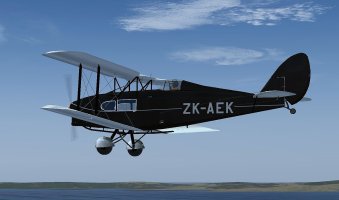
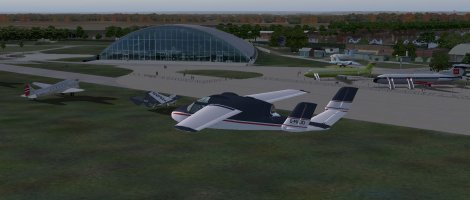
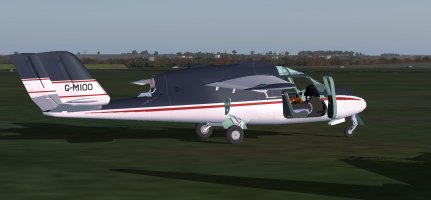
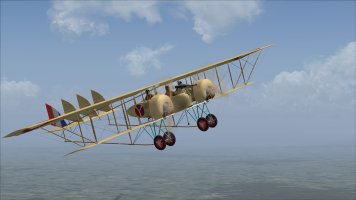
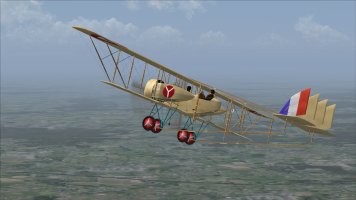
The model is done by Eduard "Ted" Cook, and available at simviation.The Farman is wonderful
Cheers,
Huub

Please see the most recent updates in the "Where did the .com name go?" thread. Posts number 16 and 17.
Just when you think you have everything running some what better...
You get a message from the Hosting company. Short story they need to move us to a new server. I have been working with them to plan a good date for all concerned. Here is what we have come up with as a schedule.
If all goes well we should be back online on November 8th.
To keep you updated we will post updates on AVSIM forums.
Thank you for your support.
The model is done by Eduard "Ted" Cook, and available at simviation.The Farman is wonderful
Oops, sorry! My fault.....That Avro is a Blackburn monoplane Huub, the Avro F is by Dennis Simaintis (Sp?)
Ttfn
Pete

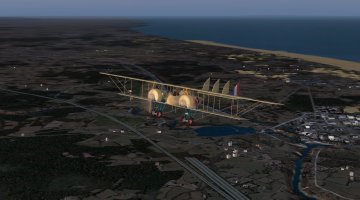

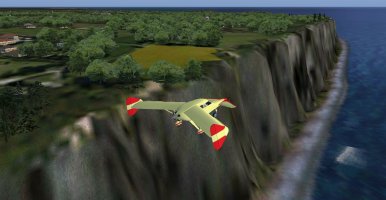

Pitts S-1 Special von Addictive Simulations (Payware)
concerning the 1909 Bleriot Type XI 'La Manche' by Joe LoGrasso, just as a heads-up, while the older version circa 2002/3 is hosted at the likes of Simviation https://simviation.com/1/search?submit=1&keywords=grasso+bleriot or FS2000 https://www.fs2000.org/2002/08/16/fs2002-1909-bleriot-xi/ , LoGrasso's updated release - update by Paul Beardsley, circa 2005 and native for FS2004 is only currently available (to the best of my knowledge), thanks to the wayback machine at the archived page of the Golden Eagles Squadron https://web.archive.org/web/20050606012123/http://windrfters.com/planespage.htmBleriot, 1909, the plane that crossed the English channel
View attachment 181611
Also from 1909, the Demoiselle from Santos-Dumont
View attachment 181612
The White No. 2 floatplane from 1913
View attachment 181613
The Dunne, a 1913 flying wing. The RAF turned it down because it was too stable to be a fighter and too small to be a bomber.
(I liked this serendipitous juxtaposition so much that it became my FS2004 splash screen, lol.)
View attachment 181614
And a Victorian fantasy
View attachment 181633
First Class Simulations' Early Years of Flight https://www.simshack.net/products/early-years-of-flight-fsx-fs2004-129Rummaged around in the dark recesses of my hangar and found some more antiques, fun to fly briefly ...if you have the patience ..and the time. None of these planes have instruments or brakes, a couple have no discernible rudder action, the engine is either on or off (half throttle is an "idle", any less and the engine may die), and there's no more than 12-15kt between overspeed and stall. so landing is a balancing act of getting a decent rate of descent without overspeeding
The 1909 Goliescu Avioplan
View attachment 181785
This was a real aircraft. Goliescu was a Romanian inventor who squandered his resources on this plane; it made numerous flights in Europe, the first tubular fuselage to fly, a concept not pursued again til Caproni built one twenty years later. While awaiting a public display in Paris the Avioplan was destroyed when a storm demolished the warehouse it was in. Destitute, Goliescu became a spy for Russia during WWI; caught and sentenced to prison, he was released in the early thirties and returned to his aeronautical studies. He passed away in 1942, never building another airplane. (Don't let speed drop below 40kt, it will stall instantly and plummet like a rock; the engine isn't responsive enough to save you.)
The Wright Model B of 1910. Slow, cumbersome, as maneuverable as an arthritic hippo in a mudhole, but quite stable. Little more than a powered glider.
View attachment 181786
The Handley Page H.P. 5 of 1912. The most advanced of these, only a step from the aircraft of WWI and the first successful airplane from HP. It flew thousands of miles around England during 1912-1914, and gave hundreds of people their first airplane ride. Eventually it became a prized display at the company headquarters til 1940 when a manager decided he needed the space and ordered it chopped up and incinerated.
View attachment 181787
And the airplane that is still controversial as possibly the first controlled heavier than air flight. The Santos-Dumont 14bis first flew publicly in 1906, but there is, arguably, evidence it had been flying a couple of years at that point. (The Wright brothers threatened to reclaim everything they had given to the Smithsonian if the latter even mentioned the accomplishments of Santos-Dumont.) Not easy to fly, is nose heavy, stalls at 30kt, overspeeds at 40, apparently only has pitch and roll control, requires utmost attention. And notice the pilot stands in the cockpit.
View attachment 181788
A flight from Dannelly Field to Maxwell Field, 8 miles apart, took over fifteen minutes, mostly maneuvering to land ...
View attachment 181789
Jean-Michel Castagné's Bleriot XI https://web.archive.org/web/20161213153612/http://bleriot11.pagesperso-orange.fr/Hallo friends,
as I see more and more modern airliners and sceneries (some look to be payware) in the "normal" or official screenshots
I would like to propose an vintage aircraft and scenery screenshots thread. It should be for aircraft and scenery from the beginning to
lets say to the sixties. My idea is to show how FS2004 is a living history from the beginning of flights. When flying was still an adventure.
And give a place to rember some aircrafts and scenery designer which are no longer active or had gone to fly in other skies.
Happy landings
Michael
View attachment 181598
la mer est si grande et mon appareil si petit

sorry mate, but I did saySurtout lien inaccessible. Un de plus!
and to add to that, possibly not; for web archive does not preserve everything https://blog.archive.org/2017/04/17...arch-engines-dont-work-well-for-web-archives/any of the posted files pointed to by the download links in the blog may potentially have been preserved by the wayback machine @ web archive
Hallo Michael,Hallo Wolfebee,
just had a look at J-M C's blog, sadly the interesting birds are only for FSX
So nada for me.
Kenavo
Michael