
-
Please see the most recent updates in the "Where did the .com name go?" thread. Posts number 16 and 17.
-
Special Server Maintenance
Just when you think you have everything running some what better...
You get a message from the Hosting company. Short story they need to move us to a new server. I have been working with them to plan a good date for all concerned. Here is what we have come up with as a schedule.
- November 4th 17:00 -5UTC shut off the forums and start backup proceedures. During this time there will be no access to the forums or the Resource Section.
- November 5th Continue with Backups and download same until complete.
- November 6th 7:00 turn over server to hosting company to move system to new server
- November 7th - 8th restore backups and upgrade forum software.
If all goes well we should be back online on November 8th.
To keep you updated we will post updates on AVSIM forums.
Thank you for your support.
You are using an out of date browser. It may not display this or other websites correctly.
You should upgrade or use an alternative browser.
You should upgrade or use an alternative browser.
City Textures rework
- Thread starter rince33
- Start date
flashgordon
Charter Member
Wow. That looks terrific.
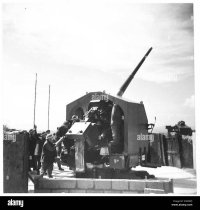
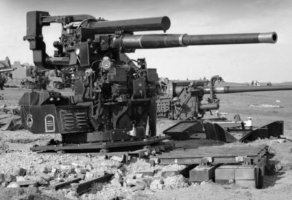
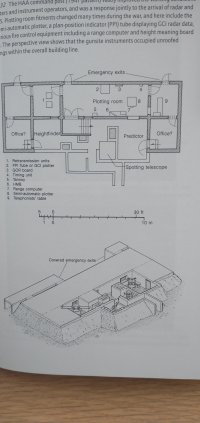
Help with your HAA Emplacement. In the permanent Command Post the open rear has 3 sections. In the centre stood the small T.I MKIII AA identification telescope usually on a metal tripod to call out range and bearing for the outer sections. To the left side would be an Height and Range Finder which came in several sizes of which the UB-10 shown attached is the largest. To the right stood the Predictor (a mechanical computer) to calculate speed, height, and direction of aircraft to predict where shells should detonate. All this data was fed to the covered plotting room (early sandbagged tent then semi-sunken brick and concrete) and then passed to the guns. These instruments became more sophisticated as time went on including radar prediction. From 1941 the women of the ATS took over these roles (in some "Mixed" batteries making up 2/3rds of the personnel) although not allowed by the Defence Regulations to actually load or fire weapons which evolved to have auto loaders and automated gun-laying.
Help with your HAA Emplacement. In the permanent Command Post the open rear has 3 sections. In the centre stood the small T.I MKIII AA identification telescope usually on a metal tripod to call out range and bearing for the outer sections. To the left side would be an Height and Range Finder which came in several sizes of which the UB-10 shown attached is the largest. To the right stood the Predictor (a mechanical computer) to calculate speed, height, and direction of aircraft to predict where shells should detonate. All this data was fed to the covered plotting room (early sandbagged tent then semi-sunken brick and concrete) and then passed to the guns. These instruments became more sophisticated as time went on including radar prediction. From 1941 the women of the ATS took over these roles (in some "Mixed" batteries making up 2/3rds of the personnel) although not allowed by the Defence Regulations to actually load or fire weapons which evolved to have auto loaders and automated gun-laying.
Attachments
-
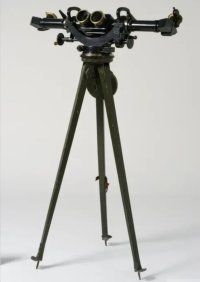 T.1 MK III AA Identification Telescope.jpg114.1 KB · Views: 2
 -
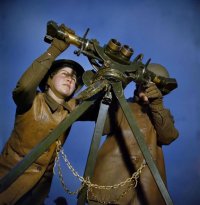 ATS using MK III AA Identification Telescope.jpg41 KB · Views: 1
 -
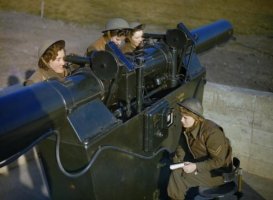 ATS girls using UB-10 height and range finder.jpg53.8 KB · Views: 1
 -
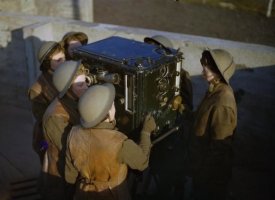 ATS girls using the predictor instrument.jpg46.3 KB · Views: 1
 -
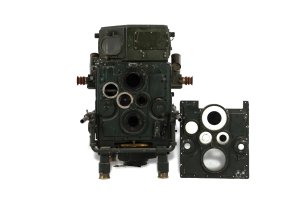 Vickers No.1 anti-aircraft predictor, 1941.jpg297.4 KB · Views: 2
 -
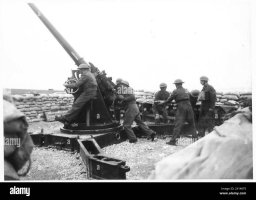 3 inch AA Gun.jpg94.4 KB · Views: 2
 -
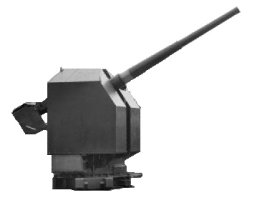 4.5-in-AA-gun.jpg13.4 KB · Views: 1
 -
 4.5-inch-anti-aircraft-gun.jpg98.2 KB · Views: 1
 -
 Anti-Diver battery Hastings 1944.jpg83.2 KB · Views: 2
 -
 Anti Diver Battery Suffolk 1944.jpg59.9 KB · Views: 3
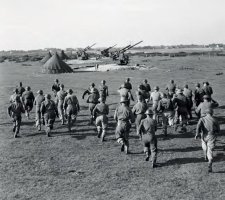
Great info as always Gordon. I wondered what 'anti-diver' meant and decided to Google it.
"Diver" batteries were specialized British World War II Heavy Anti-Aircraft (HAA) sites designed in 1944 to combat German V-1 flying bombs ("Divers"). These batteries, featuring four 3.7-inch guns and advanced radar (GL Mark II or SCR584), were arranged along the coast to intercept missiles.
flashgordon
Charter Member
Before the war it was recognised that the human operated height and range finder combined with the Predictor mechanical computer would only have a moderate chance of success even when the target was a daylight mass formation of high level bombers moving on an unchanging course at a modest speed with a raid pre-warning by the Observer Corps and Chain Home radar. This was the case for most of the BoB but then the nightime raids of the blitz showed up the defiencies of such methods with London, Coventry, Plymouth and many other cities suffering heavy damage and mass civilian casualties. Many said the 'Bomber would always get through'.
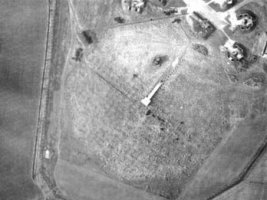
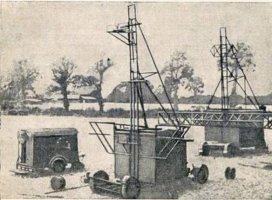
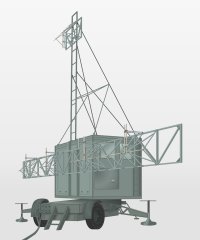
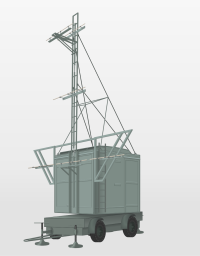
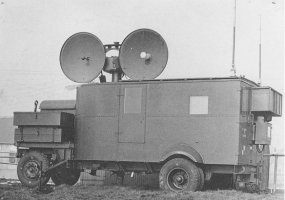
As with BoB the salvation was with those brilliant scientists who invented radar. By 1939 the Gun Laying MkI radar had begun to be introduced based on the same principles as Chain Home. This suffered from its own defiencies the major one being not having an target elevation finding and requiring the receiver to be sat on a large mat of chicken mesh to stop radar waves being reflected off the surrounding uneven ground by acting as an "optically flat" artificial ground surface. Target elevation was resolved by the interim GL-1B but it was only when the more accurate height and bearing of the GL-II that the data could begin to be used for direct gun laying.
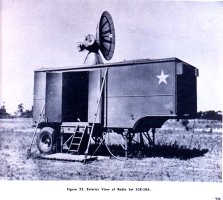
The Magnatron based GL-III and SCR-584 started to appear in 1943 and 1944 when the threat turned to high speed low level fighter bombers with coastal town nuisance raids and then the V1 which flying at 350 to 400mph at 2000-4000ft required HAA and LAA batteries to be moved to the coast to allow the radars the best opportunity to see their targets approaching over the sea. Attached are images showing the development.
As with BoB the salvation was with those brilliant scientists who invented radar. By 1939 the Gun Laying MkI radar had begun to be introduced based on the same principles as Chain Home. This suffered from its own defiencies the major one being not having an target elevation finding and requiring the receiver to be sat on a large mat of chicken mesh to stop radar waves being reflected off the surrounding uneven ground by acting as an "optically flat" artificial ground surface. Target elevation was resolved by the interim GL-1B but it was only when the more accurate height and bearing of the GL-II that the data could begin to be used for direct gun laying.
The Magnatron based GL-III and SCR-584 started to appear in 1943 and 1944 when the threat turned to high speed low level fighter bombers with coastal town nuisance raids and then the V1 which flying at 350 to 400mph at 2000-4000ft required HAA and LAA batteries to be moved to the coast to allow the radars the best opportunity to see their targets approaching over the sea. Attached are images showing the development.
Attachments
-
GL Radar for HAA Batteries.txt9.3 KB · Views: 0
-
 Gun_Laying_mat.jpg38.2 KB · Views: 2
 -
 GL Mk. II radar transmitter, receiver and generator.jpg181.2 KB · Views: 1
 -
 GL Mk II radar transmitter.jpg140.7 KB · Views: 1
 -
 GL Mk II radar receiver.png221.5 KB · Views: 1
 -
 GL_Mk_IIIb_left_side.jpg65.6 KB · Views: 2
 -
 Exterior_view_of_SCR-584.jpg1.1 MB · Views: 3
flashgordon
Charter Member
More on HAA: During the Blitz it was estimated it took 18,500 AA shells to destroy one high altitude bomber flying at 250 mph. 31/2 years later the devlopments in radar prediction, shell proximity fusing with auto setting, auto loading and gun laying would mean it took just 156 shells to destroy a low altitude 350mph V-1 where the target was visible for seconds rather than minutes for the former. The video here shows the auto loader in action:
.
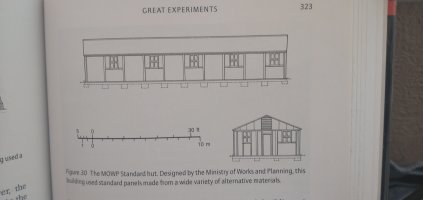
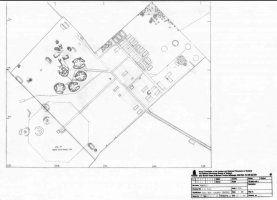
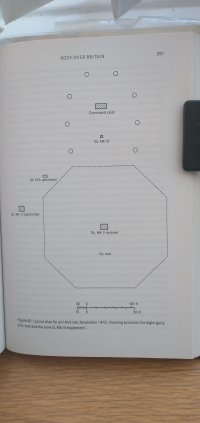
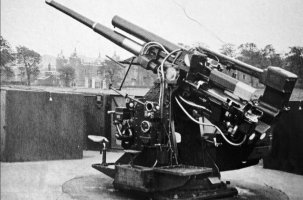
Pics attached show the loader on a late 3.7 inch with power and data cables; the chicken wire GL mat with a ramp to raise the GL Mk II Receiver above the Mat. A permanent site would have an attached accommodation camp initially tented, then MOWP wooden huts, finally nissen. Anti-Diver emergency batteries would return to tents or the more fortunate billeted in seaside accommodation. Some of the permanent ones also had decoy pits and posts as shown on the east of the attached site. The plan is of a site around Scapa Flo and shows a smaller footprint for the Command Post which grew to the structures shown in my previous post and on the attached plan more for the protection of the equipment than the crews. A good auto loader gun crew could fire some 25 shells per minute which led to the gun pit crew shelter areas being used for ammunition storage and additional protected magazines being built on site. The emergency batteries had themselves to be moved several times up the East coast with the French launch sites being overrun and the last threat coming from V-1s being air launched from bombers.
Pics attached show the loader on a late 3.7 inch with power and data cables; the chicken wire GL mat with a ramp to raise the GL Mk II Receiver above the Mat. A permanent site would have an attached accommodation camp initially tented, then MOWP wooden huts, finally nissen. Anti-Diver emergency batteries would return to tents or the more fortunate billeted in seaside accommodation. Some of the permanent ones also had decoy pits and posts as shown on the east of the attached site. The plan is of a site around Scapa Flo and shows a smaller footprint for the Command Post which grew to the structures shown in my previous post and on the attached plan more for the protection of the equipment than the crews. A good auto loader gun crew could fire some 25 shells per minute which led to the gun pit crew shelter areas being used for ammunition storage and additional protected magazines being built on site. The emergency batteries had themselves to be moved several times up the East coast with the French launch sites being overrun and the last threat coming from V-1s being air launched from bombers.
Attachments
flashgordon
Charter Member
Quite right. Afraid the original 2008 facility was put together by someone who did not do sufficient research and was basing design on Airfield Construction principles (Guilty!).
A wartime airfield dispersed it's Communal and Accommodation camps as far away from the prime target as possible both to reduce the target size and possible casualities amongst the personnel who would be responsible for returning the airfield to operational status after an attack and had little role in actually defending the base.
At an HAA site it would be vital that the personnel could get to their posts as rapidly as possible so as to get the guns ready to fire to protect the prime target.
Should have taken the hint as the accommodation for the defence forces can be found on an airfield adjacent to their action station.
Pre war Expansion Era airfields had their Communal and Accommodation buildings just behind the hangar line in large blocks so as to reduce the base footprint as far as possible to try and appease objections from the local large landowners who would have had considerable political influence.
A wartime airfield dispersed it's Communal and Accommodation camps as far away from the prime target as possible both to reduce the target size and possible casualities amongst the personnel who would be responsible for returning the airfield to operational status after an attack and had little role in actually defending the base.
At an HAA site it would be vital that the personnel could get to their posts as rapidly as possible so as to get the guns ready to fire to protect the prime target.
Should have taken the hint as the accommodation for the defence forces can be found on an airfield adjacent to their action station.
Pre war Expansion Era airfields had their Communal and Accommodation buildings just behind the hangar line in large blocks so as to reduce the base footprint as far as possible to try and appease objections from the local large landowners who would have had considerable political influence.
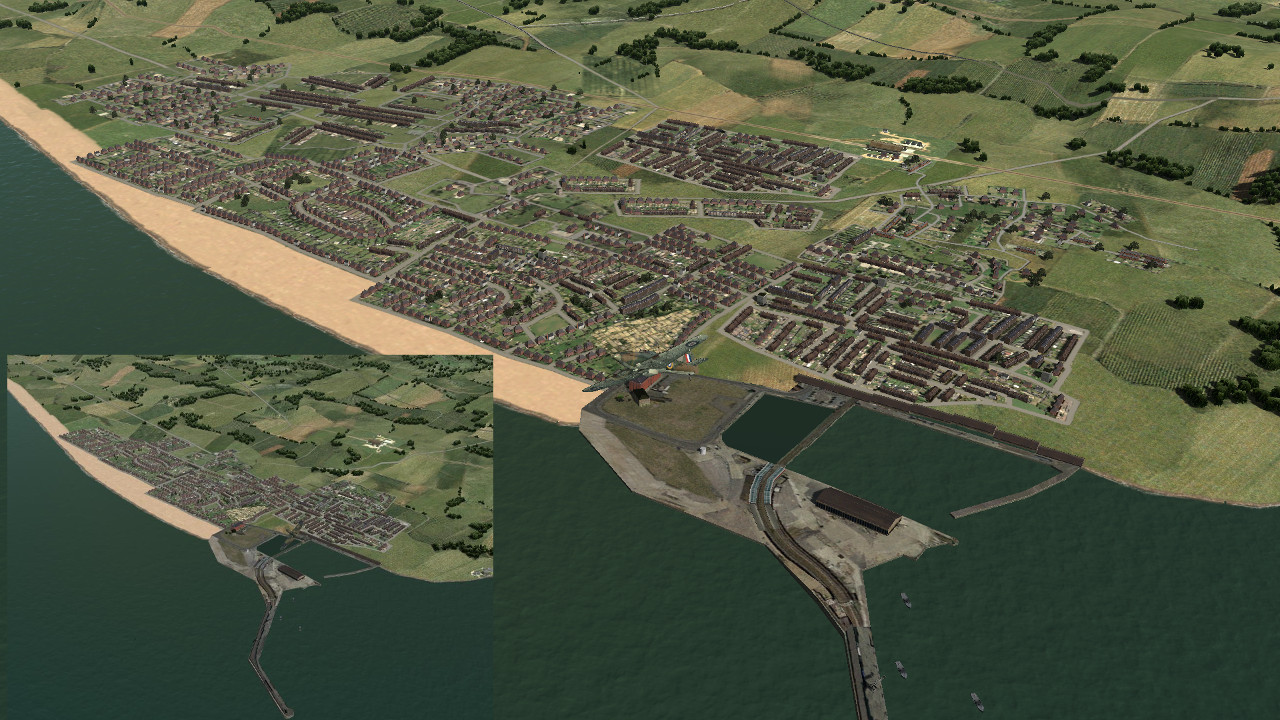
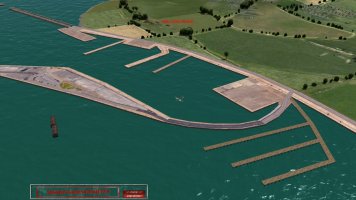
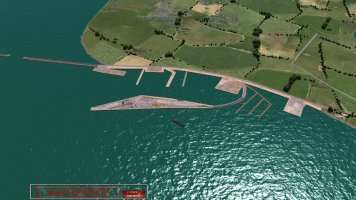
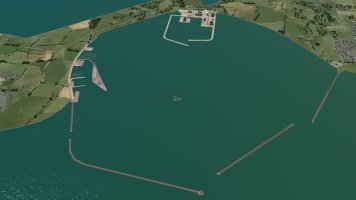
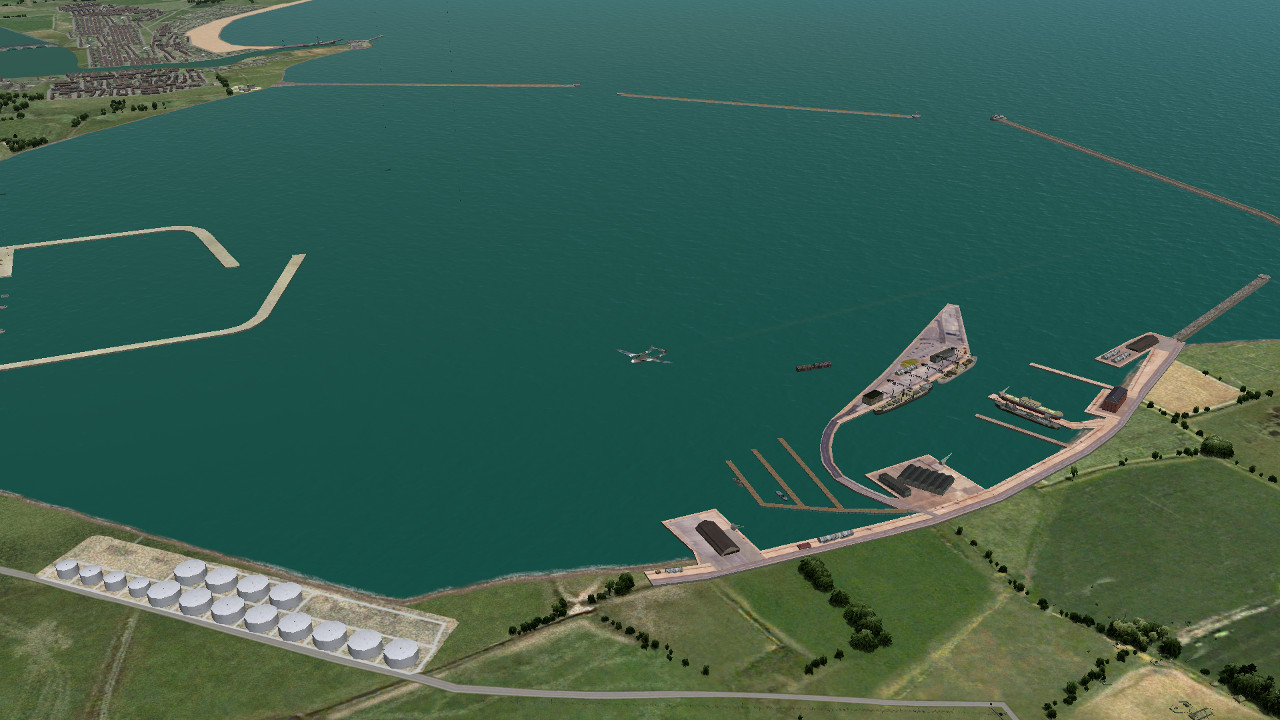
Quite a few hobbies are competing for my attention at the moment, so things are progressing slowly mod wise. I've just finished the 1940's Portland harbour model in Gmax. The harbour had to be molded to an inaccurate coastline. The buildings in the foreground were used for scaling. I've yet to remove the old harbour model. Obviously buildings and cranes must still to be placed.
There will be a tank farm to the west along with a long stretch of beach. I also have some ideas for Verne citadel... we'll see.
Ive grown rather fond of the Vampire model, and I suspect that the modeler who created it for Microsoft really enjoyed his work on this one. It's perfect for zooming around quickly, checking placements.
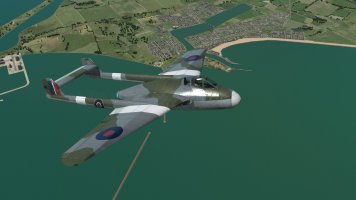
There will be a tank farm to the west along with a long stretch of beach. I also have some ideas for Verne citadel... we'll see.
Ive grown rather fond of the Vampire model, and I suspect that the modeler who created it for Microsoft really enjoyed his work on this one. It's perfect for zooming around quickly, checking placements.
Thanks Steve.
Art was another hobby of mine in the 90's. Strangely enough I packed away my brushes and paints to learn 3d modeling, a skill which I also didn't pursue until a few years back when I started texture editing and 3d modeling for flight sims, which goes to show that no learned skill is ever wasted.
Art was another hobby of mine in the 90's. Strangely enough I packed away my brushes and paints to learn 3d modeling, a skill which I also didn't pursue until a few years back when I started texture editing and 3d modeling for flight sims, which goes to show that no learned skill is ever wasted.
Last edited:


Pat Pattle
SOH-CM-2026
Fab!
Thanks Daniel and Clive.
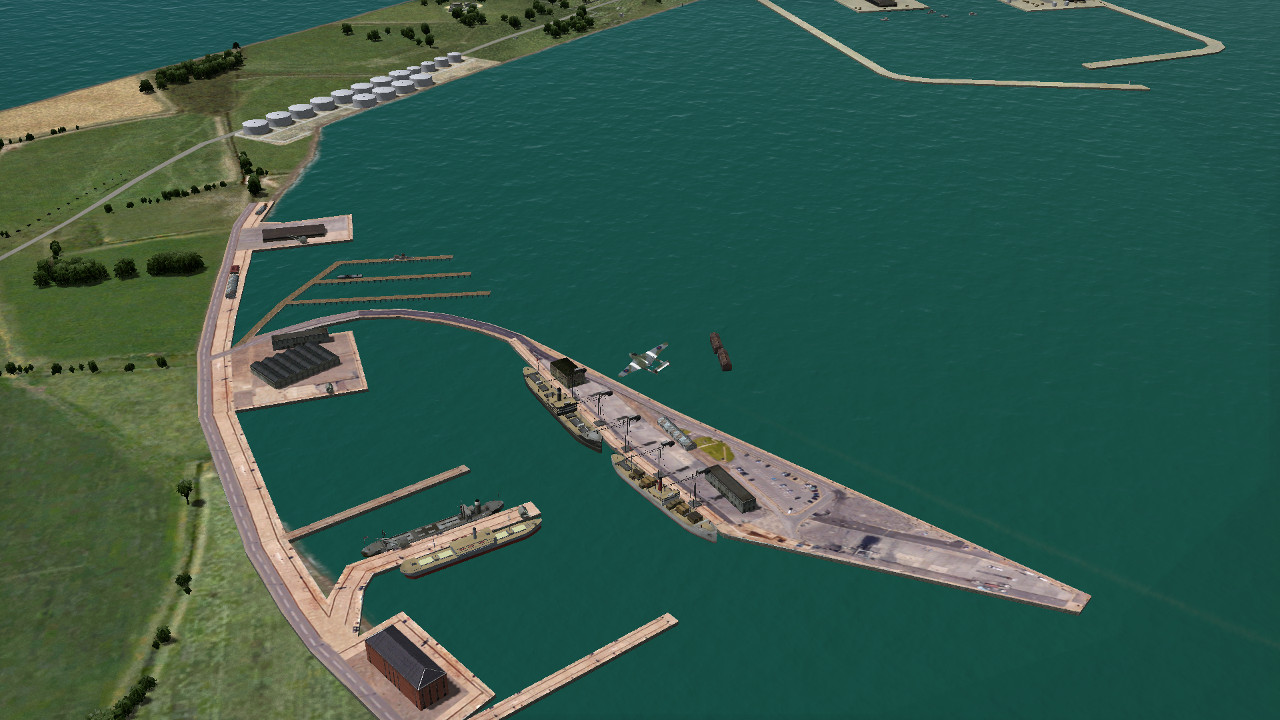
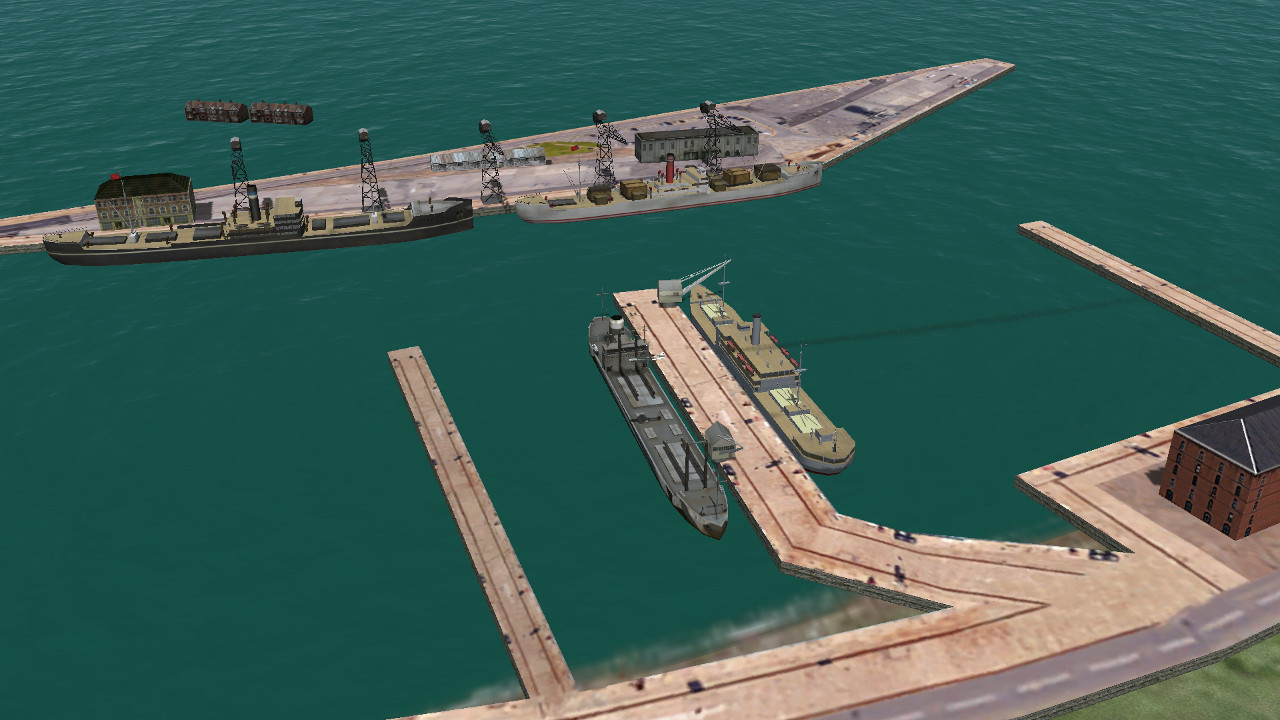
There are still quite a few harbour and housing modules to be placed.
It would be great if there were some trawler models, maybe something converted from Cfs2 if any exists. I used one of the converted KLM merchant ships for some variation.
Verne citadel will probably be my next project, dependent on the suitability of the existing raised terrain. I found some German recce pics of the citadel which I may use as a reference.
Music wise, I'm listening to Bach's 1st violin concerto as I work. I have been working on this one for some time, and can play sections of it on the violin, very badly I must add.
Hilary makes easy going of it in this performance. The 3rd movement is amazing. The expression and clarity in the fast passages is awe inspiring.
I'm also a huge Charlie Parker fan. Some rare footage here.
There are still quite a few harbour and housing modules to be placed.
It would be great if there were some trawler models, maybe something converted from Cfs2 if any exists. I used one of the converted KLM merchant ships for some variation.
Verne citadel will probably be my next project, dependent on the suitability of the existing raised terrain. I found some German recce pics of the citadel which I may use as a reference.
Music wise, I'm listening to Bach's 1st violin concerto as I work. I have been working on this one for some time, and can play sections of it on the violin, very badly I must add.
Hilary makes easy going of it in this performance. The 3rd movement is amazing. The expression and clarity in the fast passages is awe inspiring.
I'm also a huge Charlie Parker fan. Some rare footage here.

flashgordon
Charter Member
The role of the UK Fishing Fleet in WW2, ships and men, is seldom recognised.
Whilst Commercial Fishing was already one of the most dangerous professions the war added considerable additional hazards such as mines whilst also being considered legitimate targets by the Luftwaffe and U-Boats with 136 fishing boats sunk and around 1,243 fishermen killed while fishing. The North Sea grounds were closed areas except a hazardous strip 15 to 30 miles offshore on the East coast with the main fishing grounds switched to the west coast and Fleetwood becoming a premier British trawling port.
The British pre-war fishing fleet ran to some 4000 vessels of which 25% of the most suitable were requisitioned together with drifters, whalers etc. to form the Royal Naval Patrol Service (RNPS) and primarily used as armed minesweepers, inshore convoy escorts, and anti-submarine patrols plus multiple other roles after rapid conversion including highly dangerous voyages to Sweden to obtain vital high quality ball bearings and steel (Operation Rubble 1941 - in later years replaced by fast patrol boats and RAF Mosquitoes) - see Wikipedia List_of_requisitioned_trawlers_of_the_Royal_Navy_(WWII).
With their knowledge of inshore waters and trawling (akin to minesweeping) a number of fishermen (many already RNR) were also inducted into the RNPS.
Fish holds were converted into mess decks for the up to 40 crew required for their various roles, with deck beams strengthened to carry weapons (mainly WW1 vintage or older) and an open bridge added over the existing wheelhouse (known as the 'Mount Misery'[open bridge, usual British weather]. The Admiralty also had new builds constructed to commercial designs.
Some 260 RNPS trawlers were lost 1939-45 whilst 1 in 4 crew were killed of whom 2385 are recorded on a Lowestoft memorial as having no known grave except the sea.
On the south coast the RNPS kept the ports and inshore shipping channels clear of mines; provided escort for convoys travelling between ports; anti-submarine and E-boat patrols together with Boom Defence & Port Security. Anti-submarine booms were emplaced to protect the Thames Estuary, Sheerness and Chatham; the River Medway; Portsmouth Harbour; Southampton Water; Portland Harbour; Dorset Coastal; Plymouth Naval Base and the Fowey Estuary.
Whilst Commercial Fishing was already one of the most dangerous professions the war added considerable additional hazards such as mines whilst also being considered legitimate targets by the Luftwaffe and U-Boats with 136 fishing boats sunk and around 1,243 fishermen killed while fishing. The North Sea grounds were closed areas except a hazardous strip 15 to 30 miles offshore on the East coast with the main fishing grounds switched to the west coast and Fleetwood becoming a premier British trawling port.
The British pre-war fishing fleet ran to some 4000 vessels of which 25% of the most suitable were requisitioned together with drifters, whalers etc. to form the Royal Naval Patrol Service (RNPS) and primarily used as armed minesweepers, inshore convoy escorts, and anti-submarine patrols plus multiple other roles after rapid conversion including highly dangerous voyages to Sweden to obtain vital high quality ball bearings and steel (Operation Rubble 1941 - in later years replaced by fast patrol boats and RAF Mosquitoes) - see Wikipedia List_of_requisitioned_trawlers_of_the_Royal_Navy_(WWII).
With their knowledge of inshore waters and trawling (akin to minesweeping) a number of fishermen (many already RNR) were also inducted into the RNPS.
Fish holds were converted into mess decks for the up to 40 crew required for their various roles, with deck beams strengthened to carry weapons (mainly WW1 vintage or older) and an open bridge added over the existing wheelhouse (known as the 'Mount Misery'[open bridge, usual British weather]. The Admiralty also had new builds constructed to commercial designs.
Some 260 RNPS trawlers were lost 1939-45 whilst 1 in 4 crew were killed of whom 2385 are recorded on a Lowestoft memorial as having no known grave except the sea.
On the south coast the RNPS kept the ports and inshore shipping channels clear of mines; provided escort for convoys travelling between ports; anti-submarine and E-boat patrols together with Boom Defence & Port Security. Anti-submarine booms were emplaced to protect the Thames Estuary, Sheerness and Chatham; the River Medway; Portsmouth Harbour; Southampton Water; Portland Harbour; Dorset Coastal; Plymouth Naval Base and the Fowey Estuary.