-
Please see the most recent updates in the "Where did the .com name go?" thread. Posts number 16 and 17.
-
IMPORTANT DOWNLOADING INFORMATION - ALL MEMBERS PLEASE READ
Please see this thread for updates. Update Thread
SOH ADMINISTRATION
You are using an out of date browser. It may not display this or other websites correctly.
You should upgrade or use an alternative browser.
You should upgrade or use an alternative browser.
New P-51D Mustang - Little Friends
- Thread starter WarBert
- Start date


Thunderbolt
Charter Member 2014
nice Jankees 

Bomber_12th
SOH-CM-2025
well lookee here:

my paints work with this version as well!
Unfortunately, not quite...without the new texture templates in use, there are no correct textures for the new exhaust stacks, for the new inner exhaust stack shrouds, for the aerial antenna wire parts, for the gun bay door handles, the new drop tanks, etc. The new paintkit also allows you to easily achieve a more correct finish for an in-the-field, combat-vet, WWII-era Mustang.
I will be contacting those who have requested a paintkit, today. ; )
Bomber_12th
SOH-CM-2025
Excellent screenshots, Thunderbolt!! Keep them coming, if you can! ; )
Bomber_12th
SOH-CM-2025
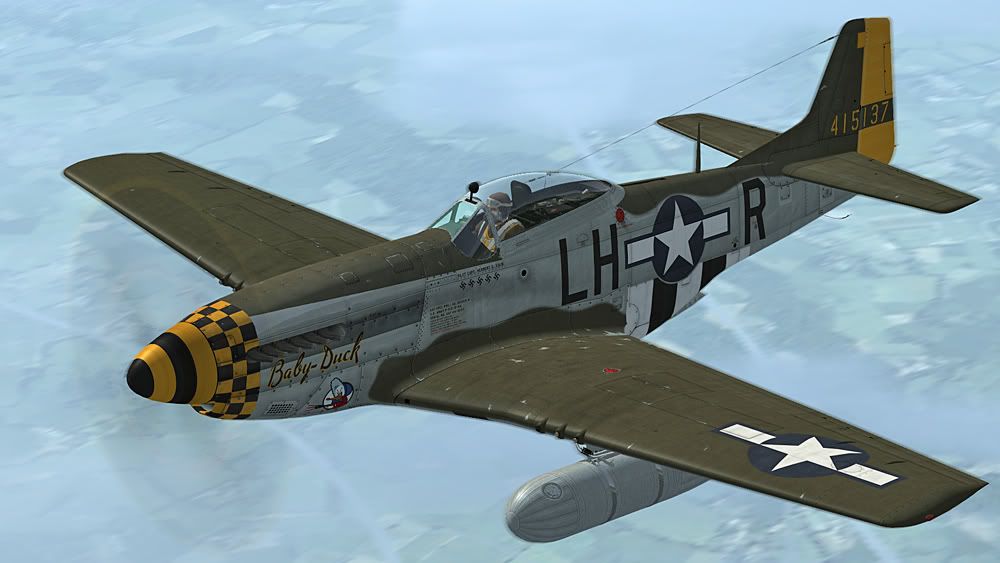
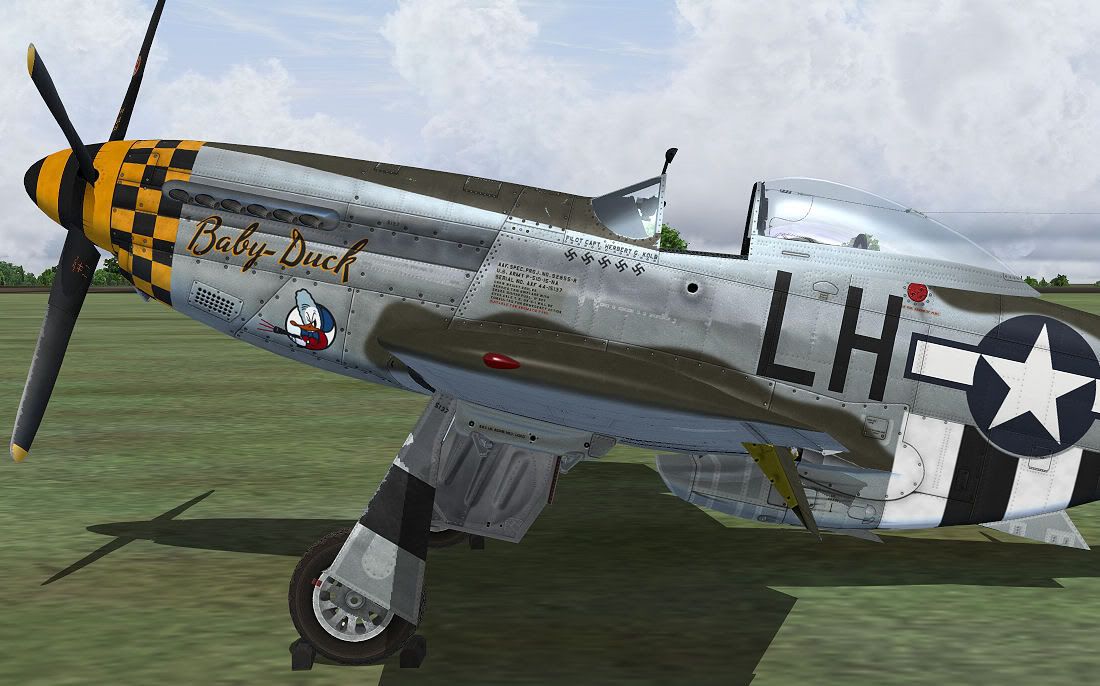
With a little bit of a connection to this product, the restored P-51D, painted as "Baby Duck", flew again for the first time yesterday, following years of storage, and more recently, a two-year restoration program. The aircraft will be getting new paint soon, but will remain as "Baby Duck" - if I understand it correctly. It will be at Oshkosh later this month!
The markings on the restored example, are quite close to the original.
http://warbirdinformationexchange.org/phpBB3/viewtopic.php?f=3&t=41689
And Warbirdsim's depiction, based on two wartime photos of this aircraft.
The markings on the restored example, are quite close to the original.
http://warbirdinformationexchange.org/phpBB3/viewtopic.php?f=3&t=41689
And Warbirdsim's depiction, based on two wartime photos of this aircraft.
Thunderbolt
Charter Member 2014


skyhawka4m
Charter Member
SHANGHI LIL....in progress.....slightly cleaner than the supplied aircraft.....for now anyway....now she's at about 90%...some details to iron out...
View attachment 42904
View attachment 42904
Detroit Miss
View attachment 42885
colour to be added to the wing tips and completion of the D-Day stripe to the doors below.
Bruce
View attachment 42885
colour to be added to the wing tips and completion of the D-Day stripe to the doors below.
Bruce
skyhawka4m
Charter Member
nice!!!!
skyhawka4m
Charter Member

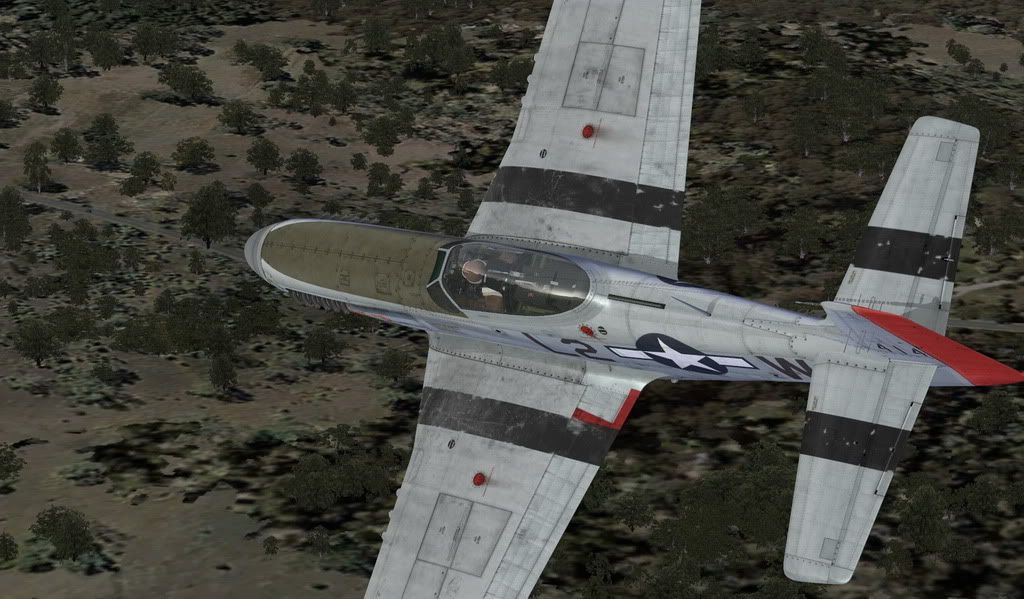
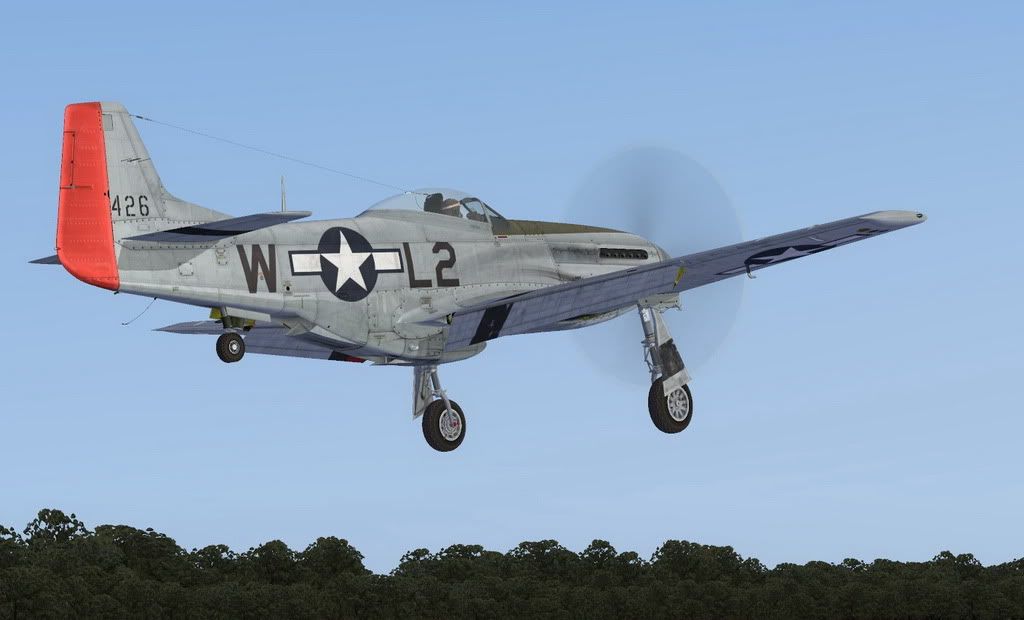
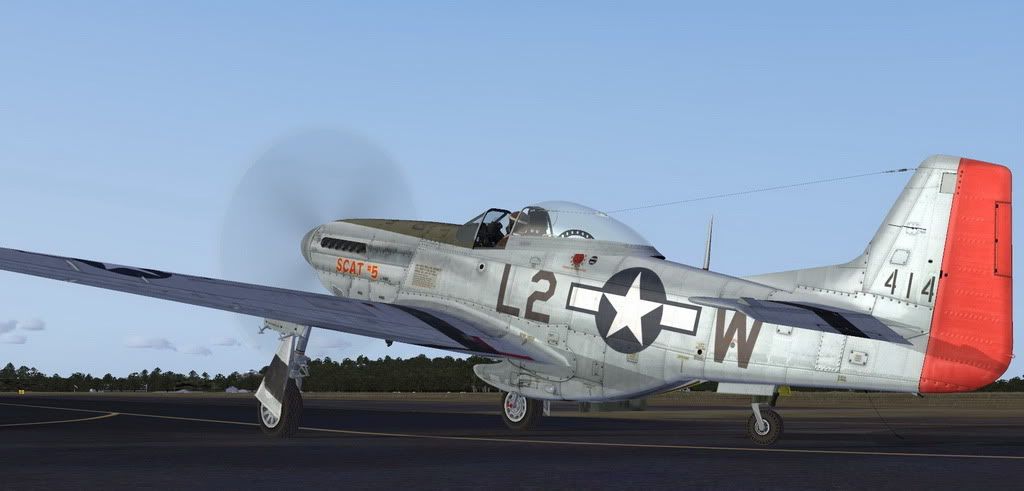


Once authorised by the mods here's the link http://www.sim-outhouse.com/sohforums/local_links.php?catid=3&linkid=4309
View attachment 42943
Bruce
View attachment 42943
Bruce
skyhawka4m
Charter Member
next up...LITTLE ONE/JEANNIE.....this will be the second of a 3 pack of 506th aircraft
View attachment 42945
A few changes to make yet...but about 95%
and SANGHI LIL is complete....
View attachment 42950
View attachment 42945
A few changes to make yet...but about 95%
and SANGHI LIL is complete....
View attachment 42950

olderndirt
Charter Member
Bomber_12th
SOH-CM-2025
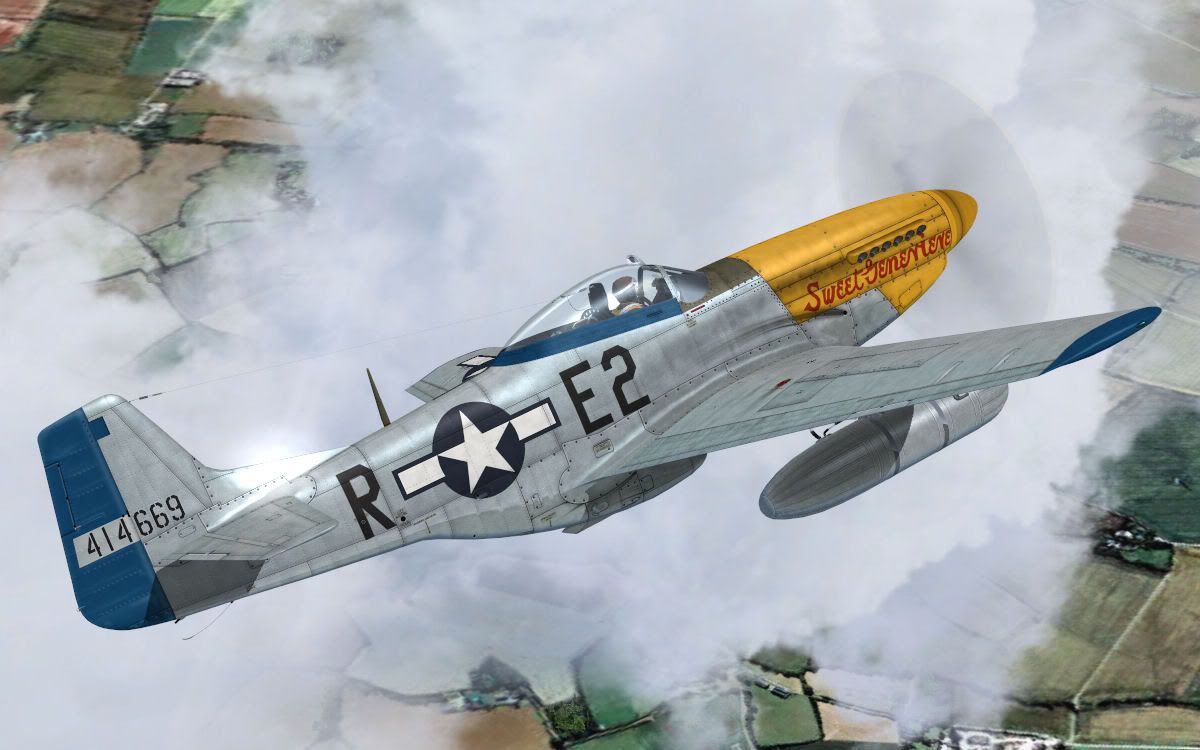
My Mac/Sweet Genevieve
Thank you for posting those screenshots, Olderndirt, and I'm glad to see that repaint being used!
Here are some photos of the original aircaft:
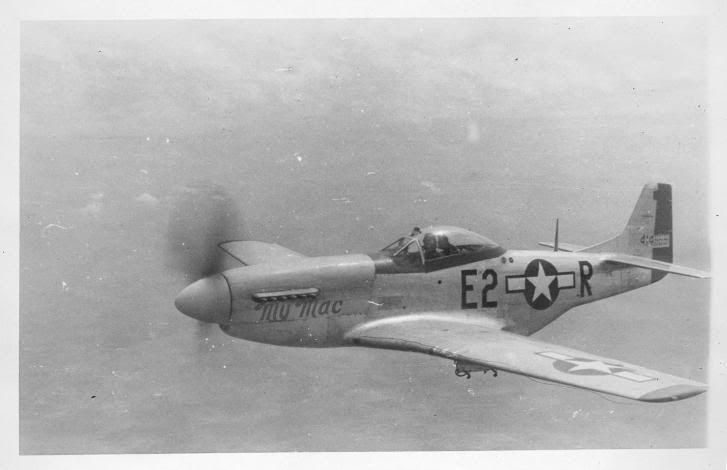
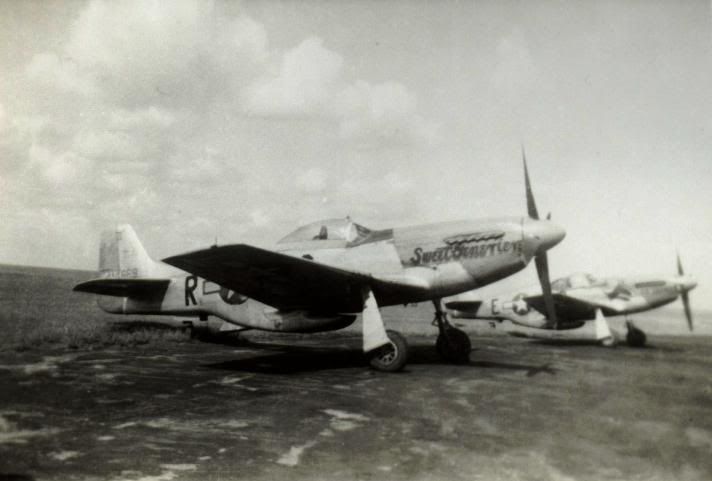
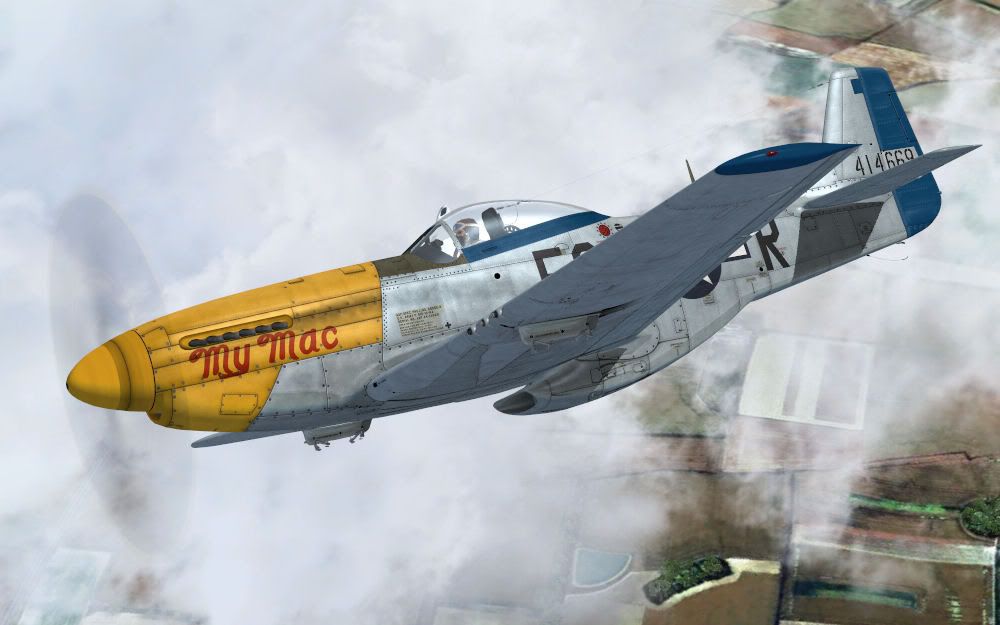
Thank you for posting those screenshots, Olderndirt, and I'm glad to see that repaint being used!
Here are some photos of the original aircaft:
Bomber_12th
SOH-CM-2025
2-Speed, 2-Stage, Supercharger
As asked about in another forum, here is a brief run-down on the modeled Merlin V-1650-7 engine supercharger, as included in "Little Friends".
First off, this feature requires you to have Acceleration installed, in order for the supercharger modeling to work (if you don't have Acceleration installed, there are alternative flight dynamics files contained for use).
From at sea-level, you will be able to achieve 67-in MP, at full-throttle. With the engine damage modeled in, however, you won't be able to run more than 61-in MP, for more than 5-10 minutes, before your engine begins failing. As you ascend to altitude, eventually full-throttle will only allow you to maintain 46-in MP (max climb power), by the time you reach 17,500 ft. At the 17,500 ft mark, high blower automatically switches ON, and you can see it, feel it, and hear it, all at the same time. When high blower comes on, you will suddenly get a great boost in power, now allowing you again to attain 67-in MP at full-throttle. A red-indicator light also comes on, to let you know that the supercharger is in high blower (though you will know otherwise as well! : ) ). When this happens, you of course have to adjust the throttle back to proper settings, so that you won't be over boosting the engine. The extra power you get at high blower, will then allow you to climb up and perform at regular combat heights of 25,000-30,000 ft. If you are lucky, and have the aircraft very lightly loaded, you can even just barely achieve the aircraft's highest recorded service ceiling, of roughly 41,900 ft, by which point you will be able to achieve about 28-in MP at full throttle.
As discussed within the flight manual portion of the Little Friends user guide, max-recommended power at take off is 61-in MP. However, 'normal take off' power is as low as 46-in MP! For me, I usually use either 50-in MP, or 55-in MP, depending on the aircraft's loading, which is more than sufficient.
As asked about in another forum, here is a brief run-down on the modeled Merlin V-1650-7 engine supercharger, as included in "Little Friends".
First off, this feature requires you to have Acceleration installed, in order for the supercharger modeling to work (if you don't have Acceleration installed, there are alternative flight dynamics files contained for use).
From at sea-level, you will be able to achieve 67-in MP, at full-throttle. With the engine damage modeled in, however, you won't be able to run more than 61-in MP, for more than 5-10 minutes, before your engine begins failing. As you ascend to altitude, eventually full-throttle will only allow you to maintain 46-in MP (max climb power), by the time you reach 17,500 ft. At the 17,500 ft mark, high blower automatically switches ON, and you can see it, feel it, and hear it, all at the same time. When high blower comes on, you will suddenly get a great boost in power, now allowing you again to attain 67-in MP at full-throttle. A red-indicator light also comes on, to let you know that the supercharger is in high blower (though you will know otherwise as well! : ) ). When this happens, you of course have to adjust the throttle back to proper settings, so that you won't be over boosting the engine. The extra power you get at high blower, will then allow you to climb up and perform at regular combat heights of 25,000-30,000 ft. If you are lucky, and have the aircraft very lightly loaded, you can even just barely achieve the aircraft's highest recorded service ceiling, of roughly 41,900 ft, by which point you will be able to achieve about 28-in MP at full throttle.
As discussed within the flight manual portion of the Little Friends user guide, max-recommended power at take off is 61-in MP. However, 'normal take off' power is as low as 46-in MP! For me, I usually use either 50-in MP, or 55-in MP, depending on the aircraft's loading, which is more than sufficient.