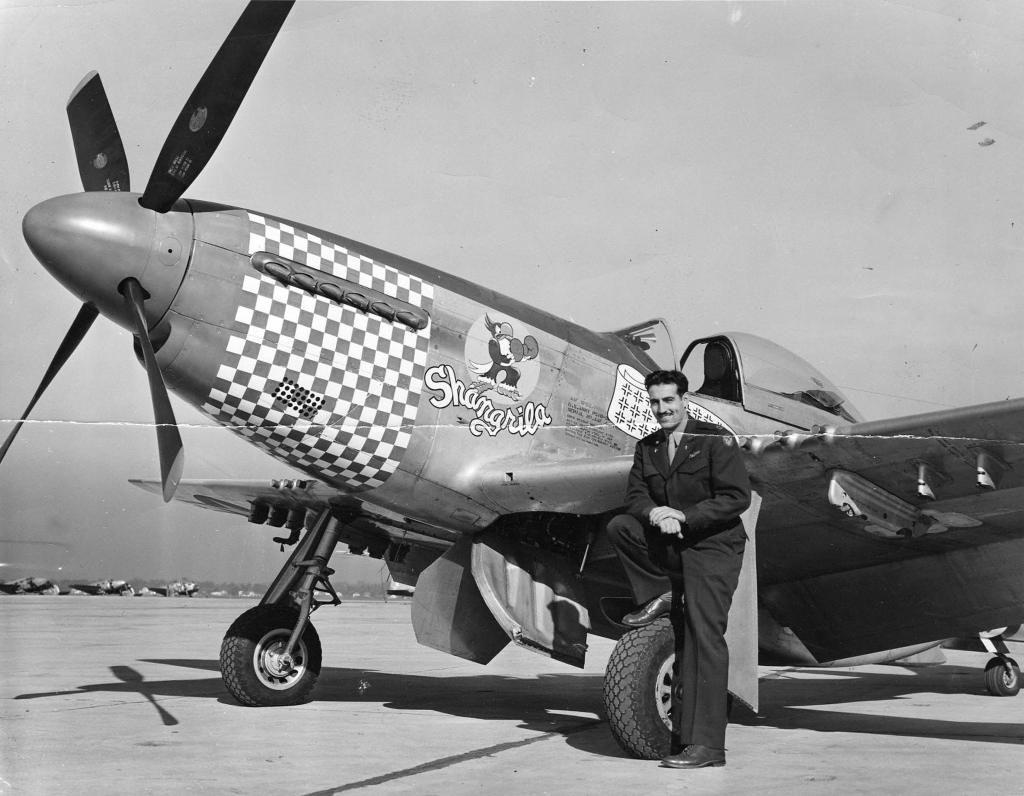
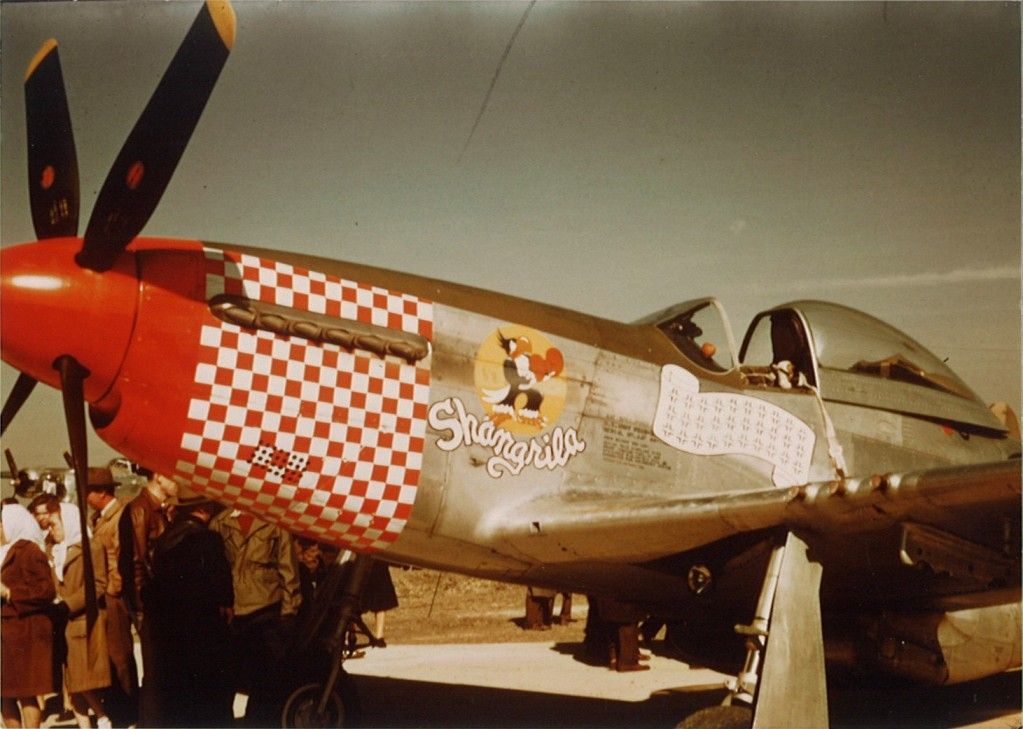
One of the current Mustang projects going on at this time, that I find very interesting, is the re-restoration of the combat vet P-51D-20-NA 44-64122 "Kansas City Kitty III" owned by Wes Stricker. The aircraft was assigned to the 353rd FG (yellow and black checker nose) in January 1945, and became the personal mount of Capt. Charles L. McGraw. Capt. McGraw shot down 3 Bf-109's on April 7, 1945, so this aircraft was very likely the one he was flying on that mission. At this time, those heading the project would love to find any WWII-era photos and documentation of this aircraft, so that it may be used to accurately reproduce the markings on the aircraft, and to know more about its service life during WWII.
According to Jim Cooper, project lead (who also managed the restoration of Wes Stricker's amazing Seafire Mk.XV, as seen at Oshkosh a couple of years ago):
"The Kitty went to Sweden postwar as 26130, and sometime later ended up in El Salvador. From there it found its way to Connie Edwards of Texas, where the current owner purchased it. It is registered N339th (a tribute to the owner's dad, who was a flight surgeon in the 339th. Also, the airplane was painted in a representative scheme of the 339th, but named Kansas City Kitty in it's 339th colors.)
The original service card on 44-64122 shows it being built as a P-51D. This particular Mustang was also fitted with the 5 inch rocket rails, and the chem/rocket release charging switch panel, left side of the cockpit.
The Mustang was converted to F-6D field conversion, having an access hatch on the left and right sides of the fuselage, presuming a downward camera in the lower fuselage panel. There are no signs of side or oblique mounted lens modifications, nor are the control cables re-routed as they would be for the factory F-6D. In April 1947, this aircraft was transferred to Sweden.
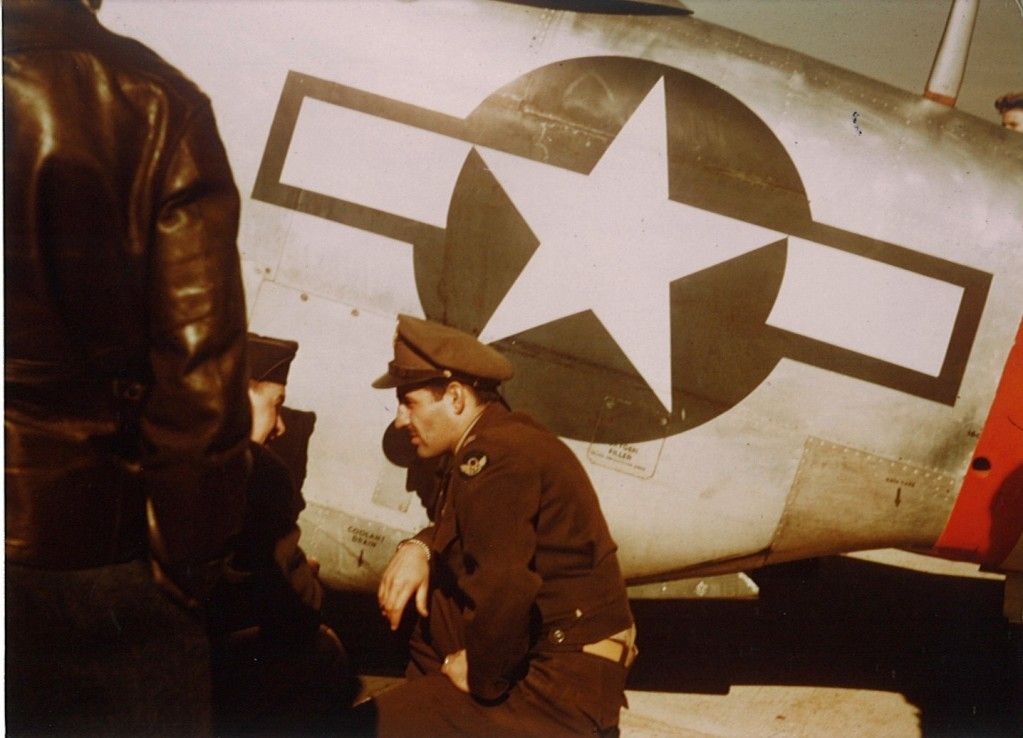
The US American insignia on the sides of the fuselage were etched into the metal, so even when the paint was removed, the etching of the original paint remains. Also etched into the skins is an original stencil, left side of the fuselage, the main placard identifying serial, crew weight, fuel, etc. This identifies the aircraft as an F-6D, but is not in the original location as the original factory stencils.
On the fuselage insignia etching, you can see a scribed line, over the top of the camera panels, rear fuselage, where the red bars were added in 1947 when the USAAF became the USAF. It was after that that the airplane went to Sweden.
ANY photos of this airplane while in service is what I'm looking for. The 353rd is a well-photographed outfit, but I have found nothing of Kansas City Kitty III. I have already contacted the son of Capt. McGraw, who lives in Kentucky. He is searching for any photos or documents, logbooks, etc from his dad, but not sure if these still exist."
When the aircraft was last painted, about 10 years ago, it was finished in the markings of a 339th FG Mustang, as a memorial to the owner's dad who had served in that Group, though the historic name attached to the airframe had been kept, through some imagined nose art.
Here are some before and after, and some work-in-progress photos posted by Jim Cooper on another forum:
Left gear well before:
And right gear well just about completed, following recent restoration work:
The firewall before:
And now the firewall after being removed, repainted, and reinstalled:
According to Jim Cooper,
"We are not de-skinning the airplane, but going through the entire thing. The lower longerons are new now, after finding corrosion. Wings are currently at Odgaard Wings in North Dakota."
"These are two photos of the etching which occured into the sheetmetal of the original paint. On the data stencil, you can clearly see that it identifies the airplane as an F-6D, but the original data plate identifies the plane as a P-51D-20-NA, and was delivered as such according to the delivery sheet.
The National insignia photo clearly shows the etching into the metal also. You can see the "red" bars which were added in 1947, and these are actually scribed into the metal, where the other insignia colors have no such scribing (star, bars, surround). Also of note is the right side raised access panel, clearly visible on the aft bar of the insignia. Interestingly, the scribe lines of the 1947 red bars are also scribed onto the "etched" insignia on the access hatch, proving that this hatch was added prior to the aircraft being turned over to Sweden in 1947. I would guess that this F-6D conversion was accomplished post-war...possibly to help in photo-documenting the destruction of Germany, and of course the secret innovations of that regime. No placarding was installed into the cockpit to denote that the "once P-51D" was a "now F-6D". We have no maintenance records during the US Military history for this airplane."