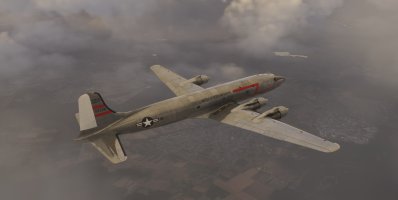
Berlin Airlift livery. NiceSearching informations on the N500EJ...

So far I was able to fly this route only in a DC-6.
Please see the most recent updates in the "Where did the .com name go?" thread. Posts number 16 and 17.
Please see this thread for updates. Update Thread
SOH ADMINISTRATIONBerlin Airlift livery. NiceSearching informations on the N500EJ...


; --------------------NOTES ON SUPERCHARGER--------------------
; In Legacy FSX, the supercharger - activated using the supercharged parameter - used a calculation that was actually lacking an essential parameter:
; boost = ( supercharger_boost_high_end - supercharger_boost_low_end ) * Throttle_position
; In this formula, the supercharger_boost_low_end parameter is not used at all.
; In Microsoft Flight Simulator this has been rectified and you can enable the use of the correct formula by enabling the new_supercharged parameter in the engines.cfg file, using one of the following values:
; 1: This will make the simulation use a fixed formula to calculate the supercharger boost using the existing legacy supercharger parameters supercharger_boost_high_end and supercharger_boost_low_end.
; Boost will then be calculated using the following formula:
; boost = ( supercharger_boost_high_end - supercharger_boost_low_end ) * Throttle_position + supercharger_boost_low_end
; 2: This will permit the simulation to have multi speed support for the supercharger using the following parameters: supercharger_altitude_gear.N, supercharger_boost_high_end_gear.N, supercharger_boost_low_end_gear.N.
; This system will allow for a maximum of 5 gears. As an example, if a two speed supercharger is needed then the CFG parameters would have this structure:
; supercharger_altitude_gear.1 = [VALUE]
; supercharger_boost_high_end_gear.1 = [VALUE]
; supercharger_boost_low_end_gear.1 = [VALUE]
; supercharger_altitude_gear.2 = [VALUE]
; supercharger_boost_high_end_gear.2 = [VALUE]
; supercharger_boost_low_end_gear.2 = [VALUE]
;
; When using the multispeed supercharger you can monitor which gear is engaged by monitoring the SimVar RECIP_ENG_SUPERCHARGER_ACTIVE_GEAR.
; The supercharger system will continuously check if the current Pressure Altitude is superior or equal to the altitude at which each gear should engage in order to automatically switch between the gears.
; If an altitude is set as -1.0 the gear is considered inactive and the engaging altitude for this gear will not be checked thus preventing the switch to this particular gear (which is why default altitude
; value is -1.0). When a gear is engaged the boost values corresponding to this gear will be used in the following calculation of boost:
; boost = ( supercharger_current_gear_boost_high_end - supercharger_current_gear_boost_low_end ) * Throttle_position + supercharger_current_gear_boost_low_end
;
; IMPORTANT! When using the "new_supercharged" param, the legacy "supercharged" parameter must be either set to 0 or removed from the CFG file.
 www.cirrusimage.com
 www.facebook.com
www.facebook.com
www.facebook.com
 www.google.com
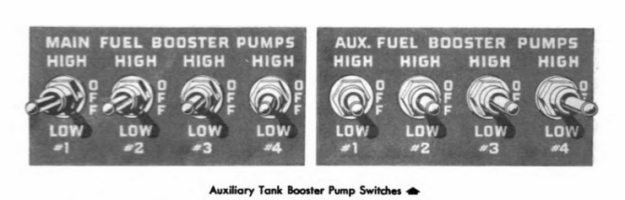
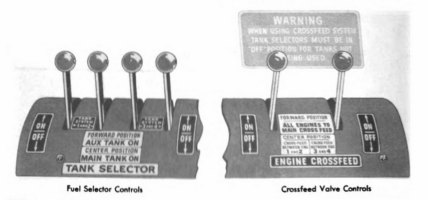
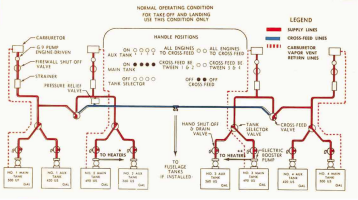
Hello Didier,Currently, I have no precise idea on the tanks number that I will modelized:
- 4 ("one" for each engine) or
- 8 (main+ aux for each engine)

 airscapemag.com
 airscapemag.com

 www.facebook.com


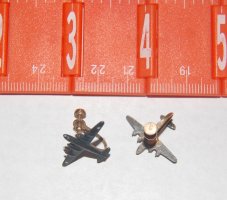
You are welcome. No answers, so I guess I'll enlighten ya'all: "Sweetheart" pins were miniatures of either hat emblems or wings of USAAF and USN members shipping out to their loved ones to remember them while they were away for a long time. When I collected I would bid on lots not just one item and many came with sweetheart pins of all kinds, some even with a miniature photo in a cameo. Like those earrings, these to me are priceless pieces of WWII history. I imagine that almost if not all of those who bestowed them are now gone on and just a distant memory to the grand kids or great-grand kids who put all of their "stuff" on eBay. Now, that's all from me so that lagaffe can back to the purpose of this thread. Thank you for letting me share a memory or two.Thanks for posting that picture.

In fact, you should read :
FUELSYSTEM_JUNCTION_SET [0]: Junction Index
[1]: Option indexSet the current junction options for which lines are open or closed at any given time. This event requires two parameters: the first is the index of the junction (as defined by the N index of the Junction.N parameter), and the second is the Option index, which is what sets the lines to open/close.
If you want to select the second option of the third junction you shoud use: 2 3 (>K:2:FUELSYSTEM_JUNCTION_SET)
FUELSYSTEM_JUNCTION_SET [0]:
Option index
[1]: Junction IndexSet the current junction options for which lines are open or closed at any given time. This event requires two parameters: the first is the Option index, which is what sets the lines to open/close, and the second is the index of the junction (as defined by the N index of the Junction.N parameter).