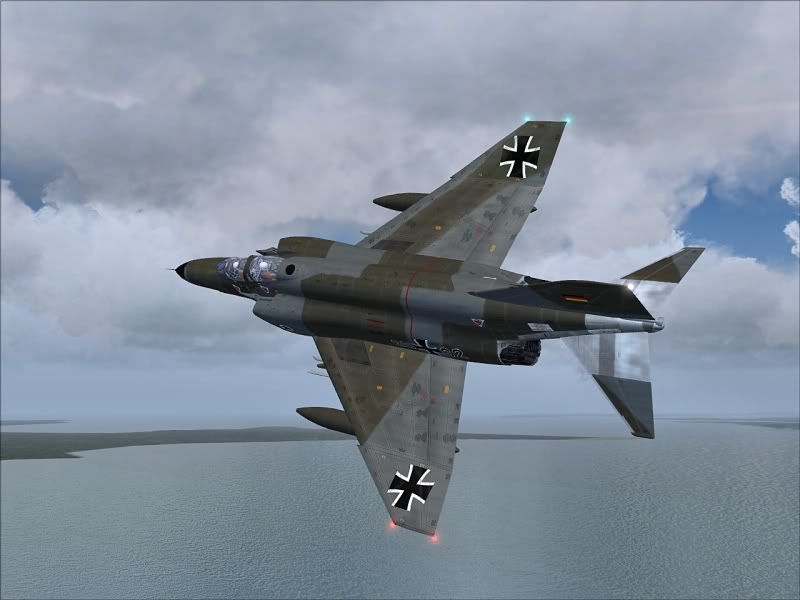
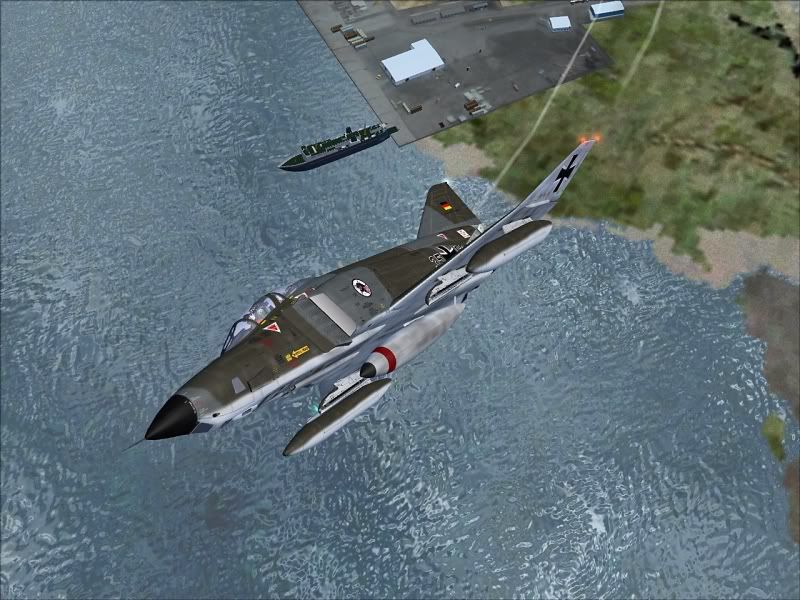
nazca_steve
Charter Member
The shell retention is interesting; I recently learned of the same thing with the A-10 which does the same for CG purposes. Makes sense, but let's face it, the sight of spent brass spilling out of a plane is pretty cool.

Please see the most recent updates in the "Where did the .com name go?" thread. Posts number 16 and 17.
Please see this thread for updates. Update Thread
SOH ADMINISTRATIONFor the A-10 the shells are made with a Aluminum alloy ..brass spilling

This alone adds 30% to amunition capacity for a given weight
The shells have also a plastic driving band to improve barell life
http://en.wikipedia.org/wiki/AluminiumIn 1808, Humphry Davy identified the existence of a metal base of alum, which he at first termed alumium and later aluminum (see etymology section, below)
There are two variants of the metal's name in current use, aluminium and aluminum (besides the obsolete alumium). The International Union of Pure and Applied Chemistry (IUPAC) adopted aluminium as the standard international name for the element in 1990, but three years later recognized aluminum as an acceptable variant. Hence their periodic table includes both.[51] IUPAC prefers the use of aluminium in its internal publications, although nearly as many IUPAC publications use the spelling aluminum.[52]
Most countries use the spelling aluminium. In the United States, the spelling aluminum predominates.[53][54] The Canadian Oxford Dictionary prefers aluminum, whereas the Australian Macquarie Dictionary prefers aluminium. In 1926, the American Chemical Society officially decided to use aluminum in its publications; American dictionaries typically label the spelling aluminium as a British variant.
The name derives from its status as a base of alum. "Alum" in turn is a Latin word that literally means "bitter salt".[55]
The earliest citation given in the Oxford English Dictionary for any word used as a name for this element is alumium, which British chemist and inventor Humphry Davy employed in 1808 for the metal he was trying to isolate electrolytically from the mineral alumina. The citation is from the journal Philosophical Transactions of the Royal Society of London: "Had I been so fortunate as to have obtained more certain evidences on this subject, and to have procured the metallic substances I was in search of, I should have proposed for them the names of silicium, alumium, zirconium, and glucium."[56][57]
Davy settled on aluminum by the time he published his 1812 book Chemical Philosophy: "This substance appears to contain a peculiar metal, but as yet Aluminum has not been obtained in a perfectly free state, though alloys of it with other metalline substances have been procured sufficiently distinct to indicate the probable nature of alumina."[58] But the same year, an anonymous contributor to the Quarterly Review, a British political-literary journal, in a review of Davy's book, objected to aluminum and proposed the name aluminium, "for so we shall take the liberty of writing the word, in preference to aluminum, which has a less classical sound."[59]
The -ium suffix conformed to the precedent set in other newly discovered elements of the time: potassium, sodium, magnesium, calcium, and strontium (all of which Davy isolated himself). Nevertheless, -um spellings for elements were not unknown at the time, as for example platinum, known to Europeans since the sixteenth century, molybdenum, discovered in 1778, and tantalum, discovered in 1802. The -um suffix is consistent with the universal spelling alumina for the oxide, as lanthana is the oxide of lanthanum, and magnesia, ceria, and thoria are the oxides of magnesium, cerium, and thorium respectively.
The spelling used throughout the 19th century by most U.S. chemists was aluminium, but common usage is less clear.[60] The aluminum spelling is used in the Webster's Dictionary of 1828. In his advertising handbill for his new electrolytic method of producing the metal 1892, Charles Martin Hall used the -um spelling, despite his constant use of the -ium spelling in all the patents[48] he filed between 1886 and 1903.[61] It has consequently been suggested that the spelling reflects an easier to pronounce word with one fewer syllable, or that the spelling on the flier was a mistake. Hall's domination of production of the metal ensured that the spelling aluminum became the standard in North America; the Webster Unabridged Dictionary of 1913, though, continued to use the -ium version.

When testing the Gatling gun on the A-10 (implementation) they provoked residual unexpected explosions .....Haven't I read somethere that even gunpowder fumes could harm an engine?
I have the privilegeWould love to re-enact one of those regular cross-pond flights to Goose Bay
to see an Bundesluftwaffe Phantom geschwader landing at Goose Bay in the 80's .. myself waiting for boarding a HS 748 to Montreal ( Air Inuit ? don't remember) 
Interesting details, Stefan!
Thanks for sharing.
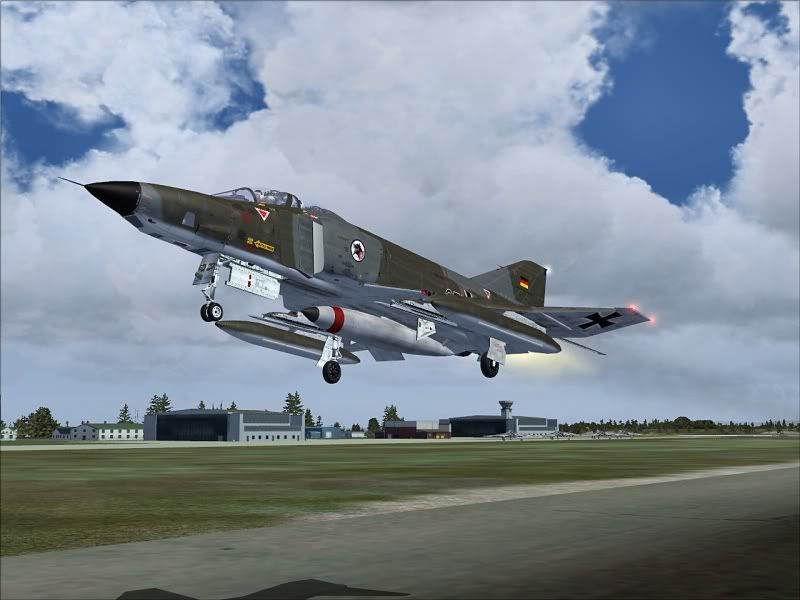
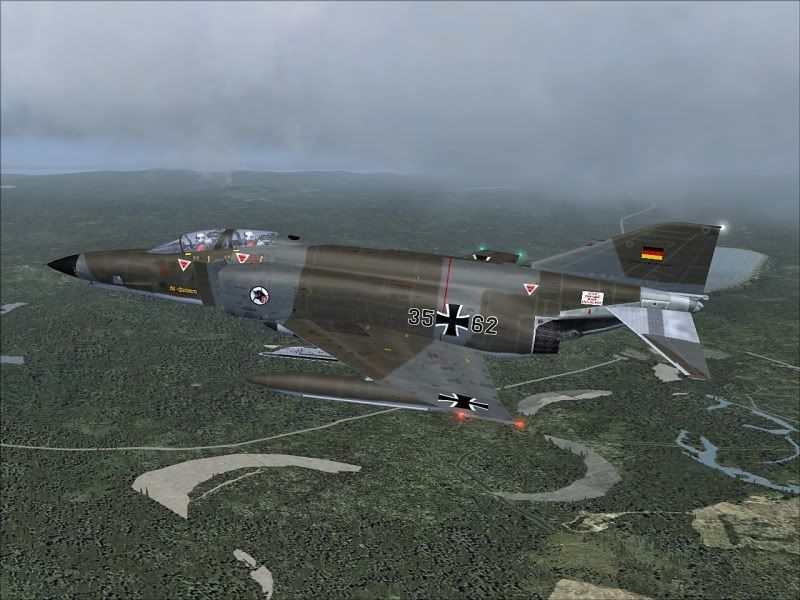
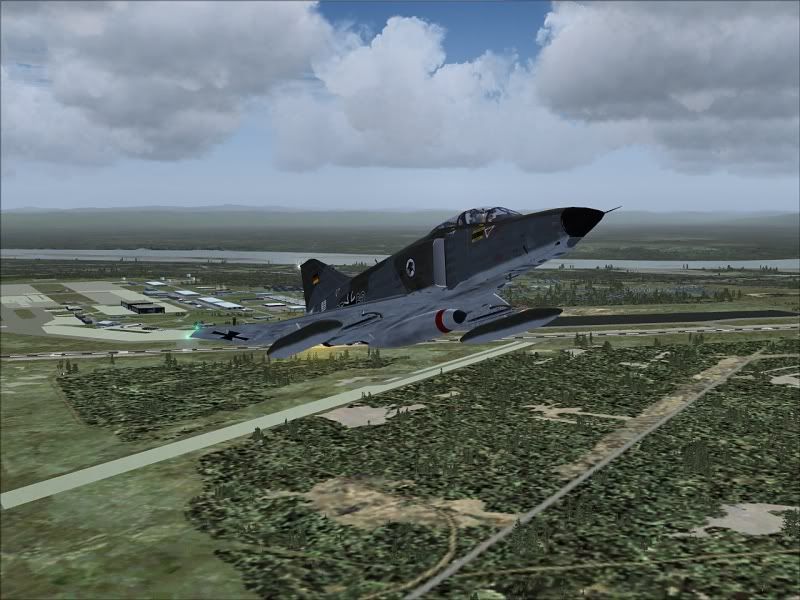
Think I'll have to add a fuel gauge to figure out which might be the best (longest-range) speed for ferrying purposes. Would love to re-enact one of those regular cross-pond flights to Goose Bay via the usual stopovers Lossiemouth - Keflavik - Sondrestrom.
Hope you'll have some more patience concerning the paint's release:
Some real-life occupations will keep me from finishing within the next week or so.
One flipside of this high-resolution paint is that even some of the smaller stencils are readable, so there's no simple mirroring - no one would like to read "PETS ON" instead of "NO STEP" on the right wing...
@ Steve:
These CG considerations are very interesting too!
Fortunately, the RF-4s CG won't care about the film reels being exposed or not...
Empty shells sucked into a jet engine would create a nice lighting effect, won't they?
Haven't I read somethere that even gunpowder fumes could harm an engine?
Cheers,
Markus.
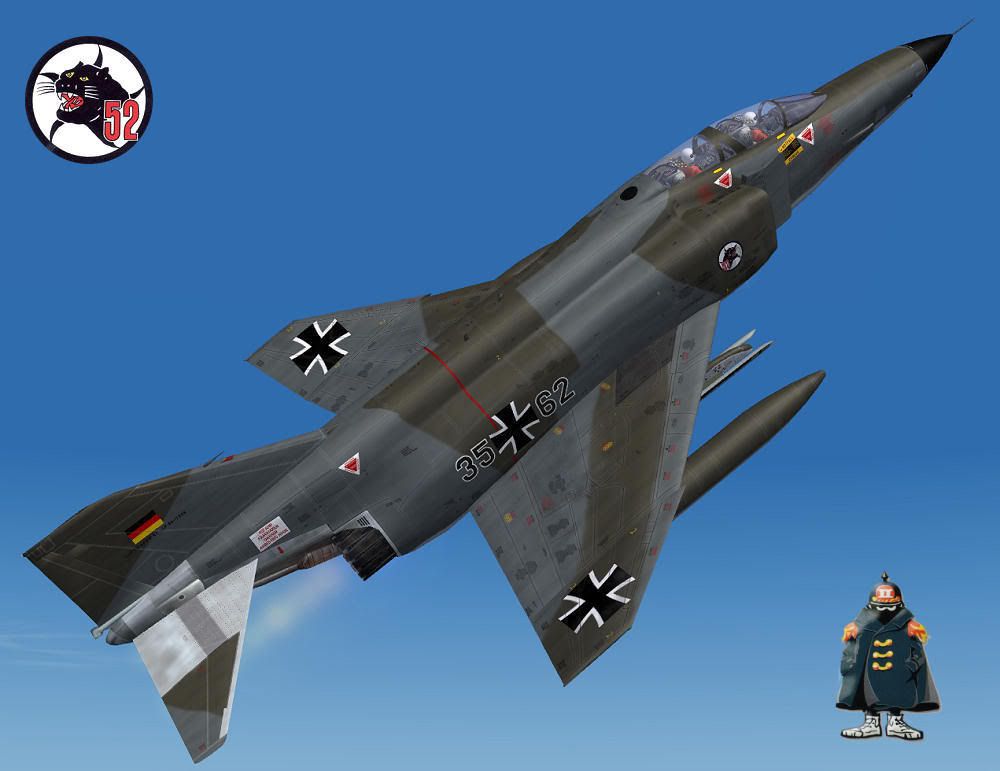
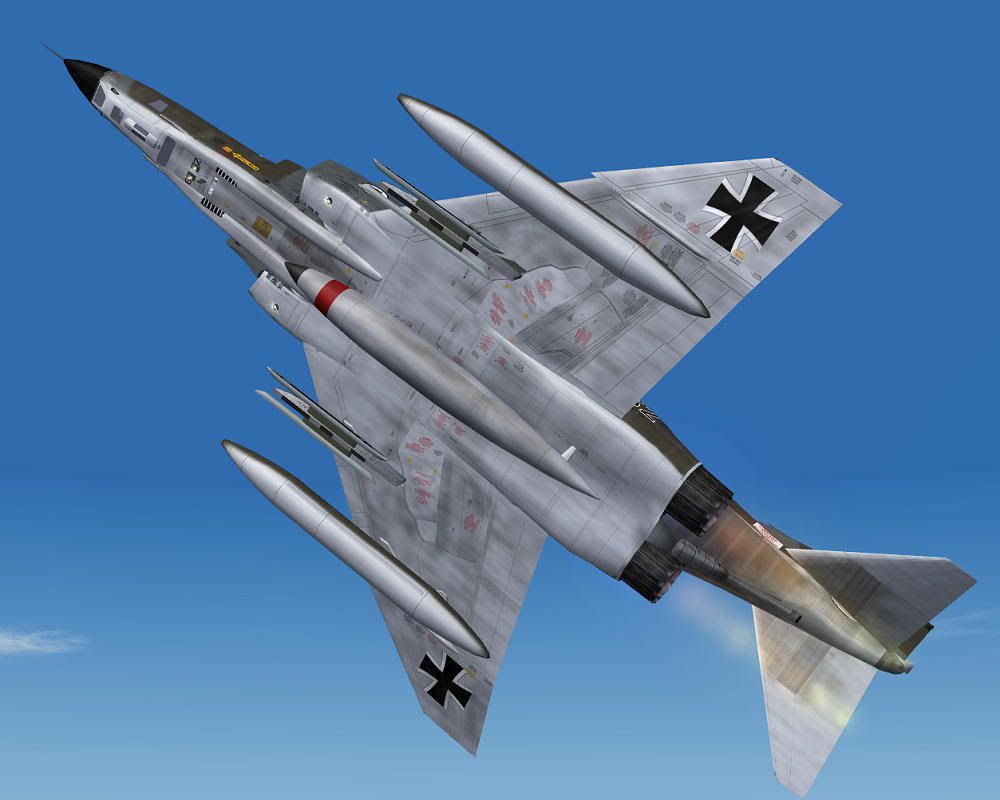
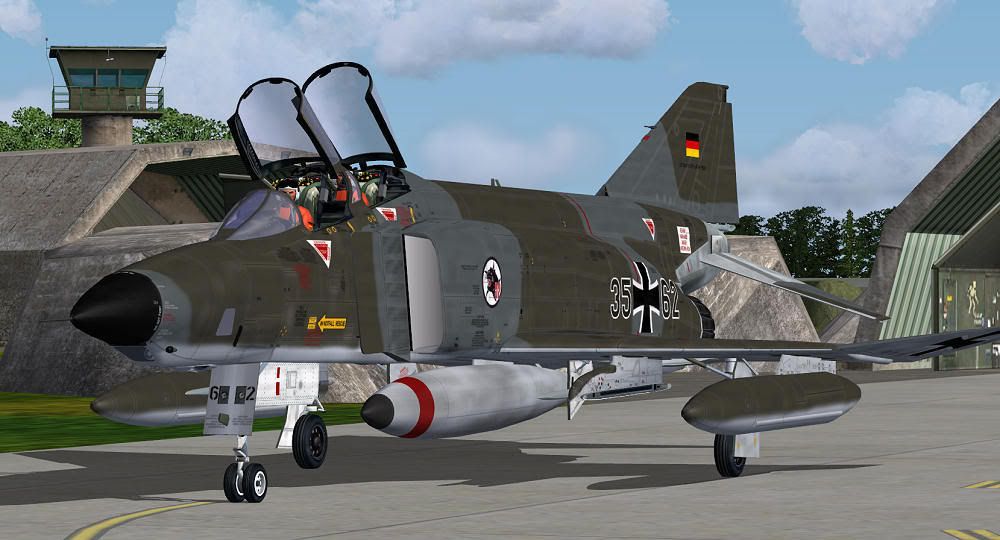
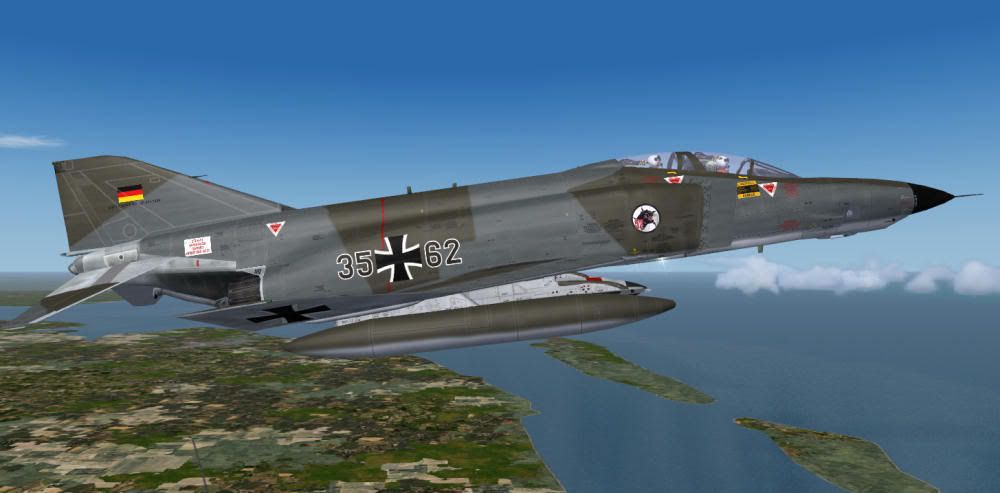
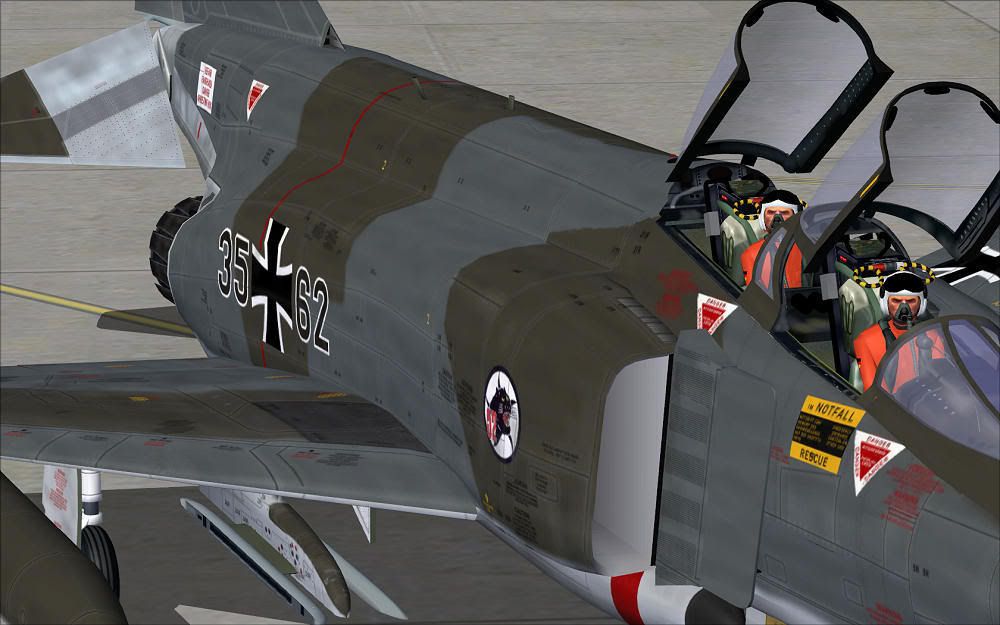
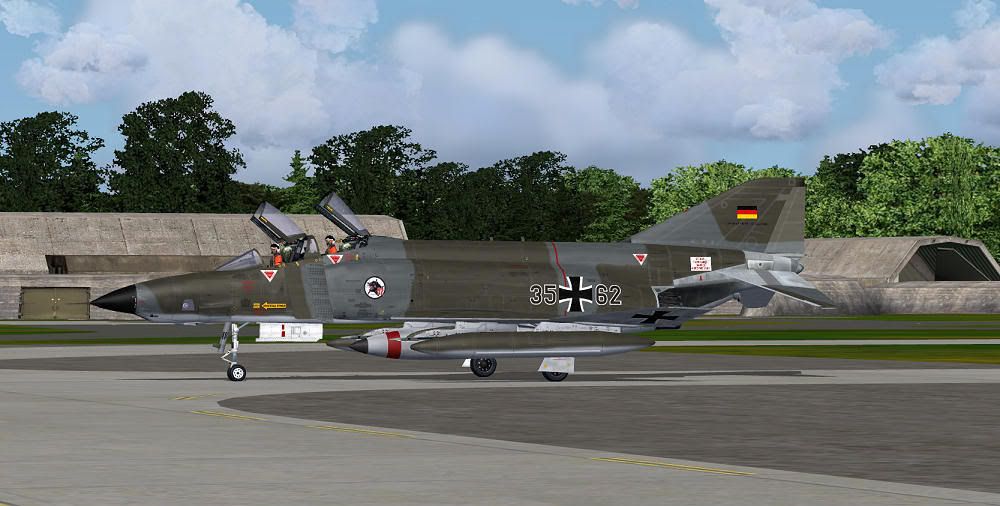

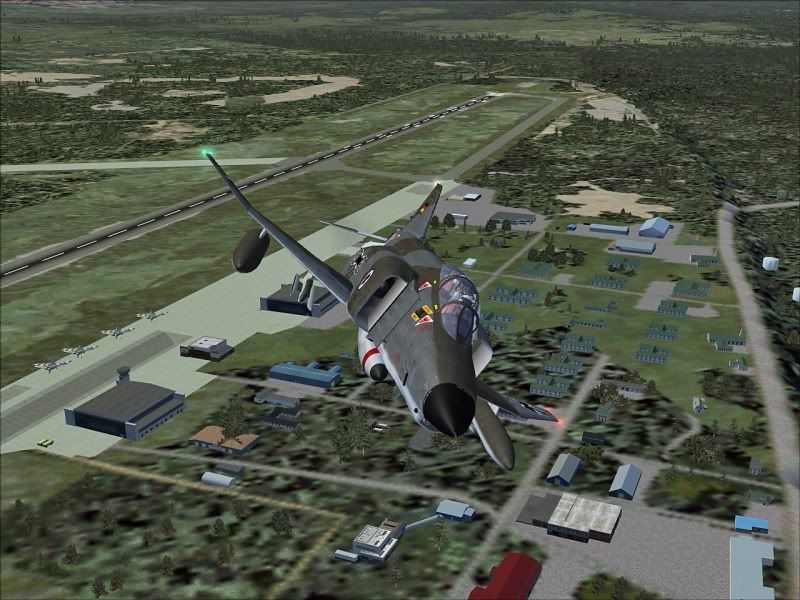
I knew someone would ask!What is the airbase in the background?

 Awesome work !