DC-4 Skymaster

Thank you Ed, I’m getting to the 500 GB of documentation just for the PDFs :cool:

I have gone through the entire document and indeed pages 282-284 provide information but do not give the solution.
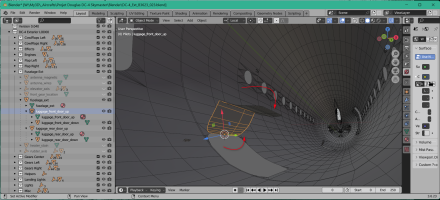
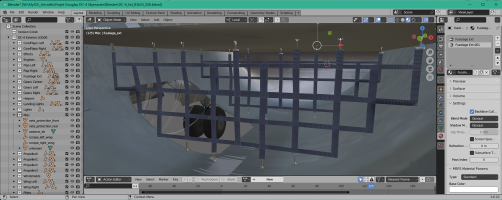
Fortunately, on the pages concerning the fuselage we have the areas of these compartments and precisely the internal structure of the aircraft. According to this structure, I think that my hypothesis of sliding doors cannot be retained: they must pivot upwards, the articulation being on the upper part of the opening.

For the B377, I will wait to finish this one ;)
 
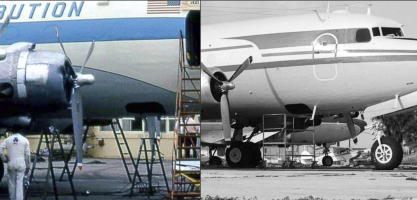
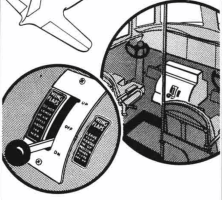
By rereading in detail the book the "DC-4 to Air France" in the ICARE collection that I finally received, I was able to get a close-up image of the front hold ... unfortunately in black and white.
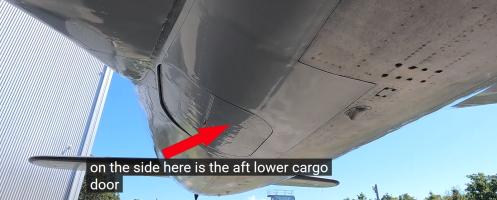
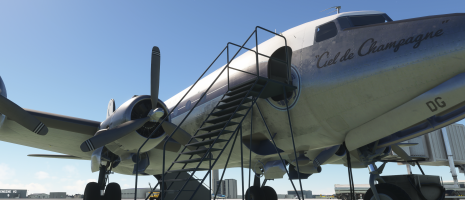
By searching more thoroughly on the Internet, I isolated two images this afternoon that show this part of the plane with great clarity.

1774111827740.png

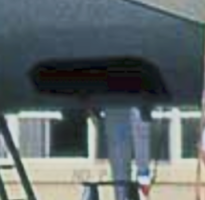
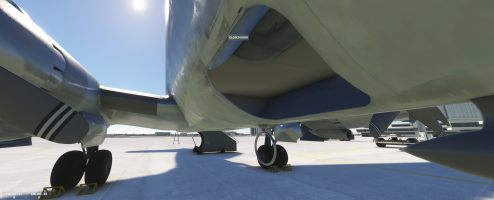
There is no doubt: the door opened inwards, I am convinced of it, but while pivoting relative to the upper part of the opening of the cargo hold (problem with the heaviness of the door) or was it sliding toward forward?

I am increasingly convinced that the second solution is the right one and I think that this door was sliding forward in a way (intuition).
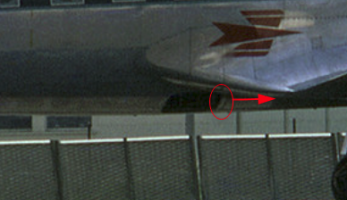
By magnifying the image of Meridien I discovered a detail that I hadn’t seen yesterday.

1774112275952.png
 
1774113724241.png

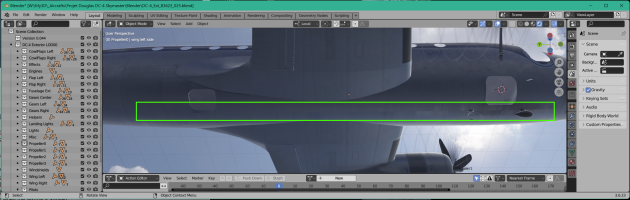
Along the lower edge of the hatch you can see two "notches". These may be hinges, a much lighter solution than a sliding door.
 
Possible but the two "notches" are not present on the others images ... so ???
A sliding door is more easy to animate :p

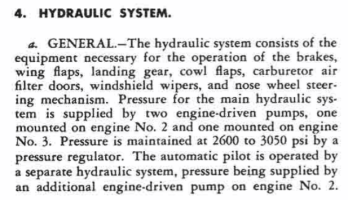
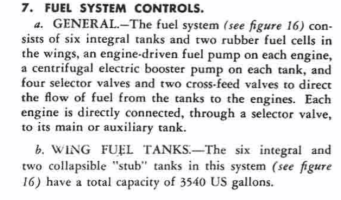
To address some of Hollister’s concerns, while reading his manual, I found some information :
1774115223184.png
so hydraulic pressure is obtained only by two engine-driven pum one inboard and one outboard, you are right.
But in the system.CFG, I don't know it engine_map parameters is for engine-driven pumps or electric pump ... I have to read the SDK.

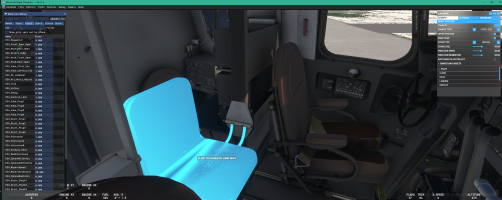
The C-54 has 8 electric boost pump (switchs are on the overhead and are three-positions). I should verify if the DC-4 has the same equipment.

1774115871122.png
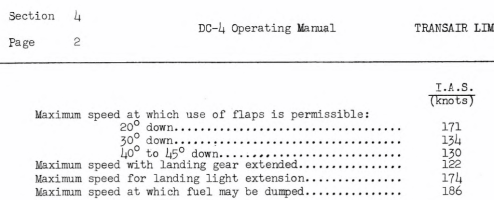
For wing flaps, I should read ALL manuals to see that Douglas has made in each aircraft (DC-4 or C-54)
In the Checklist, I see :
- Take-off : 15°
- Approach : 15°
1774117773652.png
Currently, the animation used on the exterior model is : l_flap_percent_key or r_flap_percent_key.
For the lever, the XML code used is:
<UseTemplate Name="ASOBO_HANDLING_Lever_Flaps_Template">
<DRAG_DELTA>0.03</DRAG_DELTA>
<USE_TRAJECTORY_DRAG_MODE>True</USE_TRAJECTORY_DRAG_MODE>
<INVERT_IM_DRAG_INPUT_SCALAR>False</INVERT_IM_DRAG_INPUT_SCALAR>
<ANIMTIP_0_ON_PERCENT>0</ANIMTIP_0_ON_PERCENT>
<ANIMTIP_1_ON_PERCENT>0.25</ANIMTIP_1_ON_PERCENT>
<ANIMTIP_2_ON_PERCENT>0.37</ANIMTIP_2_ON_PERCENT>
<ANIMTIP_3_ON_PERCENT>0.50</ANIMTIP_3_ON_PERCENT>
<ANIMTIP_4_ON_PERCENT>0.62</ANIMTIP_4_ON_PERCENT>
<ANIMTIP_5_ON_PERCENT>0.75</ANIMTIP_5_ON_PERCENT>
<ANIMTIP_6_ON_PERCENT>1</ANIMTIP_6_ON_PERCENT>
<ANIMTIP_0>Flaps: 0</ANIMTIP_0>
<ANIMTIP_1>Flaps: 10</ANIMTIP_1>
<ANIMTIP_2>Flaps: 15</ANIMTIP_2>
<ANIMTIP_3>Flaps: 20</ANIMTIP_3>
<ANIMTIP_4>Flaps: 25</ANIMTIP_4>
<ANIMTIP_5>Flaps: 30</ANIMTIP_5>
<ANIMTIP_6>Flaps: 40</ANIMTIP_6>
<USE_ANIM_TRIGGERS/>
<DRAG_ANIM_LAG>200</DRAG_ANIM_LAG>
<BUTTON_ANIM_LAG>500</BUTTON_ANIM_LAG>
<USE_TRAJECTORY_DRAG_MODE>True</USE_TRAJECTORY_DRAG_MODE>
</UseTemplate>

The limitation (flaps cannot be > 15°) during the take-off seem to be induced by this code ? if it is the reason I will modify the lever management.
I would investigate ...
 
Last edited:
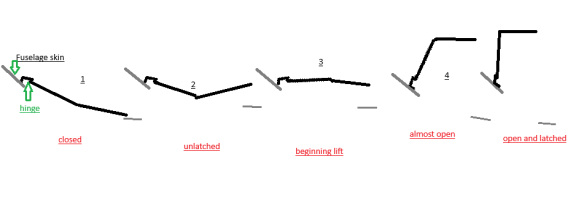
Didier, without access to CAD software right now, the best description is an analogy and a very crude drawing..
Take a hard-bound book, holding it wide open in both hands with the spine facing upward, the pages facing down.
Imagine your left hand as the 'upper' or outward side of the opening and your right as the edge nearest the centerline of the aircraft -looking aft.
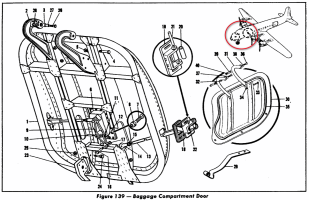
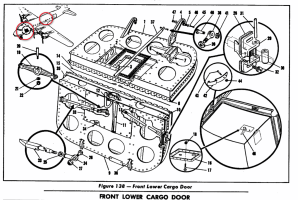
Upon releasing the latch (which is in the pages in your right hand) with the T-shaped "key", raise your right hand upward, holding that side of the 'book' level, parallel to the floor. Your left hand is the hinge attached to the fuselage (the large hooks in the diagram) so the left-hand pages now rotate to the vertical. At the fully-open position, the door is held open by a small spring catch (parts 42, 43, 44 in the diagram -Fig.139)
Lower Cargo door sequence.png
In Figure 138 on page 290 the part of the drawing circled in the lower right corner shows the door in the fully open position ( but viewed from the rear) and shows the T-handle "key in the latch mechanism. Interestingly, the small rectangle on the other half of the door opposite the key seems to be a small, removable panel that could be removed (outlined in black in the drawing of the inner side of the door) that probably allowed someone to reach in and manually release the latch if a "key" was lost or not available.
 
Back
Top